The Power of Waiting on God’s Timing in Business: Trusting the Process and Reaping Rewards

The Power of Waiting on God's Timing in Business: Trusting the Process and Reaping Rewards

The concept of "Waiting on God's timing in business" integrates deep spiritual faith with pragmatic business strategy. It moves beyond a purely temporal view of entrepreneurial success, suggesting that while personal diligence, hard work, and strategic planning are vital, the ultimate trajectory, the emergence of key opportunities, and the achievement of true, lasting success are also influenced by a higher, divine plan.

This perspective holds that there is a specific, optimal schedule for every major breakthrough, whether securing a vital investment, launching a new product, or achieving market penetration. Success, therefore, is not seen as solely the product of human effort and will, but as a divine appointment that unfolds according to a timetable set by a higher power.

Adopting this mindset helps business professionals develop patience and resilience, understanding that delays or seeming stagnation are not failures. Instead, they are essential phases such as refining the business model, strengthening internal foundations, building personal character, or waiting for external market conditions to improve. This perspective shifts focus from worrying about immediate outcomes to trusting the natural, ongoing process.

Embracing Divine Delay

In the fast-paced world of entrepreneurship, where algorithms prioritize speed and markets reward quick action, waiting can seem outdated. However, for faith-based business leaders, waiting on God's timing isn't passive; it's a strategic alignment with a higher purpose. 

As Ecclesiastes 3:1 says, "To everything there is a season, A time for every purpose under heaven." This suggests that our ambitions and urgency often fall short of divine timing. Rushing can cause mistakes, burnout, poor decisions, or shaky foundations for ventures. Conversely, patient trust builds resilience, clarity, and lasting breakthroughs.

It’s essential to recognize that being "stuck in the waiting" often means God is waiting for us to grow, align, or let go of control before moving forward. These accounts highlight a common thread: waiting helps develop character, establishes integrity in businesses, and prepares them for impact beyond just profit.

For faith-driven entrepreneurs today, navigating economic shifts, disruptions, or personal trials involves entrusting the "when" to God while taking responsibility for the "how." The outcome? Businesses that flourish and serve as a testament to God’s faithfulness, inspiring others in a world accustomed to impatience.

Many entrepreneurs testify to seasons of apparent stagnation that were, in fact, divine preparation. Delays in funding, partnerships, or breakthroughs often force us to deepen our "why", rooting our ventures in God's calling rather than mere ambition. 

Waiting effectively requires proactive steps: pray earnestly, manage existing resources wisely, and develop networks with humility. As Habakkuk 2:3 states, "For the vision is yet for an appointed time. It hastens to the end and will not fail. If it should be slow in coming, wait for it, for it will surely come – it will not delay.”

In an age of instant gratification, choosing God's pace is revolutionary. It transforms potential pitfalls into profound growth, ensuring your enterprise glorifies the Divine who holds time itself. Trust the wait – God’s breakthroughs are always worth it.

The Three Pillars of Trusting God's Timing in Business

Business success, when viewed through the lens of faith and divine timing, hinges on three essential virtues:

1. Cultivating Trust and Patience

  • Trust over Haste: This suggests fully believing that every vital business aspect, like a new idea, major investment, product launch, or key decision, has a destined, ideal time for success. It requires letting go of the urge to control the timing and trusting that a higher force is guiding the perfect moment.
  • Patience is key to Preparation: Rather than rushing to achieve a result, focus on practicing patience by confirming all essential prerequisites are in place. This involves assessing market readiness, obtaining sufficient resources, and developing your personal leadership skills. Patience serves as a safeguard against rushing ahead of natural and necessary challenges.

2. Committing to Diligence and Preparation

  • Active Waiting: This is not about passive inactivity. It means using the "waiting period" to work diligently, refine the business plan, improve the product, build relationships, and develop personal leadership skills.
  • Doing Your Part: Your fundamental role is to manage your business with the highest level of excellence and uncompromising integrity. By doing your part diligently, you ensure you are in the best possible position to capitalize on an opportunity the moment it manifests.

3. Accepting and Surrendering Uncontrollable Factors

  • Surrender to the External: Recognize that many influential factors, such as economic downturns, unforeseen market shifts, or competitive moves, lie entirely outside your sphere of control. Acknowledge these limits.
  • Finding Peace in the Process: By viewing any delays or setbacks not as personal failures but as integral, purposeful parts of a larger process, you can achieve profound peace and significantly reduce business anxiety.

This philosophy essentially defines the entrepreneurial journey as a partnership: the entrepreneur maintains unwavering faith and patience while consistently applying diligence and preparation, thereby aligning human effort with an optimal, predestined schedule.

Markethive: A Spiritually-Guided Initiative Trusting in God’s Plan

Markethive is distinguished by its comprehensive ecosystem, specifically designed to support and empower entrepreneurs worldwide. A core, defining characteristic of this platform is that it is fundamentally funded and driven by a vibrant community of Christian or faith-based entrepreneurs. This committed group has been unwavering in its dedication to upholding a God-given set of values and ethical principles. 

These deeply held convictions are not merely peripheral; they are central to the platform's operations and enable Markethive to maintain its unique and steadfast position in a challenging and volatile geopolitical and socioeconomic environment. The collective vision and moral framework of this community provide a stable, principled foundation that sets Markethive significantly apart from other networking platforms. 

As we continue our iterations to expand and enhance the Markethive platform, we need additional funding to hire more engineers to build out our revenue system, which encompasses the retail side of our products and services. 

This development is crucial to achieving key milestones, including listing Hivecoin on crypto exchanges, launching marketing campaigns to attract the masses, and commencing revenue payments to the ILP-holding community that has steadfastly supported Markethive’s Divine vision since its inception.

We can continue to do our part while we “proactively wait” for God’s timing by:

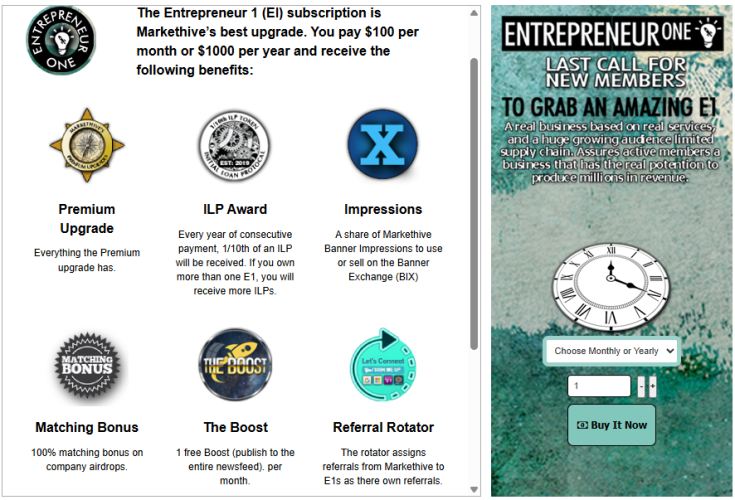
  • Secure an E1 Subscription (New Members): This is the ideal time to become an E1 member. A limited number of non-expiring E1 subscriptions are available, securing your access to all E1 benefits, including becoming an ILP shareholder and receiving 0.01 ILP annually, as long as your account remains active. Purchasing an E1 directly supports our development.
  • Expand Your E1 Subscriptions (Existing Members): Current E1 members can significantly accelerate product launches and monthly dividend payments to ILP holders by purchasing additional E1 subscriptions.
  • Direct ILP Purchase: For those seeking a foundational, direct stake in the platform's future, an ILP can be purchased directly. Please contact the Administration for details.
  • Maintain Active Engagement: Your participation in the ecosystem is crucial. We encourage you to:
    • Purchase Boosts and Vanity Promo Codes: These tools are essential for expanding your marketing reach and increasing conversions.
    • Stay Active in the Wheel of Fortune Game: This activity helps boost system energy, increases transaction volume, and rewards your efforts.

Hivecoin and ILP Incentive for 2025 Wrap Up

As 2025 comes to an end, now is the ideal time to maximize the benefits from our 2025 incentive program. This is your chance to earn extra ILPs and Hivecoins as recognition for your vital financial contributions to developing the most powerful broadcasting, automated marketing, and social market network available.

Please check your current standings. By topping off your contribution, you can earn another ILP and 1,000 more Hivecoins while helping us reach important revenue milestones. Hitting these targets is essential to ensure everyone receives the promised ILP revenue. For full details, please join the dedicated Markethive group. https://markethive.com/group/2025yearendincentive

Hivecoin and ILP Incentive for 2026 

Markethive is set to launch a significant initiative for 2026: a strategic airdrop of its native Hivecoin (HVC) tokens and ILPs. This action is designed to support Markethive's vision and ongoing development, while simultaneously thanking and incentivizing the Markethive community for its continued support. This will be a compelling reward system, rather than a simple, uniform distribution.

The HVC token allocation for each member will be dynamically calculated and directly proportional to their engagement and investment within the Markethive ecosystem throughout the preceding year. This reward is based on the user's total expenditure, which will be meticulously tracked.

The calculation comprehensively includes all financial activity on the platform, such as, but not limited to:

  • Purchases of Wheel of Fortune spins for enhanced engagement.
  • Acquisition of Boosts to amplify content visibility.
  • Subscriptions to the Entrepreneur One upgrade, which provides access to advanced features and benefits.

2026 Incentive Schedule Overview

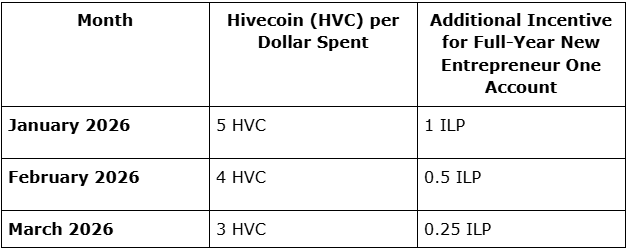
The 2026 incentive program is structured with monthly and cumulative spending rewards, outlined as follows:

Monthly Incentives (January – March 2026) 
Long-Term Incentives (April 1st, 2026 – December 31st, 2026)

This period offers two types of rewards based on total expenditure:

1. Cumulative ILP Reward:

  • Reward: You will receive 0.25 ILP upon reaching a total expenditure of $5,000.
  • Cap: The maximum expenditure eligible for this ILP reward is $50,000.

2. Tiered Hivecoin (HVC) Reward:

Hivecoin incentives are paid per dollar based on the total spending bracket:

We have ambitious plans for 2026, including the delivery of an extensive and market-leading portfolio of Inbound Marketing Tools for the retail sector. The 2026 incentive rewards you for helping us increase our revenue, enabling us to build out this great list of retail services. To get more details, please register for the Markethive group. As a bonus for registering, you will receive 50 MHV tokens. https://markethive.com/group/2026promoincentive

Thank you for your ongoing support. God bless you.


The Foundation of Startup Success: A Clear Documented Vision Team and Product The Markethive Product and Its Current Intensive Iteration Phase

The Foundation of Startup Success: A Clear, Documented Vision, Team, and Product. The Markethive Product and Its Current Intensive Iteration Phase.

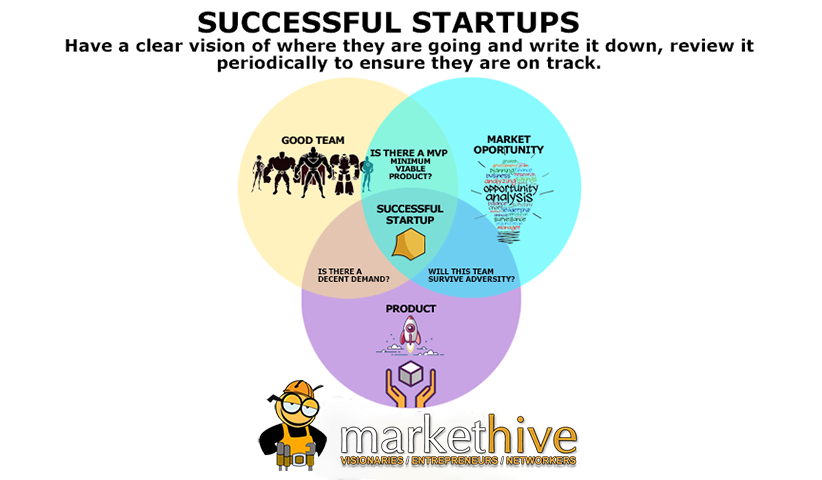
Successful startups stand out by having a clearly defined, crystal-clear vision of their ultimate goal and purpose. This vision isn't just a vague idea; it is a carefully written and formally documented strategic asset. The act of putting the vision on paper compels the leadership team to clearly state their goals, target market, proposed value proposition, and long-term impact with accuracy and thoroughness.

Most importantly, this documented vision should not be seen as a static record stored away. Instead, it serves as the company's guiding compass and requires regular, structured reviews and updates. Leadership teams should meet often to assess operational performance, market shifts, and the competitive landscape in relation to the vision, ensuring the startup stays effectively "on track." This continuous review process is crucial for:

  1. Ensuring Alignment: It allows the leadership team to critically assess whether the current trajectory, operational metrics, and immediate goals (such as product development or marketing strategies) continue to accurately steer the company toward its ultimate vision.
  2. Maintaining Relevance: As markets change, technology advances, and customer needs evolve, the review process helps ensure the vision remains relevant and inspiring, potentially requiring minor strategic tweaks without altering the core goal.
  3. Reinforcing Commitment: Frequent revisiting of the written vision re-energizes the team and strengthens shared dedication to the long-term journey, especially during tough growth periods or unexpected setbacks.
  4. Inspiring Stakeholders: A well-defined, written vision gives investors, partners, and early adopters confidence in the leadership's foresight and dedication to reaching a clearly articulated future goal.

In essence, a written, frequently reviewed vision transforms aspiration into a measurable, manageable journey toward success.

Adopt the Minimum Viable Product (MVP) strategy.

The foundation described above, combined with the steps and pillars discussed in this article, such as defining the problem clearly, identifying the target audience, and creating a compelling value proposition, serves as the essential groundwork for developing your Minimum Viable Product (MVP).

Launching an initial, functional version of your product swiftly is vital for early startup success, even if it's not perfect. This approach, called the Minimum Viable Product (MVP), is more than just a fast delivery method; it acts as a crucial way to conduct real-world testing with genuine users. This early exposure is invaluable, allowing quick identification of critical bugs, subtle flaws, and essential areas for significant improvement that internal testing might miss.

It is critically important to resist the urge to aim for an unattainable initial "perfection." This perfectionist impulse is a common trap that often leads to significant development delays, substantial resource overruns, and, most importantly, missed opportunities to receive timely, genuine feedback from your target market. Instead, the focus should be on practicality: launching a stable, working version with the least time and money necessary.

An MVP is fundamentally a structured experiment, not a final, complete product. Its core philosophy is to develop the most basic, functional version of a product that contains only the essential features required to address the primary, high-value problem experienced by your initial target users, often referred to as early adopters. 

For example, instead of building a fully-featured, complex platform, you launch a basic version with the most critical features and simple feedback tools, such as surveys, basic contact forms, or support mechanisms that allow users to report bugs or suggest improvements, forums, or dedicated groups, such as those actively used by the Markethive platform, where the company can engage directly with its user base. This is vital for actively valuing, incorporating, and prioritizing community input, transforming users into co-creators of the evolving product.

The MVP isn't just an unfinished product; it's a version of a new product designed to help a team gather the most validated customer learning with minimal effort. This idea primarily focuses on improving learning efficiency and iteration. The aim is to go beyond assumptions by collecting empirical data that confirms or refutes the core hypothesis of the product's value proposition.

The development roadmap is guided entirely by data and qualitative insights from early user engagement, enabling you to release targeted updates, new features, and improvements aligned with actual user needs and behaviors. This iterative, user-centered process minimizes risks and ensures each subsequent investment in the product aligns with market demand.

Build, Measure, and Learn: The Continuous Improvement Cycle

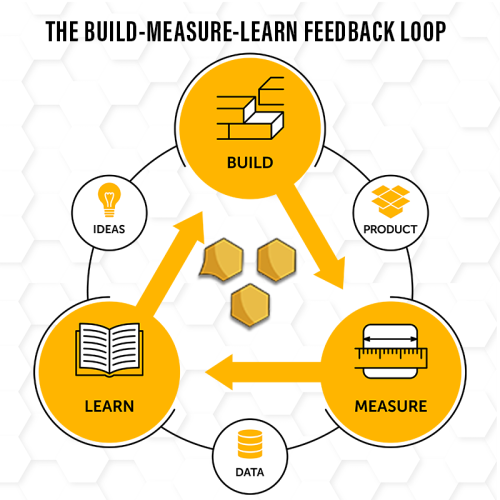
Launching an MVP is just the beginning, not the end, of the process. It marks the start of the most essential phase: ongoing testing and improvement. This phase follows the "build-measure-learn" loop, a continuous cycle vital for handling the uncertainties typical in a startup environment.

The Measure Phase: Defining Success with Data

After delivering the MVP to early adopters, the next step is to focus on detailed data collection and analysis. This includes monitoring key performance indicators (KPIs) directly linked to the initial hypotheses and the core value proposition. These metrics provide concrete evidence for evaluating performance relative to expectations.

Important metrics often tracked include:

  • Activation Rate: The proportion of users completing key setup steps.
  • Retention Rate: The percentage of users who keep using the product over time.
  • Customer Lifetime Value (CLV): The expected total revenue from a single customer.
  • Churn Rate: The percentage of customers who stop using the product.
  • Conversion Rates: The percentage of users completing specific actions like signing up, upgrading, or purchasing.

In addition to quantitative data, collecting direct user feedback through interviews, surveys, and usability tests is equally important. This qualitative data explains the reasons behind the numbers, revealing insights into user experience, challenges, and unmet needs.

The Learn Phase: Interpreting Data and Making Decisions

The data collected during the measure phase must be carefully analyzed to derive actionable insights. This learning stage involves critically evaluating the product's performance by validating assumptions, such as whether the market responded as expected and if the core features are influencing user behavior. It also involves identifying gaps, like where users exit or which features are confusing or underused. 

Based on these insights, a strategic decision is made: either to persevere or pivot. Persevering involves continuing to optimize, improve incrementally, and scale successful features if the data shows positive traction. Conversely, if the data reveals fundamental issues, such as a misaligned target market, an ineffective solution, or a less urgent problem, a pivot is necessary. A pivot is a structured change aimed at testing a new hypothesis about the product, strategy, or growth approach.

The Build Phase: Iterative Improvement

The transition from the learning phase to the build phase marks a key turning point in the agile startup journey. Unlike traditional development methods that focus on a large, risky product launch, the goal here is quite different: to pursue fast, iterative development based solely on validated insights. This principle emphasizes that the product should not be expanded recklessly but instead refined through a series of small, focused changes, or iterations.

This intentional strategy of incremental growth is the foundation of capital-efficient and low-risk expansion. By committing to minor, evidence-based adjustments, the startup avoids investing large amounts of capital into features that the market may ultimately reject. Each iteration serves as a small, controlled experiment, reducing the risk involved in new product development.

This ongoing cycle ensures that empirical data exclusively guides every development effort. It prevents teams from relying on speculation or personal bias, greatly enhancing the chances of delivering a product or service with genuine market fit. This continuous feedback loop is more than just a process; it is the driving force behind a lean startup's long-term, sustainable success, ensuring that resources are always directed toward solving problems the market genuinely needs and values.

Achieve the Perfect Product-Market Fit 

Product-Market Fit (PMF) is a key milestone for startups, signifying when a company's product successfully meets a substantial market need. It is more than a theoretical idea; it's a measurable state achieved when the right product aligns with the right market, creating a self-sustaining growth engine that can't be ignored. 

The accurate indicator of PMF is in the metrics: fast, viral, and long-lasting organic growth, combined with exceptionally high customer retention and lifetime value, often with little dependence on paid acquisition channels. Customers aren't merely using the product; they are passionately promoting it, and the market is actively driving the product out of the company.

Once PMF is conclusively demonstrated, the focus must immediately and strategically shift from simply validating the market to aggressive, systematic scaling. This is a sensitive and complex phase where initial success needs to be leveraged carefully without disrupting the operational framework that supported the growth. 

Strategic Scaling: The Essential Next Step After Product-Market Fit

Once PMF is conclusively demonstrated, the focus must immediately and strategically shift from simply validating the market to aggressive, systematic scaling. This is a sensitive and complex phase where initial success needs to be leveraged carefully without disrupting the operational framework that supported the growth. The key areas of strategic scaling include:

  1. Optimizing Operations and Infrastructure: The systems, processes, and technology stack that worked for a small user base will inevitably struggle during rapid growth. Scaling demands improving every part of the operation—from customer support and fulfillment logistics to engineering workflows and data infrastructure. This involves investing in automation, building a strong, scalable architecture, and adopting standardized, efficient procedures to keep service quality and margins steady as volume increases.
     
  2. Expanding Market Reach and Penetration: Scaling involves deliberately broadening the company's reach through geographic expansion, targeting nearby customer groups, or launching new product lines that complement existing offerings. Success depends on a thorough understanding of the Total Addressable Market (TAM), Serviceable Available Market (SAM), and Serviceable Obtainable Market (SOM). Implementing a targeted, data-backed go-to-market plan is essential for effective market penetration, often requiring localized sales efforts, marketing campaigns, and strategic partnerships.
     
  3. Solidifying a Defensible Competitive Edge: PMF attracts competitors. Therefore, scaling must be paired with the intentional building of a "moat," a sustainable competitive advantage, to ensure long-term success and protect market share. This advantage can take several forms:
  • Network Effects: Creating a platform where the product's value grows exponentially as more users join (e.g., social networks, marketplaces).
  • Proprietary Technology: Developing unique IP, algorithms, or specialized technology that is hard or costly for competitors to imitate.
  • Cost Advantage: Achieving economies of scale that enable the lowest cost structure in the industry.
  • Brand and Community: Building a strong brand presence and fostering a loyal, active community that serves as a substantial barrier to entry.
  • High Switching Costs: Integrating the product so thoroughly into a customer's operations or daily routine that switching to a competitor becomes difficult.

Successfully navigating the scaling phase is what distinguishes a successful startup from a long-term category leader. It demands discipline, ongoing improvement, and a dedication to operational excellence, all while fiercely safeguarding the core product value proposition that initially achieved Product-Market Fit.

Markethive: The Product and Intensive Iteration Phase

Markethive has been a pioneer in providing a comprehensive, all-in-one inbound marketing platform combined with a wide range of Software as a Service (SaaS) tools from the very start. A significant distinction of Markethive is the seamless integration of these powerful marketing and business management tools directly into a dynamic, built-in social media interface. 

This unique setup means users don't need to switch between separate applications to handle their social presence, run marketing campaigns, and access essential business utilities. Instead, everything is housed under one roof, creating a unified, highly efficient environment for entrepreneurs, small business owners, and digital marketers. 

Markethive has been undergoing an intensive iteration phase, a critical period of development that signifies a significant transition. This systematic overhaul involves the redevelopment and expansion of the core architecture, as well as the introduction of highly sophisticated subscription-based services and products, strategically designed to generate revenue for ILP Founding Share Token holders. 

Markethive: Ushering in the Decentralized Market Network Era

With the revolutionary rise of blockchain technology, Markethive saw a key opportunity to redefine its role in the digital ecosystem. This led to the vision of becoming a major player in the growing crypto space, resulting in the creation of the industry's first fully decentralized Market Network. This step goes beyond traditional social media, marketing, and e-commerce platforms by offering a sovereign, user-centered environment designed for the future of digital entrepreneurship.

The main factors driving this ongoing development are a proactive approach to meeting users' changing online needs and the aim of boosting financial empowerment. The digital world is constantly changing, with new technologies emerging, consumer behaviors evolving, and the demand for advanced internet marketing and entrepreneurial tools becoming more complex. 

Markethive is strategically committed to financially empowering its members. The platform offers essential tools and an ecosystem for users to create, manage, and grow their own income streams. Additionally, the company provides opportunities for wealth creation, including the Entrepreneur One (E1) subscription, which integrates the Initial Loan Procurement (ILP), the Banner Impressions Exchange (BIX), and the upcoming E1 Exchange (E1X), as well as the Bounty program, Franchives, and Hivepress. This approach keeps the platform innovative and relevant while directly helping its members achieve financial independence.

This ongoing investment is vital for building a platform that not only keeps up with industry changes but also leads innovation within the market network sector. By investing in this technological iteration, Markethive ensures its offering remains:

  • Competitive: Providing features and tools that outperform traditional, centralized platforms.
  • Powerful: Equipping entrepreneurs with state-of-the-art marketing, communication, and commerce capabilities.
  • Highly Relevant: Guaranteeing that the platform addresses the immediate and future demands of digital business owners and content creators.

This strategic shift is being implemented before the platform enters its large-scale scaling phase, ensuring that the infrastructure, feature set, and user experience are fully optimized to support significant growth and ongoing adoption. This deliberate approach focuses on stability, performance, and advanced capabilities rather than rushing into expansion.

The Foundational Value of the E1 Subscription: More Than Just a Service

Did you know that many retail products and services currently in development, which will only be available through separate subscriptions, are automatically included in an E1 subscription? Additionally, there are exclusive benefits, including banner impressions and access to prime real estate for placing your banners both on the platform and externally. This ensures maximum visibility for your business, products, or services, acting as a powerful built-in advertising engine.

The company Referral Rotator automatically assigns new Markethive signups directly to the E1 subscribers on a rotating basis. This continuous flow of organic referrals offers a steady, hands-free way to earn Hivecoin and grow the E1 subscriber's personal network. The E1 Exchange is another system for building wealth, and, of course, the ILP makes you a shareholder in the company, connecting your personal success with the growth of the entire decentralized market network.

To understand the scale of the E1 subscription, look at historical examples. Think about the enormous financial gains early shareholders of today’s giants like Facebook, X (formerly Twitter), or YouTube made. These early investors backed technologies that profoundly changed how the world communicates and does business.

The current technological shift, the move toward decentralized, crypto-based market networks, provides a similar opportunity. By obtaining an E1 subscription, the holder isn't just buying a service; they are securing a stake in the early growth phase of a pioneering, integrated platform. 

This platform combines the best aspects of social networking, inbound marketing, ecommerce, publishing, and broadcasting within a single, decentralized, crypto-focused environment. The E1 subscriber stands to gain similar rewards by being a key part of this next-generation digital economy from its inception.

Markethive's Funding Model: Growth Fueled by the Community

Markethive distinguishes itself by using grassroots funding rather than traditional venture capital. This strategic choice was made to keep the platform's development firmly aligned with the community's interests and vision. Learn more about Markethive’s team of founders in this article. This grassroots funding approach highlights community support and shared ownership as the primary engine for sustainable growth.

A cornerstone of this unique funding strategy is the Entrepreneur One (E1) subscription. E1 members are recognized as the platform's early adopters, demonstrating a strong commitment to Markethive's long-term success. Importantly, these individuals are also granted ILP shareholder status. Their early and consistent financial support has been vital to turning Markethive's ambitious roadmap into reality, providing the capital to design, develop, and launch the suite of retail products and services that will, in turn, generate revenue to sustain and improve the entire decentralized ecosystem and fund ILP shareholders.

The Path Forward: A Call to Action

The initial funding from the E1 pioneers successfully launched the first phase of the retail ecosystem. This phase included several key initiatives:

Although these milestones have been reached, more resources are now needed to accelerate innovation and growth and fully realize the vision of a truly comprehensive, decentralized platform.

To move forward with the upcoming critical iterations, including scaling the infrastructure, expanding the feature set, and improving the user experience, we need your support. Ongoing community backing is crucial to completing the ecosystem's planned features and ensuring Markethive's continued leadership in the decentralized market network space.

Ways to Support Our Growth and Gain Benefits

There are several ways you can contribute to our development goals and accelerate product launches, while also securing your own stake in the platform's future:

  • Secure an E1 Subscription (New Members): This is the ideal time to become an E1 member. A limited number of non-expiring E1 subscriptions are available, securing your access to all E1 benefits, including becoming an ILP shareholder and receiving 0.01 ILP annually, as long as your account remains active. Purchasing an E1 directly supports our development.
  • Expand Your E1 Subscriptions (Existing Members): Current E1 members can significantly accelerate product launches and monthly dividend payments to ILP holders by purchasing additional E1 subscriptions.
  • Direct ILP Purchase: For those seeking a foundational, direct stake in the platform's future, an ILP can be purchased directly. Please contact the Administration for details.
  • Maintain Active Engagement: Your participation in the ecosystem is crucial. We encourage you to:
  • Purchase Boosts and Vanity Promo Codes: These tools are essential for expanding your marketing reach and increasing conversions.
  • Stay Active in the Wheel of Fortune Game: This activity helps boost system energy, increases transaction volume, and rewards your efforts.

Thank you for your ongoing support. God bless you.


Decoding Startup Success Markethive Calls for a Strategic Push for Faster Growth

Decoding Startup Success. Markethive Calls for a Strategic Push for Faster Growth

Analyzing the DNA of High-Performing Founding Teams

The journey of a startup is inherently risky, a fact highlighted by the widely recognized statistic that for every venture that finds breakout success, a large majority, often estimated at around 90%, ultimately fail or do not reach their growth potential. This stark reality calls for a careful examination of the factors that truly distinguish a successful, category-defining startup from one that stalls, runs out of capital, or simply fades away. The focus isn’t on minor differences in execution but on the core elements that provide a sustainable, compounded advantage.

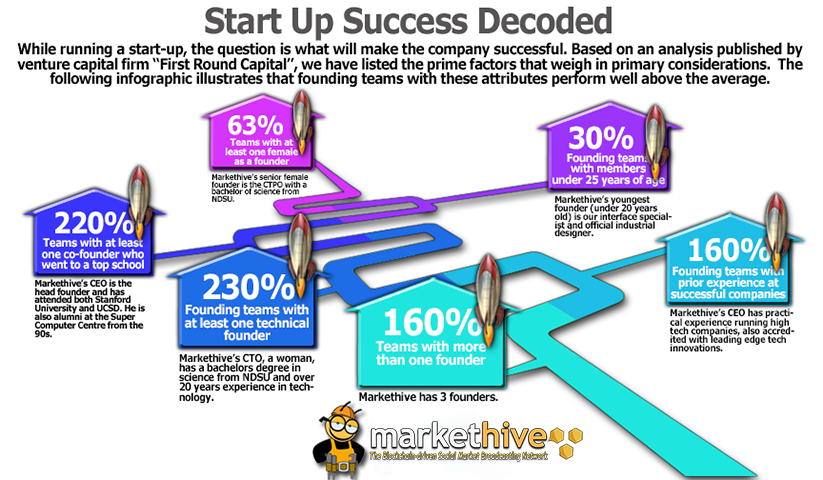
Based on a thorough, rigorous analysis of hundreds of portfolio companies published by the well-known, respected venture capital firm First Round Capital, we can identify specific, measurable qualities within the founding team that significantly and demonstrably increase the likelihood of long-term success. The key insight from this data is that success is not just about market timing or having a brilliant idea; it is fundamentally connected to the collective DNA of the initial leadership.

These identified qualities, far from being mere statistical outliers or intangible "soft skills," represent essential, measurable advantages across three key dimensions: Network, Experience, and Capability.

  1. Network Advantage: Teams with a strong, existing network, especially one that includes experienced industry veterans, successful serial entrepreneurs, and influential capital partners, secure better initial funding rounds, attract top talent more quickly, and open doors to vital early customers and strategic partnerships.
  2. Experience Advantage: This goes beyond just having domain knowledge. The data emphasizes the importance of relevant founder-market fit: teams that have previously faced the specific challenges of their chosen industry or have direct prior experience scaling a high-growth company, even if it wasn't their own. This experience directly helps avoid common operational mistakes and makes more capital-efficient decisions.
  3. Capability Advantage: This refers to the founders' complementary skill set and collective intellectual rigor. Successful teams demonstrate a balanced mix of technical expertise (the ability to build the product), commercial insight (the ability to sell and monetize it), and leadership skills (the ability to recruit and inspire a growing organization).

The comprehensive data clearly shows that founding teams with a high concentration of these attributes perform significantly above average across all key metrics. Specifically, they set a higher standard for expected growth rate, demonstrate better capital efficiency (requiring less investment to reach significant milestones), and attain substantially higher valuations in subsequent funding rounds. Their trajectory indicates not just survival, but genuine, transformative success.

The following sections elaborate on these primary considerations and showcase how Markethive's founding team embodies these key factors: 

Key Attributes of High-Performing Founding Teams

1. Elite Educational Background

Success Uplift: +220%  
Core Attribute: Teams with at least one co-founder who went to a top school.

This substantial premium highlights the value of the network, rigorous training, and intellectual horsepower often associated with leading academic institutions.

Markethive's Profile
Markethive’s Chief Executive Officer (CEO) and head founder possesses this critical advantage, having attended both Stanford University and the University of California, San Diego (UCSD). Furthermore, his technical acumen is underscored by his affiliation as an alumnus of the Supercomputer Center from the 1990s, indicating deep, foundational expertise in high-level computing.

2. Gender Diversity in Leadership

Success Uplift: +63%
Core Attribute: Teams with at least one female as a founder.

The inclusion of female founders is strongly correlated with improved performance, suggesting that diverse perspectives lead to better decision-making, broader market understanding, and a more resilient organizational culture.

Markethive's Profile
Markethive actively benefits from this diversity. The company's senior female founder serves as the Chief Technology and Product Officer (CTPO) and holds a Bachelor of Science degree from North Dakota State University (NDSU). Her role ensures that a balanced and comprehensive leadership approach informs product development and technological strategy.

3. Technical Prowess as a Foundation

Success Uplift: +230%
Core Attribute: Founding teams with at least one technical founder.

This is the most significant factor, underscoring that in a tech-driven landscape, the ability to build, innovate, and adapt technology internally is paramount. Technical founders eliminate reliance on external contractors, accelerate product iterations, and inherently understand the core product's capabilities and limitations.

Markethive's Profile
Markethive’s technical leadership is robust and experienced. The company's Chief Technology Officer (CTO), who is also a woman, holds a bachelor’s degree in science from NDSU and brings over 20 years of verifiable, hands-on experience in technology. This deep domain expertise is the backbone of the company's platform development.

4. Generational Perspective and Agility

Success Uplift: +30%
Core Attribute: Founding teams with members under 25 years of age.

While experience is invaluable, the inclusion of younger founders provides a crucial link to emerging consumer behavior, modern digital aesthetics, and an innate understanding of next-generation technologies and social platforms. This provides cultural relevance and design agility.

Markethive's Profile
Markethive incorporates this forward-looking perspective through its youngest founder, who is under 20. This individual serves as the Interface Specialist and Official Industrial Designer, ensuring the product's user experience (UX) and visual design (UI) are cutting-edge and aligned with contemporary digital standards.

5. Strength in Numbers: The Power of Collaboration

Success Uplift: +160%
Core Attribute: Teams with more than one founder.

The workload, stress, and complexity of a startup are rarely manageable by one person. Multiple founders distribute risk, provide emotional support, and, most importantly, bring diverse skill sets and accountability to the table.

Markethive's Profile
Markethive has three dedicated founders, ensuring a strong, multi-faceted leadership structure capable of addressing technology, business strategy, product development, and operational execution simultaneously.

6. Proven Track Record in High-Tech Leadership

Success Uplift: +160%
Core Attribute: Founding team members with prior experience running high-tech companies.

Past success is a strong predictor of future performance. Founders who have navigated the complexities of scaling a high-tech company possess invaluable institutional knowledge, established vendor relationships, and a realistic grasp of market dynamics and pitfalls.

Markethive's Profile
Markethive’s CEO brings direct, practical experience in running high-tech companies. Critically, he is also credited with leading-edge technology innovations, signaling not just operational competence but a history of pioneering market-defining technologies.

In conclusion, Markethive’s foundational team structure is not accidental; it is a strategic accumulation of the precise attributes that the venture capital firm analysis identifies as the highest correlates for startup success. By excelling across key factors such as elite education, incorporating both male and female genders, deep technical expertise, generational relevance, collaborative structure, and proven high-tech experience, the company is inherently well-positioned to outperform its peers in the competitive startup ecosystem.

Markethive: A Divine Vision and Strong Foundation 

Since its founding, Markethive's founders have emphasized five key steps and five pillars described in this article. The company has built a solid foundation, driven by a Divine vision that forms the core philosophy of the entire ecosystem. This vision has served as a catalyst, facilitating the vertical rollout of products and services and playing a crucial role in promoting genuine, organic growth, where community engagement and product usefulness organically encourage adoption.

The most notable result of this foundational strategy is the successful implementation of their native cryptocurrency, Hivecoin (HVC), along with the internal wallet. Hivecoin is more than just a utility token; it is the financial lifeblood of the entire Markethive system, enabling internal transactions, rewarding user engagement, and reflecting the platform's dedication to decentralization.

The foundational ethos of the thriving ecosystem is built on four immutable core values:

  1. Autonomy: Giving users complete control over their assets and reducing dependence on centralized systems.
  2. Privacy: Ensuring the protection of user data and preventing misuse by the platform.
  3. Free Speech: Maintaining an open, uncensored environment that fosters authentic dialogue and innovation.
  4. Free Market: Promoting a merit-based economy where success is driven by value creation and entrepreneurial effort, unhindered by manipulative market forces.

Through these foundational principles, Markethive has cultivated a prosperous, resilient, and user-centric environment ready for long-term growth in the digital marketplace.

Markethive's Distinct Funding Model: Community-Driven Growth

Markethive distinguishes itself in the crowded startup scene by adopting a proper grassroots funding approach rather than catering to traditional venture capitalists' demands. This approach solidifies the project's commitment to its community, which, in turn, provides vital financial support for development and growth. A key part of this model is the Entrepreneur One (E1) subscription.

Members who invest in the Entrepreneur One subscription are designated as E1 members and also serve as early adopters and ILP shareholders. This threefold title reflects strong alignment with Markethive's core vision and future goals. Significantly, the financial support from these E1 members has been vital for Markethive, directly contributing to the launch of numerous products, services, and key systems that support the whole ecosystem.

Momentum and Anticipated Milestones

The Markethive platform is currently experiencing significant development momentum. The recent launch of the Vanity Promo Code subscription-based service introduced a new layer of incentive and personalization for its community. Building on this success, the highly anticipated Entrepreneur One Exchange (E1X) is currently in its final, rigorous testing stages, positioning it for an imminent release that will be a game-changer for E1 members.

Looking ahead, Markethive has exciting and innovative products in development, including the impressive Sitemaker tool and the groundbreaking Smart Mail Intelligent Responders. However, bringing these sophisticated technologies to completion will require a substantial injection of further funding. Your involvement is essential as we work together to bring these exciting tools to life.

The Financial Nexus: Revenue, Obligation, and Community Reward

Both the founders and the Markethive community look forward to the full rollout and launch of all upcoming products and services, including the critical listing of HVC on external crypto exchanges. These new offerings are more than just feature updates; they are key future revenue sources essential for Markethive's ongoing growth.

Furthermore, these revenue streams are directly connected to a key commitment Markethive has made to its most loyal supporters. The successful monetization of these offerings will enable Markethive to meet its clear financial obligation to allocate a significant 25% of its net revenue to ILP shareholders, with these payments scheduled to be made monthly.

The Strategic Imperative for Acceleration: The Critical Role of Entrepreneur One (E1) Subscriptions

To successfully navigate the next phase of Markethive's growth and commitment to product innovation, the single most critical imperative is to accelerate the number of Entrepreneur One (E1) subscriptions

Our roadmap features the launch of several highly anticipated core Markethive features that will transform the platform and significantly boost user engagement. The revenue from a significant boost in E1 subscriptions will directly support the specialized developer teams required to rapidly develop and launch these products. Specifically, the

  • Sitemaker: A powerful, easy-to-use, and feature-rich website and funnel builder that allows every user to create professional online assets without leaving the Markethive ecosystem.
  • Smart Mail: An innovative, algorithmically-enhanced email marketing system designed to improve delivery rates, personalize content at scale, and maximize campaign ROI.

A significant rise in E1 subscriptions will enable Markethive to confidently plan the release of these features, along with others in development, within a six-month window. This rapid progress will dramatically increase the platform's utility, value proposition, and competitive edge for all members.

A Direct Call to Action

Therefore, we are making a direct and respectful request to every member of the Markethive community:

  • Purchase a New E1 Subscription: If you are not currently an E1 member, now is the time to secure your spot and access the full range of E1 benefits, including becoming an ILP shareholder, all while directly supporting our development goals.
  • Boost your current subscriptions: For existing E1 members, expanding your subscriptions is the most effective way to accelerate product launches and meet the ILP obligation sooner.
  • Consider Direct ILP Purchase: Direct purchase of an ILP remains an option for those looking for a foundational stake in the platform's future.
  • Sustain Your Involvement: Beyond subscriptions, your continued participation in the ecosystem is vital. We encourage you to continue buying Boosts to maximize your marketing reach and to participate enthusiastically in the Wheel of Fortune game, which adds additional energy and transaction volume to the system and rewards you for your efforts.

Your immediate action on this critical imperative is the single most potent factor in determining how quickly we can deliver the products and financial fulfillment our community deserves.

Thank you, and God bless you and Markethive.


Five Fundamental Steps and Pillars for Startup Success

Five Fundamental Steps and Pillars for Startup Success

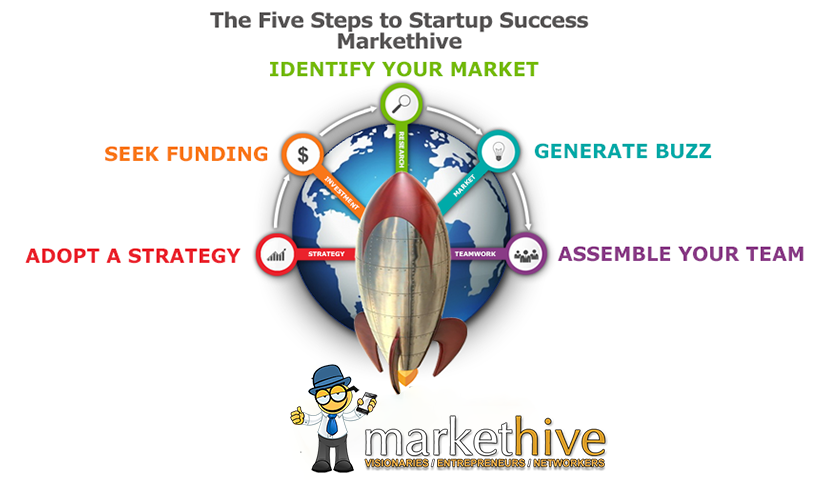
Markethive champions the entrepreneurial spirit, striving to maintain its momentum amid conglomerate oppression. Entrepreneurs are driven by the desire to turn their ideas, often born of personal insight and passion, into thriving, successful businesses that create value and have an impact. Starting a startup is an exciting process that requires careful planning and execution. To increase the likelihood of success, aspiring entrepreneurs should follow key steps, from developing the initial concept to full implementation.

This article outlines five essential steps to kick off your startup journey and significantly increase your chances of building a successful business from the ground up. Starting a company is an inherently risky venture; however, by following a structured five-step process and five core pillars, aspiring entrepreneurs can systematically mitigate risk, validate their ideas, and establish a strong foundation for sustainable growth.

The Indispensable Role of a Solid Strategy

A solid, well-defined strategy is the absolute foundation for any successful venture, serving as the constant guide for every major decision and action. Skipping this stage is a common pitfall. Every founder must meticulously consider these core strategic elements:

  • Define your mission and value proposition by clearly explaining the "Why" behind your business. Grasp the problem (Pain Point) and specify the Value (Solution). Your value proposition should highlight the unique, persuasive benefit your target customers gain. It needs to be communicated clearly and convincingly, explaining why they should choose you over competitors. Remember, this isn't merely a list of features; it's the essential transformation you provide.
     
  • Set clear, strategic goals that turn your mission into concrete, measurable targets using the SMART framework. Make sure your goals are Specific, Measurable, Achievable, Relevant, and Time-bound to foster accountability. Differentiate between short-term and long-term objectives by pursuing quick wins, like achieving product-market fit, and building momentum toward larger aims, such as market leadership.
     
  • Creating a comprehensive business model acts as the blueprint for generating, delivering, and capturing value. It functions as your company's economic engine. Clearly define your pricing strategy and how you intend to monetize, whether through subscriptions or licensing. List and evaluate all major operating expenses to determine your break-even point and required margins. Identify your key assets, such as intellectual property or talent, and necessary actions like R&D or sales that are essential to delivering your value proposition.
     
  • To analyze and outmaneuver your competition, thorough analysis is essential for defining your niche and minimizing risks. Identify both direct and indirect competitors addressing the same customer problem. Evaluate their strengths and weaknesses by systematically assessing what they do well and where they lack. Clearly articulate your differentiation by highlighting your unique competitive advantages, such as advanced technology or innovative approaches. This creates your "moat," a barrier that protects your market position from being copied.

The strategy phase is a vital investment. A clear strategy acts as a compass for your organization, showing that your idea is not only feasible but also scalable for long-term success.

Seek Funding

To effectively assess your financial needs, you need to clearly understand your startup's specific requirements. This includes thoroughly analyzing key areas such as product development costs, marketing expenses, operational overheads, and growth potential. A complete assessment helps you accurately determine the required funding amount and the ideal timing to secure it.

Raising capital for a startup involves exploring various financing options, and the best mix depends on each company's needs and growth plans. A strong funding strategy is essential, balancing the need for sufficient capital with maintaining control and minimizing equity dilution.

  • Bootstrapping: Funding the business with personal savings or company revenue. This method provides maximum control but requires strict budgeting.
  • Crowdfunding: Raising smaller sums from a large group of people, typically via online platforms.
  • Angel Investors: Private individuals who invest in startups, typically in exchange for equity, often offer valuable mentorship.
  • Venture Capital (VC): These firms invest in high-growth companies. They typically require a substantial equity stake and expect high returns.
  • Business Loans: Borrowing money from banks or financial institutions. This option typically requires solid credit and collateral.

Actively engaging with the startup ecosystem is crucial for spotting investment opportunities. It's recommended to network with industry specialists, attend startup events, and become part of local entrepreneurial communities. Joining business incubators or accelerators, along with industry conferences or pitching contests, offers valuable chances to connect and showcase the startup’s potential to a broader pool of investors. A well-crafted business plan and a compelling pitch deck are vital for drawing in investors.

It is important to note that startups should focus on growing independently and seek funding only when necessary to prevent losing control too early. When investment becomes unavoidable, founders should thoroughly evaluate potential investors to ensure their values and vision align with the company's long-term objectives. Founder disputes, often aggravated by conflicts with investors, are a common reason for startup failure. Before making any agreements, entrepreneurs must have a clear understanding of both the potential risks and rewards.

Identify Your Market

Achieving success depends on a deep understanding of your target market. You need to identify your ideal customers, understand their specific needs, and find the most effective ways to reach them. Consider these key steps:

  • Identify Your Ideal Customer (Target Audience Definition): Clearly specify your perfect customers by understanding their demographics, such as age, location, and income, and psychographics, which include values, attitudes, lifestyles, and buying behaviors.
  • Conduct In-Depth Market Research: Systematically gather data to grasp your market's needs and preferences. Use techniques like surveys, interviews, and extensive online research.
  • Conduct Competitive Analysis: Research your competitors. Identify their target audience and examine the marketing strategies they use.
  • Develop Detailed Buyer Personas: Create in-depth profiles of your ideal customers. These personas should then guide your product development and marketing efforts.

By thoroughly understanding your market, you can tailor your products, services, and marketing messages to connect and resonate with your target audience.

Generate  Buzz

Creating excitement and awareness is essential to attracting both customers and investors to your startup. Use these strategies to generate considerable buzz.

  • Building Anticipation and Exclusivity: Creating anticipation and exclusivity to generate excitement for a product or service launch by releasing information in stages, starting with basic features and revealing major milestones later to keep interest high. Additionally, building exclusivity through waitlists, limited early access, or invite-only events to reward early adopters and encourage strong word-of-mouth marketing.
  • Online Presence & Engagement: Create a professional website and maintain active social media profiles. Regularly share valuable content and engage with your audience to develop a strong online community.
  • Media and Public Relations: Actively reach out to journalists and bloggers to obtain media coverage. Emphasize your unique value proposition and showcase any significant success stories. Draft a compelling press release for major news and niche outlets about substantial milestones, like funding or a product launch. Offering exclusive data or stories can increase coverage.
  • Social Media Strategy: Use social media channels to engage your target audience, boost brand visibility, and direct traffic to your website. Use relevant hashtags and compelling visuals to maximize discoverability.
  • Content Marketing: Engage and inform your target audience with high-quality content like blog posts, articles, videos, and infographics across all your digital platforms.
  • Networking and Events: Attend industry conferences and events to meet and connect with potential customers, partners, and investors.

Creating a compelling brand story, highlighting the company’s purpose, and encouraging user-generated content through challenges or giveaways can boost organic growth and excitement. Stay creative and think outside the box to generate the biggest buzz!

Assemble Your Team

Your team is the cornerstone of your startup's success. Cultivate a dedicated, passionate group of talented individuals who are fully aligned with your core vision. To assemble this critical asset, focus on these key areas:

  • Strategic Talent Acquisition: Define your needs by clearly identifying and articulating the specific expertise and skills essential for operational success. Prioritize hiring individuals whose values and work ethic naturally align with your company's culture.
  • Empowerment and Trust in the Team Environment: Build trust by demonstrating confidence in your team. Empower individuals to take full ownership of their responsibilities through effective delegation.
  • Foster a Positive Culture: Establish a workspace that actively champions innovation, effective collaboration, and continuous professional growth.

Building a successful startup hinges on assembling a skilled and cohesive team. Start by clearly identifying the essential roles and expertise needed to execute your business plan. Look for individuals who are not only passionate and committed but who also wholeheartedly share your vision. The strongest teams possess complementary skills and diverse perspectives, significantly boosting the startup's capabilities and fostering a positive culture of innovation and collaboration.

Effective teams are made up of individuals who blend knowledge and experience with purpose, engagement, and connection. Those who are self-aware, show empathy, and build conscious connections with others can drive a startup toward better performance, productivity, and financial success.

Successful startups often shift from traditional hierarchical structures to a more horizontal leadership model. This approach encourages a role-independent style of collaboration, valuing each team member's input equally, leading to decisions that benefit the business rather than simply following hierarchy. This transformational leadership, combined with a team that mixes hard and soft skills, is essential for successfully scaling your startup.

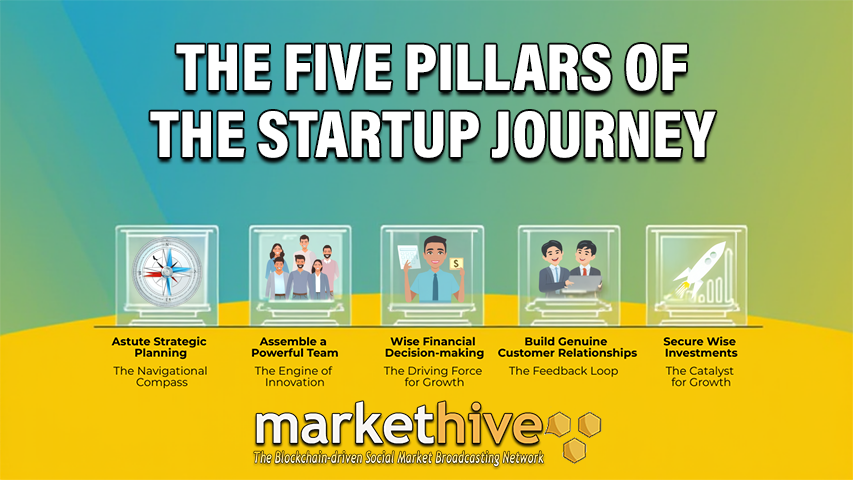
Five Pillars of the Startup Journey

Launching a startup is an odyssey that extends well beyond a simple business plan; it is a profound journey of courage, resilience, and unwavering vision. It involves turning an initial idea into a market-ready product, a process that pushes entrepreneurs to go beyond traditional boundaries of commerce. Success in this challenging venture depends on five essential, interconnected pillars, each requiring careful attention and strategic execution.

1. Astute Strategic Planning: The Navigational Compass
A clear, adaptable strategy anchors a successful startup. This entails more than just identifying a market need; it requires a deep understanding of the competitive landscape, a precisely defined target audience, and a sustainable monetization model. The strategic plan must be a dynamic document, regularly reviewed and adjusted in response to market feedback, technological changes, and emerging threats. It involves setting realistic, measurable short-term milestones while consistently working toward the long-term, overarching vision.

2. Assembling a Powerful Team: The Engine of Innovation
A solitary visionary rarely succeeds; it requires a cohesive, highly skilled, and passionate team. The strength of a startup lies in its collective talent and complementary skill sets; combining technical expertise with marketing savvy, financial prudence, and operational efficiency. Beyond just competence, the team must share the founder's core values and dedication. Building a culture of trust, open communication, and shared accountability is essential for managing the intense pressures and unpredictable pivots common in the startup world.

3. Making Wise Financial Decisions: The Driving Force for Growth
Financial discipline is essential for a startup's success. This involves careful budgeting, accurate cash flow management, and unit economics. Founders need to know their burn rate, prioritize costs that support growth or product development, and avoid scaling too early. Sound financial management helps ensure the company’s sustainability and builds trust with investors and partners.

4. Building Genuine Customer Relationships: The Feedback Loop
A startup's success depends on solving real problems for customers effectively. This involves shifting from simple transactions to forming genuine, meaningful relationships. It is essential to actively gather, listen to, and incorporate customer feedback, whether positive or negative. Using this iterative process, known as the build-measure-learn cycle, helps the product evolve constantly, addresses and forecasts user needs, and turns early adopters into passionate supporters.

5. Securing Wise Investments: The Catalyst for Growth
While bootstrapping offers valuable discipline, external funding often becomes essential to reach critical scale. Securing capital from venture capitalists, angel investors, or strategic partners demands a compelling pitch and a proven execution plan. Yet, the wisdom of the investment is crucial; founders must select partners who provide more than just money—they should offer mentorship, industry connections, and strategic alignment, ensuring the partnership promotes sustainable, responsible growth rather than reckless expansion.

In summary, the journey to startup success is neither simple nor direct. It will naturally involve setbacks, self-doubt, and major operational and mental challenges. Yet, it is through these trials that entrepreneurs grow stronger, sharpen their strategies, and become truly prosperous, resilient, and insightful. Launching takes courage, but dedication to mastering these five pillars is what creates a lasting legacy.