All posts by Alan B. Zibluk

Bitcoin BTC Finds Support at 4200 What Next?

Bitcoin (BTC) Finds Support at $4,200, What Next?

Bitcoin (BTC) Finds Support at $4,200, What Next?

After a brief recovery mid-week that hinted at a possible bottom found, a fresh crash has decimated the cryptocurrency market this morning. After dipping sharply from $4,440, Bitcoin (BTC) managed to find support at $4,200, which has long been considered a critical support level. Should it breach it, though, the next test will likely be $3,000 – the level that buoyed up the markets in the brief September dip last year before the epic late November rally.

While last weeks drops have been attributed by some to be investors selling assets ahead of Black Friday, these new losses are too close to the time for that explanation. It’s more likely that these continuing declines are fuelled by a number of factors, including depressed tech stocks as a result of the on-going China-U.S. trade war, the DOJ’s Tether manipulation probe and the Bitcoin Cash (BCH) war that is driving hash power away from Bitcoin mining.

There is also mounting evidence to suggest price manipulation by Wall Street whales in order to accumulate ahead of the ICE’s Bakkt launch, although that little nugget of hope has now been delayed until late January next year, so if true, we may see similar dips again after New Years.
 

Black Friday Fever

Several exchanges have chosen to take advantage of Black Friday fever and sell assets at discount prices, with some going as far as giving away Bitcoin for free. Unfortunately, while these actions may grow adoption, they also serve to further devalue cryptocurrencies in the short term.

After the drop to around $4,150 on some exchanges earlier today, Bitcoin has shown signs of recovery, rallying up to the $4,250 range more recently. Whether or not this support will hold is unclear, with many bearish analysts becoming more and more convinced that Bitcoin’s real bottom is likely to be in the $3,000 range. Should it maintain support above $4,200, the next resistance level is $4,720 with strong resistance at $4,830.

Any analytical comparisons to last year’s epic mid-December bull run don’t hold up within today’s vastly altered landscape. In light of the BCH hash war, tighter SEC regulations, more substantial institutional interest, and an entirely different psychological viewpoint, to assume a similar event would happen this year is optimistic at best. However, considering that last years rally was almost certainly the result of market manipulation and left the majority investors in debt, maybe that’s a good thing.

AUTHOR Mark Hartley November 23, 2018, UTC, 4:41 am

Alan Zibluk Markethive Founding Member

There Is No Bitcoin’ – What the SEC Doesn’t Get About Cryptocurrency

There Is No ‘Bitcoin' - What the SEC Doesn't Get About Cryptocurrency

There Is No ‘Bitcoin’ – What the SEC Doesn’t Get About Cryptocurrency

The U.S. Securities and Exchange Commission (SEC) has been gone to significant lengths in an attempt to understand the crypto asset space. This effort is to be applauded. However, the SEC has failed to come to terms with one fundamental aspect of crypto assets and systems.

Namely, properly constructed crypto systems do not involve “persons” or “entities” and do not represent a form of property. For this reason, they do not have any analogue in the traditional financial world, nor can they fall under financial regulation.

In the traditional financial world, assets are a claim on a specific property. For example, a commodity, shares in a company or a debt owed.

Crypto assets, however, are not a claim on anything. What is bitcoin a claim to? Or ether?

Instead, crypto assets are a form of proof. They are cryptographic proof that a specific set of mathematical functions has been performed. They are proof that certain software instructions have been performed and of the algorithmic outputs of that software. And crucially, the mathematical functions are performed by nobody in particular, they are performed by the network as a whole.

Property is “ownership determined by law.” Crypto assets are not property because they are not determined by law – they are determined by maths. This presents some obvious issues when it comes to figuring out exactly how to regulate them.

There is no bitcoin

Many people today speak of cryptocurrencies in the shorthand of property. They say things like “Alice transferred a bitcoin to Bob,” but we shouldn’t let this metaphor confuse us.

In actual fact, there was no bitcoin that existed anywhere and it didn’t move from any one place to another.

In “The Matrix,” Neo understood the true nature of the world when he understood that “there is no spoon.” Likewise, we can only understand the true nature of blockchain when we recognize that “there is no bitcoin.”

Instead, what really happened is that Alice proved to Bob that she had certain secret knowledge and that she had used that knowledge to perform a mathematical operation. But wait, the rabbit hole goes even deeper.

Even “Alice” and “Bob” are misleading fictions. Alice is not necessarily a person, that is shorthand too. Alice is really only an address – an output of a hash function, that may or may not be associated with a specific “entity.”

Now, of course, sometimes Alice is a person. And sometimes Alice created a “token” (another metaphor) and sold it to Bob as an investment. In which case, arguably that was a securities offering and can be regulated by the SEC.

However, the SEC doesn’t stop there. The agency wants to regulate what happens to those tokens, as they interact with smart contracts too. In its November 16 “Statement on Digital Asset Securities Issuance and Trading,” the agency says:

“Any entity that provides a marketplace for bringing together buyers and sellers of securities, regardless of the applied technology, must determine whether its activities meet the definition of an exchange under the federal securities laws.”

An “entity” here refers to a legal person.

As an example, they use EtherDelta, and specifically its smart contract, saying:

“EtherDelta’s smart contract was coded to, among other things, validate order messages, confirm the terms and conditions of orders, execute paired orders, and direct the distributed ledger to be updated to reflect a trade.”

Here is where taking metaphorical thinking can easily go too far, and where the SEC is introducing vague and problematic language. EtherDelta, as an entity, provided various services (such as a webpage user interface for interacting with the smart contract). EtherDelta also developed the smart contract.

But who “provided” the smart contract? Who performed its functions? Not EtherDelta or anyone else in particular.

The SEC might regulate the EtherDelta website but to attempt to regulate the smart contract is a result of confusion.

The rabbit hole goes deeper

This confusion gets worse when the SEC talks about secondary markets for these “securities.”

Crypto assets are so new that even many experienced practitioners are confused and think that they represent a distinct property. As a result, as an industry, we have been far too willing to indulge the SEC view that since something was the product of a securities offering, it remains a security thereafter. Once we realize that there are no “tokens” and no “property,” we realize that this is a categorical error.

It becomes easy to see this error when one imagines the following scenario: Bob, having purchased the tokens from Alice sends them to a smart contract owned by nobody. He has given up claim of ownership – which would mean that no legal entity owns the “security.”

By definition, a security is an “investment contract.” A contract is “an agreement between legal persons, creating obligations that are enforceable by law.”

So for something to be a security, it must, therefore, (a) be between legal entities and (b) be enforceable by law (not math).

Tokens held by smart contracts fail both these tests. They cannot properly be described as securities. However, the SEC is suggesting something radically new: that a set of instructions which involves no agreement, no persons and is not enforced by law (but rather by math) can yet still be viewed not just as a contract but as a security. This is a radical departure from existing law.

Property laws and financial laws rely on enforcement by governments. Since there are many governments and their jurisdictions are limited, there is no truly global system of enforcement that is appropriate to the borderless world of the internet.

A huge potential benefit of crypto assets is that they overcome this problem — by not being a product of law or limited to its jurisdiction.

The SEC, for obvious reasons, would like to establish jurisdiction over crypto assets. However, this jurisdiction is only appropriate where there are legally enforceable contracts between legal entities.

For the SEC, or anyone, not to recognize this important distinction is a recipe for overreach and confusion. It has the potential to rob many of us for the benefits of a truly global, digital method of managing ownership and value.


Edan Yago

Nov 22, 2018 at 05:00 UTC

Alan Zibluk Markethive Founding Member

3 Ways the Coming of Jesus was Foretold

There are more than 300 prophecies about Jesus (the Messiah) in the Old Testament.

Written by Joy on 07/12/2014

Series: Weekly Devotional

Tags: JesusJesus BirthProphecy


“For to us a child is born, …. and he will be called Wonderful Counselor, Mighty God, Everlasting Father, Prince of Peace. His government and its peace will never end. He will rule with fairness and justice from the throne of his ancestor David for all eternity.” Isaiah 9:6-7


There are more than 300 prophecies about Jesus (the Messiah) in the Old Testament. Jesus fulfills every prophecy! Since it’s the Christmas season, let’s take a look at 3 ways the coming of Jesus was foretold.

1. The Miracle of His Birth

“Therefore the Lord himself will give you a sign: The virgin will conceive and give birth to a son, and will call him Immanuel” (Isaiah 7:14). God uses His supernatural power to give us evidence that He, and He alone, is doing something amazing. The foretold virgin birth is only possible by God. It is important that Jesus is called Immanuel, which means “God with us.” Jesus is unique because he is a man, or a “seed of woman” (Genesis 3:15), and the Son of God (Matthew 3:17).

2. The City of His Birth

“But as for you, Bethlehem Ephrathah, Too little to be among the clans of Judah, From you One will go forth for Me to be ruler in Israel. His goings forth are from long ago, From the days of eternity.” (Micah 5:2) Jewish scholars agreed that Jesus would come from the descendants of King David (Isaiah 11:1-2), and be born in Bethlehem.

How amazing that God arranged for a pagan Roman emperor to take a census, causing a pregnant virgin to travel to Bethlehem at just the right time! “And because Joseph was a descendant of King David, he had to go to Bethlehem, David’s ancient home. He traveled there from the village of Nazareth in Galilee. He took with him Mary and while there, the time came for her baby to be born.” (Luke 2:3-6)

3. The Purpose of His Birth

“But he was pierced for our transgressions, he was crushed for our iniquities; the punishment that brought us peace was on him, and by his wounds we are healed.” (Isaiah 53:5). Jesus had to suffer as the prophets foretold (Luke 24:26-27). He died in our place so we could have peace with God. This is why the Angels sang at His birth: “Glory to God in the Highest! And Peace on earth to those with whom God is pleased.” (Luke 2:14)

“Without Faith it is impossible to please God.” (Hebrews 11:6) Have you received the peace that Jesus died for you to have? Click here to learn how to please God by having faith in Jesus Christ.


Pray this week:

To help you understand Jesus as the fulfillment of prophecy.


Are you surprised about these prophecies? If you want to learn more, talk about it with a caring Christian.

Alan Zibluk Markethive Founding Member
Bitcoin price plunges below 4500 mark in new 2018 low

Bitcoin price plunges below $4,500 mark in new 2018 low

Bitcoin price plunges below $4,500 mark in new 2018 low

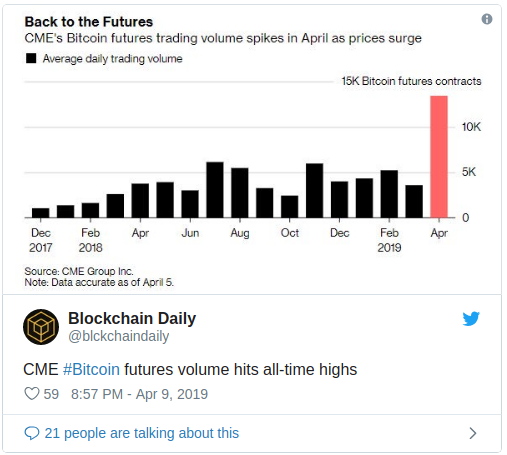
The price of bitcoin continued to plunge on Tuesday as it fell another 7% to $4,387, taking its losses to almost 30% in the past week.

A 14% tumble in the price of the world’s biggest and best-known cryptocurrency on Monday had taken bitcoin below $5,000 for the first time in 13 months. It is now at its lowest level since October last year.

Other cryptocurrencies have also declined in the past days.

Why central bank digital currencies will destroy bitcoin

Last December the cryptocurrency surged to an all-time high of $19,511 in highly volatile trading but fell back to $13,500 at the start of this year.

“The crypto bloodbath continues,” said Neil Wilson, the chief market analyst at Markets.com. “Things looks like they only get worse from here. Where is the incentive to buy? It does rather look like the bottom is coming out of this market.”

On Friday, the US Securities and Exchange Commission took action against two cryptocurrency startups that staged initial coin offerings, or ICOs, selling cryptocurrency tokens to the public. Airfox and Paragon Coin agreed to pay civil penalties for conducting token sales last year without registering them as securities offerings.

That sparked numerous warnings from central bankers and JP Morgan boss Jamie Dimon who declared in September 2017 that bitcoin was a fraud that would ultimately blow up.

However, this year bitcoin has become increasingly attractive to institutional investors. Fidelity Investments announced last month that it was launching a new company for institutional clients that will trade and store cryptocurrency assets. Fidelity said it wanted to make them more accessible to investors such as hedge funds, family offices and market intermediaries.

Central banks have also begun to discuss the idea of issuing their own digital currencies, as cash is used less and has nearly vanished in some countries, such as Sweden and China.


Nouriel Roubini

Alan Zibluk Markethive Founding Member
Bitcoin price latest update: Cryptocurrency value to INCREASE due to high US debt level

Bitcoin price latest update: Cryptocurrency value to INCREASE due to high US debt level

ShapeShift CEO Erik Voorhees has said cryptocurrencies will boom during the next global financial crisis. The finance expert at the global trading firm believes the high level of US debt will cripple the economy unless more money is printed. He argues this will lead to an increase in cryptocurrency investment.

He said: “When the next global financial crisis occurs, the world will realise organisations with $20trillion in debt can’t possibly ever pay it back.

“Thus must print it instead, and thus fiat is doomed.

“Watch what happens to crypto.”

US lawmakers keep increasing the country’s debt ceiling, allowing for the federal government to take on more and more debt.

His theory is the debt level of world economies is unsustainable and will put states under pressure the next time there is a financial crash.

As a result, he believes quantitive easing will have to come into force, the process whereby governments print money, to help pay off the money they owe.

The more money in circulation the less it is worth, meaning ordinary families could be set to see their savings decrease in value.

Mr Voorhees believes this in turn could lead to more people investing in cryptocurrencies.

However, digital currencies are also a financial risk for investors due to their history of extreme volatility.

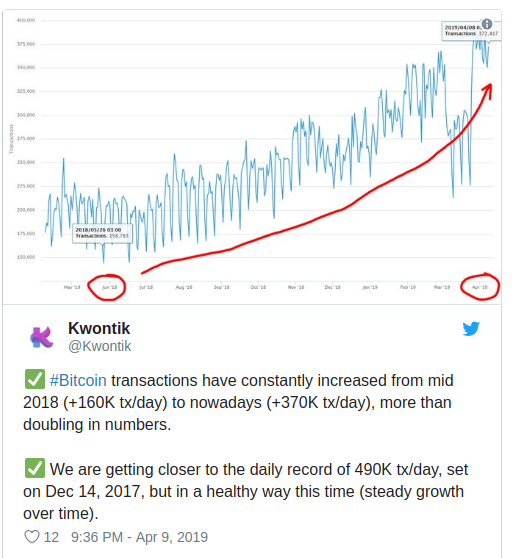
In 2017, Bitcoin’s value rocketed to more than double its value, reaching a high $19,783 in December.

However, it then plunged in 2018 to a low of less than $6,000 in June.

Since then the online money has stabilised and has seen no major rises or falls in its value.


City & Business | Finance

11/11/2018


Alan Zibluk Markethive Founding Member
Bitcoin BTC Long Term Price Forecast


Bitcoin (BTC) Long Term Price Forecast

BTC/USD Long-term Trend: Ranging

Resistance levels: $7,200, $7,400, $7,600

Support levels: $6,400, $6,200, $6,000
 

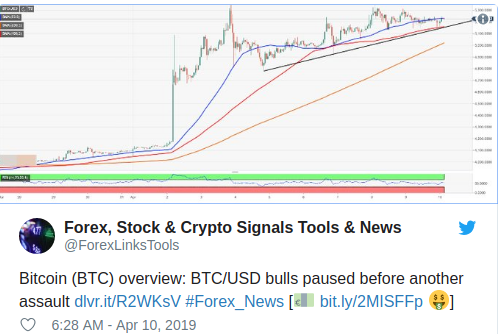
The price of Bitcoin was range bound in the first week of November 2018. In retrospect, the digital currency was ranging above the $6,400 price level all through the month of October 2018. The major bearish event is that on October 11, the bears went deep into the $6,200 price level. While on October 15, the bulls had a price spike that reached the high of $7,600 but price pulled back to the low of $6,500.

That was why we had a price ranging above the $6,400 price level. On November 7, the price reached a high of $6,565.66 but was resisted. The digital currency was in a downward trend after the resistance at $6,600 price level. The digital currency is likely to fall because price is in the bearish trend zone. Meanwhile, the price of Bitcoin is below the 12-day EMA and the 26-day EMA which indicates that a bearish trend is ongoing. The MACD line and the signal line are below the zero line which indicates a sell signal.


By Azeez M – November 10, 2018

Bitcoin (BTC) Long Term Price Forecast

Alan Zibluk Markethive Founding Member
Bitcoin holding strong resistance at 65006550

Bitcoin holding strong resistance at 6500/6550

Bitcoin holding strong resistance at 6500/6550


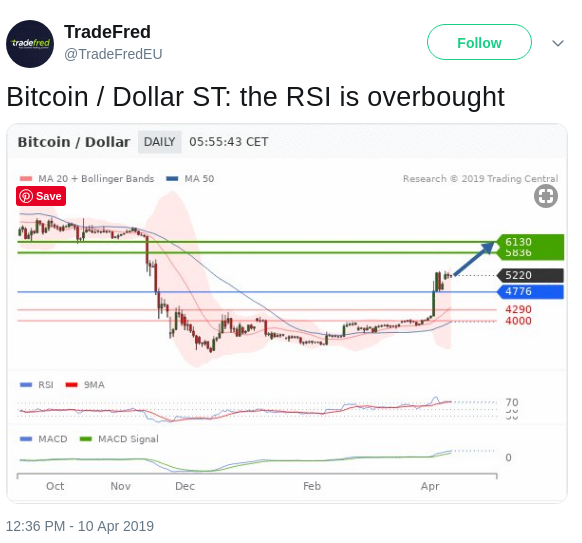
Bitcoin holding strong resistance at 6500/6550 keeps the outlook negative targeting 6400 (now hit). This is the best support for today & therefore a break below 6350 is a sell signal targeting 6320 & 6220/6200 (we bottomed exactly here last week) before the October low at 6100/6055. A break below 6000 is the next sell signal targeting 5900/5880 & the low for this year at 5780. This is NOT expected to hold for long in the bear trend.

Quite strong resistance at 6500/6550 (this trade worked perfectly) but shorts need stops above 6600. Bulls are only in control on a break above here. We then need a break above 6760 to target 6825 & strong resistance at 7000/7050.


Jason Sen

DayTradeIdeas.com | 05:16 GMT

Alan Zibluk Markethive Founding Member

Surcharge is NOT the same as Cash Discount

I’ve witnessed a recent spike in interest in cash discount programs. I’ve heard from our sales executives and partners that business owners increasingly are asking about cash discount programs. Google Trends data indicates that searches for “cash discount program” doubled in the second half of 2017.

This activity made me wonder, why the sudden interest in cash discounts? After all, cash discounts have been around for many years. It also made me curious about the interest in cash discount programs compared to convenience fees and surcharges, which have grown in recent years. Upon reflection, I came to realize that, when implemented properly, cash discount programs combine the most attractive elements of cash discounts and surcharges in a single program.

The topic of cash discounts and surcharges can make your head spin, as they are subject to many specific laws and rules. So, what is a cash discount and is it the same thing as a surcharge?

A cash discount is a reduced price paid by customers who use cash or check rather than a credit or debit card. A surcharge is an extra charge that applies to customers who pay with a credit card rather than other forms of payment, including debit cards, cash and check.

The payment networks such as Visa and MasterCard have specific rules for surcharges to comply with a settlement with the U.S. government in 2012. In addition, ten states prohibit surcharging.

Cash discounts are permitted according to U.S. law and Visa and MasterCard rules. One way of implementing a cash discount program is gaining popularity. Businesses post signs indicating that a service fee such as 3% will be added to all posted prices, but the fee will be waived for those who pay with cash or check. In other words, the fee will apply to purchases made via credit card, debit card and prepaid card – anything except cash or check.

The service fee can offset the costs of processing card payments, yielding significant cost savings for merchants. While surcharge programs are limited by rule to credit cards, cash discount programs have the advantage of offsetting the costs of debit card payments as well. Of course, they also motivate more customers to pay with cash and check. I believe this explains the recent interest in cash discount programs.

Is a cash discount program right for your business? That depends on many factors, as discussed in this blog post.

Chris Corey 

Swipe It Inc

(810)308-0872

Alan Zibluk Markethive Founding Member
Will Bitcoin cost 28000 by 2020? Vinny Lingham bets 20000 that it won’t

Will Bitcoin cost $28,000 by 2020? Vinny Lingham bets $20,000 that it won't

Will Bitcoin cost $28,000 by 2020? Vinny Lingham bets $20,000 that it won't

  • Vinny Lingham and Ronnie Moas bet on Bitcoin price movement.

  • BTC/USD resumes the decline during Asian hours.

The co-founder & CEO of the US-based startup Civic Vinny Lingham accepted the call from Ronnie Moas, the founder of investment company Standpoint Research, and bet $20,000 that Bitcoin price won't exceed $28,000 before December 31, 2019.

Moas believes that the demand for Bitcoin will be growing amid limited supply, which will lead to a substantial price increase up to $28,000 in 2019 and potentially to $50,000 by the end of 2020. Meanwhile, Lingham says that companies will have to sell their coins to cover expenses as mining and other cryptocurrency related activities are not that profitable anymore.

Whoever wins the bet, $20,000 will go to Free Ross charity, a group that provides a legal assistance to Silk Road creator Ross Ulbricht.

Meanwhile, Bitcoin dropped to $6,440 in Asia after an initial attempt to recover above $6,500. The most popular coin is changing hands at $6,444 with the Relative Strength Index pointing to further declines. The initial support lies with $6,400 with SMA200, 1-hour located right under that level. If it is cleared, the downside may be extended towards $6,300 congestion zone.


Tanya Abrosimova Tanya Abrosimova

FXStreet | 04:07 GMT

Alan Zibluk Markethive Founding Member

BTCC TO SHUT DOWN MINING POOL FOLLOWING BUSINESS ADJUSTMENTS’

BTCC TO SHUT DOWN MINING POOL FOLLOWING ‘BUSINESS ADJUSTMENTS'

BTCC TO SHUT DOWN MINING POOL FOLLOWING ‘BUSINESS ADJUSTMENTS’

The turbulent journey of the Bitcoin mining sector continues this week as BTCCPool announces it will close “indefinitely” November 30.


BTCC PULLS OUT OF MINING

The pool, which constitutes the mining arm of Hong Kong-based exchange BTCC (formerly BTCChina), began operating in 2014, yet rarely competed with giants such as Bitmain’s Antpool.

A statement confirmed the closure November 6, with officials remaining coy over the exact impetus behind the decision.

A rough translation reads:

Today, we regret to announce that due to business adjustments, the BTCC pool will shut down all mining servers on November 15 and will cease operations indefinitely from November 30.

The “adjustments” involved are not mentioned but come at a time when Bitcoin mining is a headache in terms of profitability due to long-term price suppression.

At the same time, the closure appears not to be an entirely permanent move, with BTCC hinting a return to the market could occur in future.

The statement concluded:

We firmly believe that the cryptoassets and the Blockchain industry represented by Bitcoin will continue to develop and improve.

[…] We will see you again!

MONEY STAYS IN MINING

In June, BTCC had stuck provisional plans to sell a 49 percent stake of BTCCPool to Value Convergence Holdings in a deal which would have raised around $18 million. No news has surfaced since the plans went public, and the status of the handover remains unknown.

Bitcoin mining’s household names meanwhile continue to see mixed fortunes.

While Bitmain grapples with mixed publicity over its financial health, BitFury today released details of a giant $80 million funding round from a basket of Asian and European investors.

Executive Vice President George Kikvadze said:

This private placement will take our corporate governance to the next level, broaden our financial strategic options, and ideally position us for our next phase of growth as the market matures […]

Like Bitmain, the company is rumored to be planning an IPO.


Wilma WooWILMA WOO | NOV 07, 2018 | 00:10

Alan Zibluk Markethive Founding Member