
What is happening to cryptocurrency valuations?

What is happening to cryptocurrency valuations?

    
The total market cap for all cryptocurrencies just surpassed $100 billion.

The vast majority of these gains have come in just the last few months — on April 1st the total market cap was just over $25 billion — representing a 300 percent increase in value in just over 60 days. While some of these gains are from bitcoin itself (BTC is up ~160 percent in the same two-month time frame), other digital currencies like Ethereum are also responsible for the increase, which on its own has increased ~439 percent over the last two months. There’s perhaps no better way to show this diversity in gains than by looking at a chart of bitcoin’s “dominance” — i.e. what percent of the entire cryptocurrency market cap is represented by bitcoin. For years this had always hovered around 80 percent, but in the last few months has fallen to below 50 percent — with currencies like Ethereum and Ripple taking its place.

Bubble talk? 

It’s hard to be an experienced investor, or even an at-home part-time trader, and not think of a massive bubble when you see that some asset has increased more than 400 percent in just a few months. It’s just how history works — when an asset rises that fast it’s a near certainty that it will come back down. Markets are irrational, after all. So don’t be surprised if there’s at least some type of correction. There already was, a few weeks ago — bitcoin pulled back from a high of $2,700 to around $2,000, but, as of today, has slowly climbed back up to a new all-time high of ~$2,850.

Latest Crunch Report

That being said, we may look back in 12 months and realize that this two-month period of insane growth was less of a bubble and more of a rebirth of cryptocurrencies as a whole. The fact that these gains have come from currencies other than bitcoin are a good sign that this is less of a bubble and more of a resurgence of interest in crypto. It makes sense that Ethereum is on a tear — the cryptocurrency has technological improvements over bitcoin, including the ability to code smart contracts directly into the blockchain, which in turn allow for things like the ability to build totally new tokens and even host ICOs

(initial coin offerings).

The public has never been able to put their money directly into a technology that has so much potential but is still developing.

And similarly, Ripple, a cryptocurrency based on inter-bank settlements, has signed up more than 100 banks worldwide. Even if this takes a while to implement (which anyone who works in the old-school banking industry will confirm), it’s still tangible news and a reason for people to get excited about the currency. These recent developments certainly don’t justify increases of 400 percent in 60 days. Both Ethereum and Ripple have been around for a lot longer than a few months. So if these were publicly traded companies, there would be (almost) no reason for drastic rise in value. But cryptocurrencies are new — most of the world has no idea what bitcoin is, let alone Ethereum and Ripple and other currencies. The public has never been able to put their money directly into a technology that has so much potential but is still developing.

For example, a technology enthusiast in the 1990s may have foreseen the rise of the internet, but had no way to directly take a stake in the technology. The idea of applying cryptography to the storage and transmission of data is still very new. And the fact that anyone can directly buy the currency that powers these cryptographically secured blockchains is much like the public actually getting a chance to invest in the internet during its infancy.

Impossible to value?

There is one rational explanation that, if true, would totally justify this rapid increase in price across some of the major cryptocurrencies. And that is, maybe these currencies are actually worth these high prices, and maybe even worth many times more than that at which they are currently trading. But the problem is we have no way to figure out their value. Cryptocurrencies aren’t public companies with earnings and expenses and EPS. For example, we can look at Apple’s financials and determine its book value — what the company’s assets would be worth if hypothetically liquidated today. Of course, stocks trade at a premium to this, because people are enthusiastic that Apple will continue to perform well and this book value will continue to rise.

But we can’t do this with cryptocurrencies. We could guess — and compare it to things like the total money or gold supply in the U.S. For example, if you’re someone who thinks of cryptocurrencies as a store of value, the total estimated value of all gold in the world is more than $8 trillion dollars… meaning if bitcoin would ever replace or supplant gold, its current value is pennies on the dollar. If you’re someone who thinks of cryptocurrencies as a genuine currency, you could compare the market cap to M2, which is the total money supply in the U.S. — cash and checking accounts, as well as “near-money” accounts like savings, mutual funds and money-market securities. The total value of M2 is about $13.5 trillion, also meaning cryptocurrencies are just a small fraction of that.

Be an informed “investor”

I’ve long cautioned readers (and friends) from buying cryptocurrencies because they have seen it rise and just want to make a quick buck. The past two months have led to a tremendous surge in public interest, with mainstream news like CNBC and CNN explaining how to “invest” in bitcoin and other cryptocurrencies. Just make sure you’re doing it for the right reasons. Buy cryptocurrency to learn about it and transact with it. Or buy it because you are betting that this new technology will change the world by:

  • Supplanting gold as the main store of value in the world
  • Transforming inter-bank settlements
  • Making international remittance affordable
  • Revolutionizing the fundraising and IPO process

These are just a few options, and if you’re in tune with the cryptocurrency world, you’ll know the opportunities are endless. So if you’re going to buy cryptocurrency, do it because you see the long-term vision (and sure, ostensibly the financial gains that may come from them), not because you think it will blindly appreciate and give you a good return on your “investment.”

Chuck Reynolds
Contributor
Please click either Link to Learn more about –
TCC-Bitcoin.

Alan Zibluk – Markethive Founding Member

Crypto Asset Fund looks to raise $400 million to buy into blockchain frenzy

Crypto Asset Fund looks to raise $400 million to buy into blockchain frenzy

Crypto Asset Fund looks to raise $400 million to buy into blockchain frenzy


Timothy Enneking started a cryptocurrency fund in 2014, when the market was almost exclusively bitcoin. That's no longer the case.

The 58-year-old money manager is now aiming to raise up to $400 million for the Crypto Asset Fund, a diversified pool of digital currencies and assets that he expects to be in the tens of millions of dollars by the end of this year. Enneking filed with the SEC on Monday.

With the soaring value of ethereum, Ripple XRP and NEM, the top 100 cryptocurrencies combined are now worth more than $98 billion, according to CoinMarketCap. Bitcoin accounts for 46 percent of the total. Enneking said just six to eight months ago, the total value was in the low teens and 85 to 95 percent was bitcoin.

"We can actually now apply much more sophisticated tools to a portfolio of investments," said Enneking, who started managing money in Russia in 2002 and is now based in San Diego. "I don't think the world has seen but the pointy end of the spear in terms of what's going to happen in cryptocurrencies."

Crypto Asset is a trading fund, so it's not for the buy-and-hold investor. Enneking said that the minimum investment for the fund is $25,000 and that most of the institutions that are approaching him have between $100 million and $2 billion under management.

What Is Blockchain

The craze around cryptocurrencies stems from growing adoption of blockchain, a distributed electronic ledger that makes all transactions trackable. Banks are using it for payments and back-office functions, while companies in digital music, ride-sharing and cybersecurity are starting to use blockchain for tracking, sharing or protecting assets.

It's still very early and speculators abound. Start-ups built on blockchain are creating their own crypto-tokens and selling them to investors and prospective customers in initial coin offerings (ICOs). Buyers can hold the tokens in the hopes of price appreciation or, in some cases, use them as currency in the company's ecosystem. For example, a cloud storage company called Storj sold tokens that customers can use to buy digital storage space.

Enneking said he participated in an ICO for INTCoin, which calls itself "a next-generation decentralized currency that takes advantage of blockchain capabilities for instant transactions with a minimum fee."

'Less regulation'

As for the Crypto Asset Fund's strategy, Enneking said he's broken the market up into six pieces, ranging from the "blue chips" valued at above $2 billion all the way down to the currencies with so little value that they don't trade. There are currently four cryptocurrencies that fall into the blue chips category — bitcoin, ethereum, XRP and NEM — and another 22 in his large-cap group with coins outstanding valued at $200 million or more, according to CoinMarketCap.

Enneking spends much of his time educating investors about the market and trying to get them comfortable with the idea that crypto is just like any other asset, except it's moving much more quickly and the regulators have yet to become a presence.

That's a big part of the risk.

"It's not nearly as different as the average fiat investor thinks it is," Enneking said. "It's better, faster and with less regulation, which isn't always good."

Ari Levy

Senior Tech Reporter CNBC


If you do not have $25,000 to invest, you could go to Trade Coin Club where minimum starting investment is 0.35 Bitcoin

David Ogden
Entrepreneur


Alan Zibluk – Markethive Founding Member

Cryptocurrency Investment Manager Seeks $400 Million for New Fund

Cryptocurrency investment manager Tim Enneking is seeking to raise as much as $400m for a new fund.

cryptocurrency new fund for investment

New filings from the US Securities and Exchange Commission reveal that Enneking is launching the "Crypto Asset Fund", registered in the state of Delaware. CNBC first reported the news. According to that filing, no equity sales in the fund have been made. The minimum amount required by outside investors to gain a stake is $5,000, the filing notes.

Enneking told CNBC that the fund will be aimed at investing in a broader subset of digital currencies and blockchain assets. He also said that, as it stands, he has been fielding interest from institutional investors looking to gain a stake in the market.

If you believe that my message is worth spreading, please use the share buttons if they show on this page.

Stephen Hodgkiss
Chief Engineer at MarketHive

markethive.com


Alan Zibluk – Markethive Founding Member
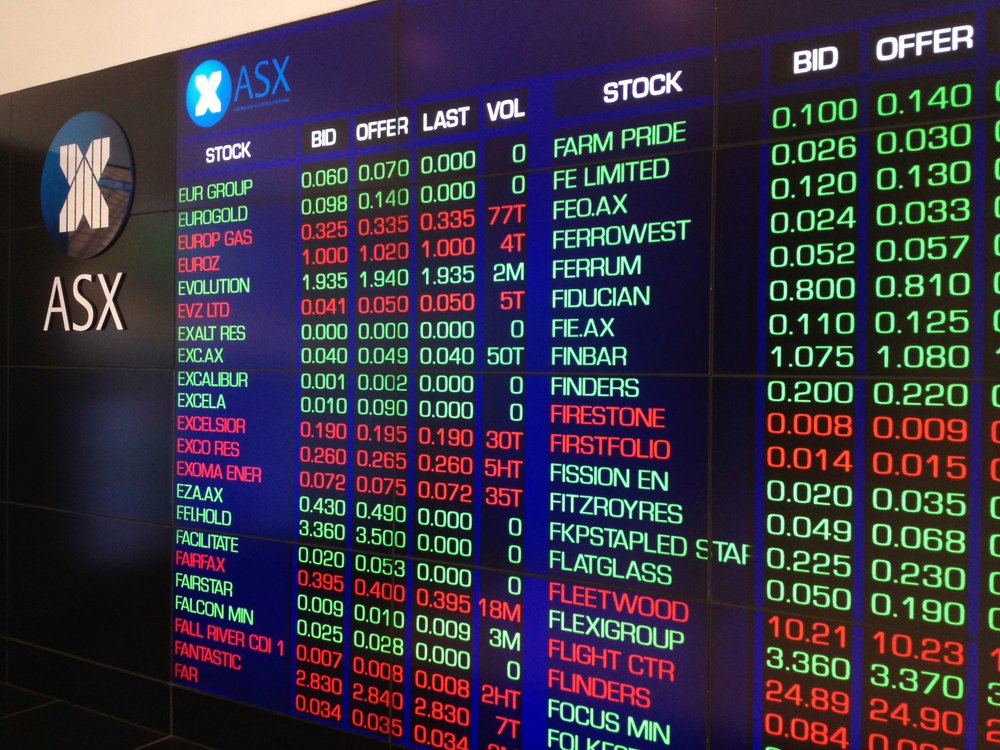
Why Buy This Expensive Bitcoin ETF Instead of Actual Bitcoin?


If you're interested in getting invested in the digital currency world,

now seems to be as good a time as ever. Bitcoin has seen repeated record-setting price levels, and a host of other digital currencies are becoming increasingly popular around the globe. And yet, there are some reasons why even seasoned investors may be reluctant to get involved in direct investments relating to cryptocurrencies. Fortunately for those people, there is an exchange-traded fund focusing on Bitcoin in particular that can simplify the process. It is called the Bitcoin Investment Trust (GBTC) and it is provided by Grayscale Investments. Here are some of the basic details about the new ETF and its relationship to the digital currency itself.

Significant Returns Possible, But Are They Likely?

The Bitcoin Investment Trust sported a tremendous 248% increase in the month of May. This far surpasses the gains of 72% overall for the Bitcoin-U.S. dollar currency cross. With that figure in mind, investors may be jumping to get access to GBTC shares. However, there are other factors to consider as well. First, May's performance seems to be a relative anomaly for the ETF. For the three months prior to May, Bitcoin performance superseded ETF performance two months. This suggests that the two are actually more neck-and-neck than May's figure would suggest. Second, investors looking to buy into GBTC should keep in mind that the shares of the ETF are currently trading at more than double the cost of Bitcoin itself, according to a report by Business Insider.

Why the Huge Premium for GBTC?

Potential investors are likely wondering why GBTC shares can be found at such a high premium over Bitcoin. The issue seems to lie in supply and demand. While Bitcoin demand has skyrocketed, GBTC has kept its shares outstanding close to 1.7 million in the two years that it has existed. In fact, the ETF seems unlikely to change the number of total outstanding shares in the future, according to the company's head of research, Ihor Dusaniwsky. He explains that "with the operational risk of buying and holding actual Bitcoins to support ETF creation very high, and difficult and expensive to insure, it is unlikely that GBTC's outstanding share amount will climb above 1.7 million anytime soon."

It is useful to note that GBTC didn't always seem this expensive in comparison with Bitcoin. Before Bitcoin's price spiked in the past several weeks, the ETF traded on an average premium of just 10% above the cryptocurrency in 2017. The issue seems to have come about when Bitcoin's demand blew up and GBTC's supply did not change. As Bitcoin continues to spread further into the financial world, it will be interesting to see where GBTC's share prices go as well.

Chuck Reynolds
Contributor
Please click either Link to Learn more about – TCC-Bitcoin.

Alan Zibluk – Markethive Founding Member

How to Buy Bitcoin

How to Buy Bitcoin

When it comes to some exotic investments like bitcoins, investors not only need to consider the worthiness of the investment, but how to even buy the digital currency in the first place.


Bitcoin is a digital cryptocurrency with no intermediaries or banks necessary

to conduct transactions. It was designed as open-source software in 2009 by an individual or group known only as Satoshi Nakamoto with the intention to minimize transaction costs and deregulate currency. The cost of a bitcoin has skyrocketed this year. When the calendar rolled over to 2017, a price of one bitcoin was just a shade under $1,000. As I write, the price of bitcoin has more than doubled to slightly more than $2,500.

This huge increase in price has led some investors to not only some to wonder if they should invest in bitcoin, but even how to invest in bitcoin in the first place. After all, it's not like they can purchase a bitcoin at their brokerage or bank. Heck, one can't even buy a bitcoin at Amazon.com, and Amazon sells everything! With this question in mind, let's look at some different ways investors can buy bitcoins or otherwise gain exposure to this unique asset class. (If you're still a little confused about what exactly a bitcoin is, here is an excellent primer on the unregulated virtual currency by fellow Fool Matthew Frankel).

What's in your (bitcoin) wallet?

The most popular way to buy bitcoins is through bitcoin wallets, digital wallets for the exclusive use of bitcoins. There are many different types of bitcoin-based wallets and you need to be very careful to choose something that will best meet your needs. Some bitcoin wallets are device-specific, while others are web-based.

Coinbase is one of the most popular digital wallets used to purchase bitcoins. As with almost any of these wallets, customers must sign up for an account online and then link a bank account. If they just want to buy, a valid credit card number will do. Coinbase accepts Mastercard and Visa. Before any bitcoin transaction, Coinbase shows users the current value of the digital currency in U.S. dollars. When making a withdrawal from a Coinbase account, account holders can choose to have the funds go to either a linked bank or PayPal account.

Since third-party cryptocurrency wallets have been famously known to be hacked resulting in a permanent loss of funds, investors must be careful to properly secure their bitcoin wallets. Remember, bitcoins are not stored in FDIC-insured accounts and most third parties do not offer insurance in case of theft or fraud. How bad is this problem? Last August, Reuters reported that a full third of bitcoin exchanges had been breached.

Security is vitally important in keeping bitcoin accounts safe. Back-ups are critical in cases of computer crashes or stolen wallets. Wallets must be encrypted so anyone withdrawing bitcoins from your account must know a password. Many wallets offer two-factor authentication, where a unique code is texted or emailed to you before withdrawals can be made. Bitcoin passwords are also critical as, unlike bank accounts, there is no customer service line to reset your password. Bitcoin.org recommends either memorizing the password or writing it down and storing it in a safe place.

Alternative ways to purchase bitcoins

There are other ways to purchase bitcoins; some more exotic than others. Bitcoin Depot, in conjunction with the bitcoin wallet Airbitz, allows users to buy bitcoins with cash at dozens of special ATM locations spread across six states: Alabama, Florida, Georgia, Massachusetts, Tennessee, and Texas. After setting up an account, all customers need to do is deposit cash in the ATM and scan a QR code with a special scanner attached to the ATM and, within minutes, the purchased bitcoins will be available in the Airbitz account.

The bitcoin-based ETF

The most convenient way to gain exposure to bitcoins is through the Bitcoin Investment Trust (NASDAQOTH:GBTC). This fund was created so that buying bitcoins could be as easy as buying any stock or ETF share. All people have to do is buy shares through their regular broker using the ticker symbol. Each share represents about one-tenth of a bitcoin. But, as fellow Fool Jordan Wathen recently pointed out, this convenience comes at a steep cost. According to his calculations, a share costs about 105% more than the value of the underlying bitcoin. Yikes! As with any security, one should do their due diligence before buying bitcoins. Not only on its worthiness as an investment, but on the right exchange platform that best meets your security and convenience needs.

Mark Cuban predicts this will make someone a trillion dollars

Shark Tank's Mark Cuban recently predicted that an emerging tech trend would make someone $1 trillion. That lucky future trillionaire is just the beginning — and the trend itself could be worth as much as $19.9 trillion. Fortunately, this hasn’t yet gone mainstream — most people haven’t recognized the scale of opportunity here. We believe that one market expert has the right answer for investors looking to get in early — and potentially win big.

Chuck Reynolds
Contributor
Please click either Link to Learn more about –
TCC-Bitcoin.

Alan Zibluk – Markethive Founding Member

AMD shares are surging with bitcoin because digital currency ‘miners’ need its graphics cards

AMD shares are surging with bitcoin because digital currency 'miners' need its graphics cards

  • AMD told CNBC on Monday the "newly resurgent cryptocurrency mining markets" are driving demand for its graphics cards.
  • Computer hardware retailers are sold out of most AMD RX 570 and RX 580 graphics card models, according to NowInStock.


AMD shares rose as much as 7 percent

Tuesday after the company revealed the dramatic jump in digital currency prices is driving demand for its graphics cards. The stock was the top performer in the S&P 500 on the day. "The gaming market remains our priority. We are seeing solid demand for our Polaris-based offerings in the gaming and newly resurgent cryptocurrency mining markets based on the strong performance we are delivering," an AMD spokesperson wrote in an email to CNBC late Monday.

Ethereum cryptocurrency is up over 2,900 percent year-to-date through Tuesday morning, while bitcoin is up nearly 200 percent this year, according to data from industry website CoinDesk. The digital currency jumped more than 8 percent at one point Tuesday to a record nearing $3,000. AMD is one of the market's best performing stocks in the past year with its shares up nearly 170 percent in the past 12 months through Tuesday morning compared with the S&P 500's 15 percent return.

Cryptocurrency miners use graphics cards from AMD and Nvidia to "mine" new coins, which can then be sold or held for future appreciation. AMD traditionally has a better reputation for mining cryptocurrencies. Computer hardware retailers are sold out of most AMD RX 570 and RX 580 graphics card models, according to NowInStock. AMD launched the RX 500 series of graphics cards on April 18. The strong demand is spreading to older graphics cards as well. Used AMD RX 470 graphics cards are selling for well over $100 list price on eBay.

Chuck Reynolds
Contributor
Please click either Link to Learn more about –
TCC-Bitcoin.

Alan Zibluk – Markethive Founding Member

BitCart Ditches Bitcoin For Dash, User Uptake “Soars”

BitCart Ditches Bitcoin For Dash,
User Uptake “Soars”


Discount gift card supplier BitCart

has taken the unusual step of abandoning Bitcoin in favor of Dash payment, with demand “soaring” as a result.

BitCart, an Irish startup competing with the likes of Gyft, now only offers customers the option of paying for their Amazon gift cards with Dash. The cards, purchased at a discount, effectively give holders a 15 percent saving on Amazon products. The scheme will shortly expand to include hotels.com. “From a merchant’s point of view, bitcoin is extremely problematic,” CEO Graham de Barra said in a press release about the move.

“Bitcoin as a method of payment on BitCart is simply not sustainable and it's a nightmare from a merchant point of view; every twenty or so transactions the platform would stop working and we would have to reintegrate the API.” Dash has meanwhile managed to keep its value in the face of rising and falling altcoin markets, while Bitcoin’s network woes are compounded by an influx of new users. “Since we integrated Dash six weeks ago, we haven't had a single problem. Dash is so easy to use from both a consumer and merchant perspective and since we disabled bitcoin, demand for BitCart has gone through the roof,” de Barra continued.

Chuck Reynolds
Contributor
Please click either Link to Learn more about –
TCC-Bitcoin.

Alan Zibluk – Markethive Founding Member

GAW Miners Creator Josh Garza Fined $12 mln For “Ponzi Scheme”

GAW Miners Creator Josh Garza Fined $12 mln For “Ponzi Scheme”


Former GAW Miners creator Josh Garza faces a $12 mln fine

for running what lawmakers have certified was a “Ponzi scheme.” Garza, who was charged with securities fraud in 2015 and is also facing separate criminal proceedings for running the fraudulent mining operation, received a final judgment from the US Securities and Exchange Commission (SEC) on June 2. “According to the SEC's complaint, GAW Miners and ZenMiner did not own enough computing power for the mining they promised to conduct, so most investors paid for a share of computing power that never existed,” the official filing reads. “Returns allegedly paid to some investors came from proceeds generated from sales to other investors.”

GAW Miners and sister scheme Paycoin attracted widespread accusations while it was active during 2014, despite Garza’s persistent efforts to denounce what he considered defamatory propaganda on the part of users, commentators and the media. A ruling is yet to be made on what should happen to the Bitcoin funds collected by Garza and his associates, with the virtual currency’s price having markedly increased in the intervening period. The penalty specifically takes the form of “$10,384,099 in disgorgement and prejudgment interest. The final judgment also requires each entity to pay a civil penalty of $1,000,000.”

Chuck Reynolds
Contributor
Please click either Link to Learn more about –
TCC-Bitcoin.

Alan Zibluk – Markethive Founding Member
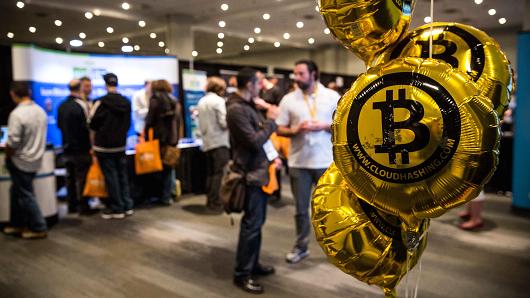
The new cryptocurrency gold rush: digital tokens that raise millions in minutes

The new cryptocurrency gold rush: digital tokens that raise millions in minutes

The new cryptocurrency gold rush: digital tokens that raise millions in minutes


New York City

About a dozen rain-soaked people were crammed between the revolving doors and security barriers in the lobby of New York University’s Stern School of Business as torrents pelted down outside. All desperately wanted in to the hottest ticket in town, one that promised to make some of them overnight millionaires, if not billionaires. Among them was Dan Morehead, a former Wall Street titan turned bitcoin investor, and a dentist working on a blockchain startup who had flown in from Seoul.

“I don’t really care that you overbooked, it’s not my problem! I don’t care about a refund,” one agitated man seeking entry barked at two T-shirt clad twentysomethings on the other side, one of them clutching a clipboard.

“You can be upset and raise your voice, but we can’t change anything,” one of the gatekeepers replied.

“We have three clients down there!” another man interjected.

The clipboard holder dutifully scribbled down names. When it was my turn, she said NYU wanted to clear out the huddled mass blocking the building’s entrance: “The auditorium holds like 470 people. We have more than 500 people down there right now. NYU is calling security.”

Inside, a conference called “Token Summit” was in full swing. The event was the first to focus on a rapidly snowballing phenomenon called cryptocurrency token offerings—a new fundraising method that allows companies to raise millions of dollars in mere minutes.

The cryptocurrency world has gone mad for token offerings. These launches, popularly known as ICOs or initial coin offerings, have already raised more than $150 million this year, according to research firm Smith + Crown. They are seen as a disruptive new mechanism that could displace traditional venture capitalists from the fund raising process—a view that’s been endorsed by a coterie of brand name VCs themselves—and remake the internet’s business model with decentralized applications and cryptocurrencies. Take an outfit known as Gnosis, a decentralized prediction market, which raised $12 million in under 15 minutes, valuing it at $300 million. Investors had invested based solely on a PDF prepared by its founders (recently a firm called Brave raised $35 million in 30 seconds).

As cryptocurrency prices exploded, ICO fever gripped the over 2,700 blockchain tech enthusiasts who descended on New York in late May for a series of back-to-back industry conferences. Rumors flew about the fortunes being made, as the cryptocurrency ethereum climbed from $127 per unit of ether at the start of the week to $228 by Thursday. The head of an ethereum app development shop was said to hold 6 million ether, meaning he went from being a mere millionaire on Monday to an ether billionaire, holding $1.4 billion worth of the stuff, three days later. “Out of the 2,700 attendees there were at least 500 millionaires, and between zero to five billionaires,” said one longtime observer of the cryptocurrency scene, who wanted to remain anonymous.

Why are tokens a big deal?

The oracles of Silicon Valley say token offerings could reinvent the “freemium” business model of the internet, upending the huge centralized services—think of Facebook or Google—that have emerged. Instead of enticing users with free services, paid for by venture capital, and then eventually turning a profit by showing ads to those users, tokens offer a direct channel for capital to flow between user and the technologist.

The user would pay for a token upfront, providing funds for coders to develop the promised technology. If the technology works as advertised and gains popularity, it should attract more users, thus increasing demand for the token offered at the start. As the token value increases, those early users who bought tokens will benefit from appreciating token prices. Each token offering has different rules around the total supply of tokens and when they are released.

“This is a ‘better-than-free’ business model, where users make money for being early adopters,” write Balaji Srinivasan and Naval Ravikant, a partner at venture firm Andreessen Horowitz and the founder of investing platform AngelList, respectively. Ravikant has launched a platform called CoinList that will help accredited investors put money into token launches.

Token offerings could also correct an imbalance in the way financial rewards are distributed among technologists. Historically, the people who develop foundational technologies, such as protocols, have watched from the sidelines as others—firms that build the applications running atop those protocols—reap the riches. The Google search engine, for instance, is an application that trawls the world wide web, which is made up of a collection of open-source protocols. Yet it’s Google’s founders who are billionaires and not Tim Berners-Lee, who came up with the protocols that made not just Google, but the entire web, possible.

Cryptotokens could change that because protocol creators now have a way to be rewarded for the success of their technology, without having to create a hit application on top of it. “With tokens … the creators of a protocol can ‘monetize’ it directly and will in fact benefit more as others build businesses on top of that protocol,” writes Albert Wenger, a partner at Union Square Ventures.

This is the argument behind the “fat protocol” investment thesis: the protocols of the past were “thin” and unable to accrue financial value. The application layer resting atop those protocols were the ones to reap the rewards. But cryptotokens could enable the protocols of today to become “fat”—creating more wealth and value than even the enormously successful applications of the past. “These new ‘fat protocols’ may eventually create and capture more value than the last generation of Internet companies,” Srinivasan and Ravikant write.

Venture firms who subscribe to this theory have wasted no time putting their money where their mouths are. This is why firms like Union Square Ventures and Andreessen Horowitz have backed funds like Polychain Capital, which invest exclusively in token offerings. While the tokens are being raised for digital services at the moment—things like storage, identity management, or chat room stickers—one can imagine them being used for offline products and services someday in the future, too.

Nor are tokens limited to new projects. The chat platform Kik, with 15 million monthly active users, launched its own token last week at the conference, in the hopes of seeding an “economy built around chat (pdf).” In practice this means Kik users can earn and spend on special stickers, images, or even entry to celebrity chat rooms using the chat app’s Kin token. Unlike traditional loyalty points issued by a merchant, however, the Kin tokens are decentralized because they are issued on top of ethereum (more on that below). The Kin digital currency could exist even if the chat app vanished after issuance—although it probably wouldn’t be used very much and would be worth little.

What are tokens, exactly?

At this stage, an explainer on what tokens are, exactly, is helpful. You can think of a token offering as a hybrid between a Kickstarter campaign and a stock market flotation. On one hand, the launch lets customers reserve a product or service before it’s completed and ready for the market—that’s the Kickstarter part. On the other hand, it also gives those customers a stake in the future of that product or service; if the service gains in popularity, the token should rise in price, enriching the original users, making it a lot like getting in on a hot IPO. However, one of those analogies puts token issuers squarely in the sights of securities regulators, so the distinction is crucial. More on that later when we discuss the legal gray area that tokens occupy.

Like the rest of the cryptocurrency industry, token offerings rely on a basic circular logic: A token has as much value as its users bestow on it, just as bitcoin rises in price so long as demand outstrips supply. But token boosters say their units of digital currency are different from bitcoin in one critical respect: they are programmable, and have been coded to perform various useful functions.

Tokens issued today are built atop ethereum, the second most valuable cryptocurrency on the market. Ethereum is like bitcoin because it is a tradable digital currency, which is called ether. It’s unlike bitcoin because it was designed with its own programming language—a significant departure from, and its creators say, an upgrade over, bitcoin. This language allows people to write “smart contracts” or automatically executed agreements on ethereum. A bond, for instance, might automatically pay out its coupon, without the need for an intermediary or paperwork.

It turns out that ethereum’s programming language is powerful enough that coders can write smart contracts that issue new units of digital currency, bound by their own rules. This is what the tokens offered today are: a series of complicated ethereum smart contracts. The ethereum network itself is being used as a giant token-issuing machine. “Right now ethereum is a token factory,” says Muneeb Ali, co-founder of Blockstack, a startup working on building tools for a decentralized internet.

The circularity of cryptocurrency economics is at play again here: Ethereum itself raised capital from its users by offering ether tokens in 2014, raising $18 million. The ethereum protocol then became a staging ground for experiments in token funding: A vehicle called the Decentralized Autonomous Organization managed to raise $150 million on the promise that it would be a new form of business structure, one that automated away managers using a combination of smart contracts and tokens. It was promptly hacked for millions and flamed out spectacularly.

An ethereum-based token is to ether as a concert ticket is to a US dollar, Peter Van Valkenburgh, director of research at the Coin Center think tank, suggests. “In the real world we often use all sorts of items rather like we use cash,” he writes. “We use tickets, coupons … and a variety of bearer instruments because they entitle the holder to different things.” These customized tokens can be traded on secondary markets, like exchanges, and have their own value, independent of the price of ether.

Orange groves and securities law

While the potential of token launches remains vague, though powerful, almost everyone I spoke to at the New York conferences agreed on one thing: The US government would crack down on the offerings eventually. No one seems to think the good times for ICOs will last.

The legality of tokens hinges on something called the “Howey test,” named after a Florida company in the 1940s that tried to raise capital by selling contracts against its citrus groves—a practice that the US Supreme Court ruled was similar to a stock offering. At the Consensus conference, the debate about whether or not ICOs were like citrus grove contracts was captured by an exchange between Van Valkenburg, who argued that tokens are like products and not securities, and Preston Bryne, a lawyer and founder of a blockchain company called Monax.

“It’s like buying gold … it’s not like buying a security in a gold mine,” said Van Valkenburg. Responded Bryne, “This is complete nonsense. Everybody knows what this is. It’s, in substance and form, the sale of investments that people are purchasing with expectation of profit at a later date.”

Of course, what really matters is the regulator’s opinion. The US Securities and Exchange Commission hasn’t weighed in on the matter yet. But an SEC official who spoke at the Consensus conference, Valerie Szczepanik, who heads its unit looking at blockchain tech, sounded a note of caution, according to Reuters: “Whether or not you are regulated by the SEC, you still have fiduciary duties to your investors. If you want this industry to flourish, protection of investors should be at the forefront.”

Token boosters await official intervention with a mixture of trepidation and relief. Take Stan Miroshnik, who was a veteran investment banker with Morgan Stanley in London. He now runs a firm called Argon that corrals big investors—like cryptocurrency “whales,” adventurous family offices, and hedge funds—into token launches to ensure they’re sold out.

When a group of coders wants to raise money for their project, Miroshnik hits Slack teams, Telegram groups, and gets press in the cryptocurrency trade media to rustle up business. “Having seen the technology boom in the 90s, this is just another emerging capital market,” he says. “It needs institutional grade providers like ourselves who come out of traditional investment banks. One day Fidelity is going to show up and say, ‘I want $4 billion of that token, help me buy it.’ You need someone who can, frankly, speak their language.”

For Miroshnik, the sooner the SEC steps in, the better. “I welcome it,” he says. “It would be helpful to figure out where the boundaries are.”

WRITTEN BY
Joon Ian Wong

David Ogden
Entrepreneur


Alan Zibluk – Markethive Founding Member

Look Mom I have a Blog