Tag Archives: DigitalMarketing

Markethive Sitemaker: The Comprehensive Platform for Next-Generation Web and Landing Page Creation

Markethive Sitemaker: The Comprehensive Platform for Next-Generation Web and Landing Page Creation

The modern digital environment demands precision and efficiency, making highly targeted, conversion-focused web assets crucial. In such a setting, optimized landing pages are not just optional but are a vital cornerstone of any successful digital marketing plan. These pages serve as a clear, focused entry point, carefully crafted to guide potential customers and leads to a specific product, key service, or important call to action. Their dedicated focus reduces distractions and increases the chances of conversion.

Markethive recognizes the importance of providing easy-to-use, sophisticated web asset creation tools. To fill this market gap, it introduces Sitemaker, a powerful, visually driven platform designed for comprehensive marketing and intuitive website building. This cutting-edge platform enables a variety of users, including independent marketers, entrepreneurs, and businesses of all sizes, to quickly design, deploy, and manage essential conversion-focused assets effectively. 

Sitemaker promises to deliver this capability with an unprecedented combination of ease of use, sophisticated functionality, and powerful visual control. Its design philosophy centers on reducing the technical complexity often associated with web development, making it intuitive so users can focus purely on marketing strategy and conversion optimization.

Unpacking the Core Features and Capabilities of Sitemaker

Markethive Sitemaker isn't just a basic drag-and-drop website builder; it's a comprehensive, all-in-one digital publishing platform. Designed to go beyond simple page creation, it provides an extensive suite of integrated tools for various publishing needs, sophisticated community-driven conversion optimization, and seamless business integration. It combines website design, social networking feedback, and decentralized finance into a single, powerful platform.

1. Flexible Content Deployment & Asset Utilization:

The platform is designed to accommodate a full spectrum of publishing requirements, from simple, effective campaigns to complex, multi-page corporate presences.

  • Complete Professional Website Management: Users can create, host, and maintain fully professional, multi-page websites directly within the highly intuitive Sitemaker environment. This includes full site navigation, robust linking, and organized content structures.
  • High-Converting Landing Pages (Funnels): Sitemaker excels at developing hyper-focused, single-purpose pages. These are specifically engineered with a marketing mindset to maximize effective lead capture, drive direct sales conversions, and serve as crucial components in a high-performance marketing funnel.
  • Seamless WordPress Integration via Dedicated Plugin: Recognizing the ubiquity of WordPress, Sitemaker offers a dedicated plugin. This critical feature allows existing WordPress users to seamlessly incorporate Sitemaker’s powerful, high-converting designs, widgets, and advanced marketing tools directly into their current WordPress ecosystem without migrating their entire site.

2. Robust Branding and Domain Management:

Maintaining a consistent, professional online identity is critical, and Sitemaker provides the tools to ensure complete brand control.

  • Custom Domain Connection and SEO Benefits: Users can easily link and manage their own purchased custom domain (e.g., https://www.yourcompany.com). This ensures consistent, professional branding across their entire web presence and provides essential SEO and trust-building benefits.
  • Markethive Subdomain Option for Rapid Deployment: For rapid testing, initial launches, or users who prefer a minimal setup, Sitemaker offers a complimentary Markethive subdomain (e.g., yourpage.markethive.com), enabling instant page deployment.

3. Revolutionary A/B Testing Powered by Social Engagement and DeFi:

Sitemaker introduces a community-driven, statistically sophisticated optimization process that far surpasses traditional, passive traffic-based split testing.

  • Social Polling and Immediate Community Feedback: Different page designs (A and B versions) are not just sent into the void. They can be presented to the engaged, diverse Markethive social community for immediate, qualitative input on design, copy effectiveness, and user experience.
  • Hivecoin Incentives and Decentralized Feedback: The community is incentivized to participate in this optimization process using Hivecoin (HVC), Markethive's native cryptocurrency. Users are paid to vote on and provide qualitative feedback. This unique method delivers rapid, statistically relevant insights on design and user experience before the page is deployed to the public, significantly shortening the optimization cycle and boosting conversion rates from day one.

4. Sophisticated Marketing Element Toolset:

Users gain access to advanced, reusable tools designed to maximize marketing efficiency and consistency.

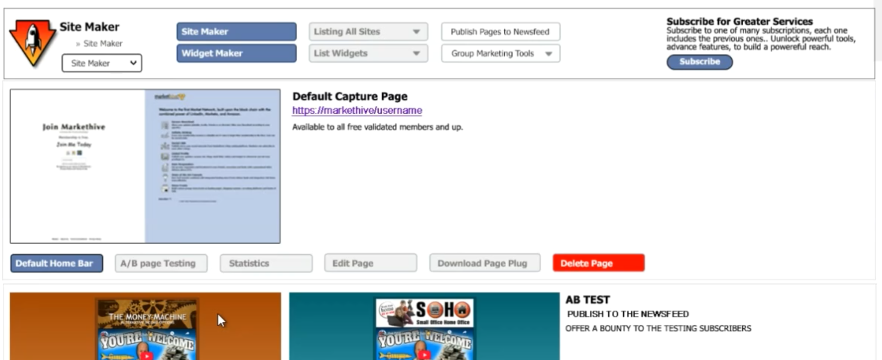
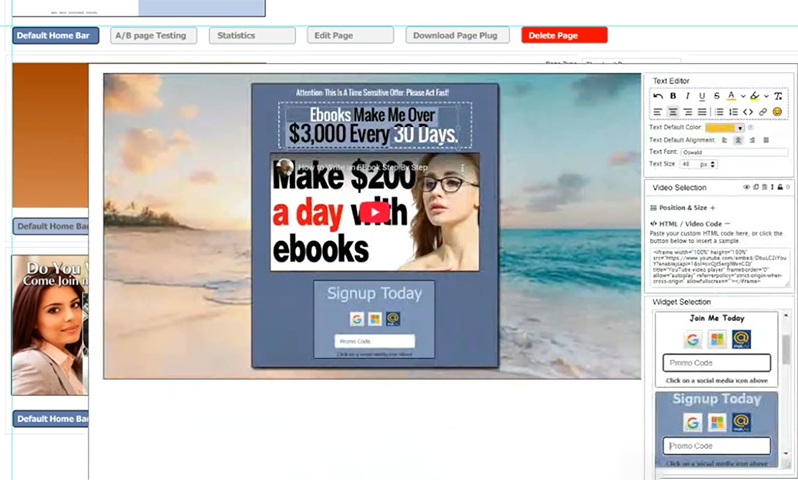
  • Widget Maker for Dynamic and Consistent Content: This tool enables users to create and customize reusable content blocks (widgets). These widgets can be dynamic, displaying unique Promo Codes and updated information across all pages simultaneously, ensuring content consistency and reducing manual updates on complex websites.
  • Group Marketing Tools for Scaled Collaboration: Sitemaker includes specialized features to facilitate team collaboration, campaign asset sharing, and centralized management. This is highly beneficial for marketing teams, organizations, and large enterprises utilizing Markethive's specialized supergroups feature.

5. Fully Integrated E-commerce Solutions:

The Markethive Sitemaker simplifies turning web pages into effective sales and transactional platforms.

  • Direct E-commerce Incorporation: Users can effortlessly integrate product listings, detailed shopping cart functionalities, and secure checkout processes directly onto any website or landing page they create.
  • 3rd-Party E-commerce Integration (Shopify, etc.): For existing online retailers, Sitemaker offers direct synchronization with popular platforms like Shopify. This allows merchants to leverage Sitemaker's advanced, high-converting page designs for product promotion while maintaining their existing inventory and sales infrastructure.

6. Streamlined Analytics and Workflow Efficiency:

The system is designed to provide maximum efficiency for the professional marketer, minimizing friction and maximizing focus.

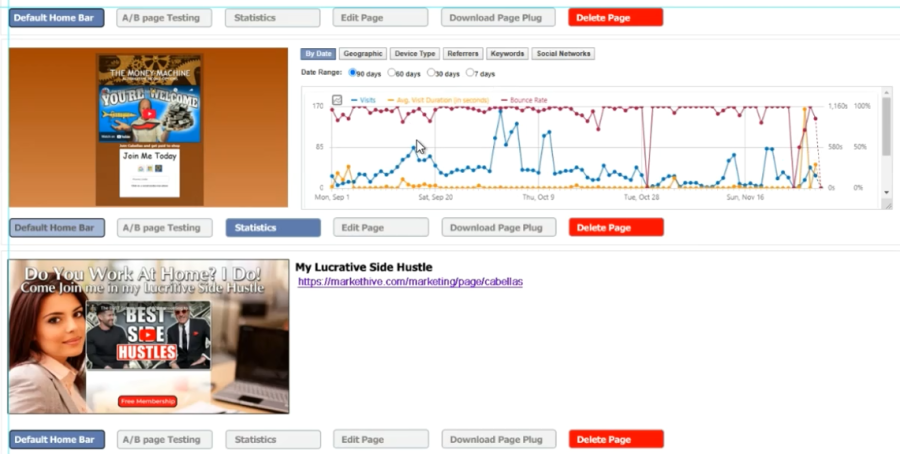
  • Thumbnail Page Statistics for Rapid Assessment: Key performance metrics, including traffic volume, conversion rates, and bounce rate, are conveniently visible directly on the page's thumbnail preview within the dashboard. This allows for an immediate, high-level performance assessment without diving into complex analytics reports.
  • Efficient Non-Disruptive Pop-up Editing: All configuration, settings, and advanced edits are managed in a dedicated, non-disruptive pop-up window. This ensures a smooth, focused editing experience, preventing the user from needing to leave the main dashboard or reload pages frequently.

7. Flexible and Accessible Subscription Model:

Markethive Sitemaker is designed for broad adoption with accessibility in mind, offering a tiered subscription system that includes a free plan. 

  • Robust Free Tier: Removes financial barriers for individuals, startups, and small businesses by providing access to core features, including basic tools and thumbnails, enabling them to launch campaigns and build an online presence.
  • Tier 1 Upgrade: Grants access to landing page creation.
  • Tier 2 Upgrade: Adds hosting services and WordPress integration.
  • Tier 3 Upgrade: Allows hosting on a custom domain and subdomains.
  • The top-tier upgrade integrates powerful AI tools directly into Sitemaker, supporting key tasks such as content creation, intelligent design suggestions, automated video production, and data-driven insights for conversion rate optimization. This integration helps streamline and speed up the entire process of creating and deploying projects.

Markethive Sitemaker: For Digital Asset Management and Business Growth

Sitemaker is more than a website builder; it is a revolutionary, all-encompassing digital ecosystem designed to give users maximum flexibility, professional control, and strategic control over their entire portfolio of web assets. It enables seamless publication, agile deployment, and optimal use of digital content across the multifaceted digital landscape, ensuring a cohesive, powerful online presence.

Engineered from the ground up to serve as the central hub of a complete online business operation, Sitemaker provides the mission-critical integration points essential to modern commerce. This includes robust solutions for sales funnel management, sophisticated analytics and reporting, and core technology infrastructure built for enduring relevance in the rapidly evolving digital future.

What truly distinguishes Sitemaker from conventional platforms is its advanced, proprietary marketing and optimization toolkit. This powerful suite of tools gives users a significant, quantifiable competitive edge, particularly in the critical area of conversion optimization. This superior performance is achieved by seamlessly harnessing the powerful social and economic ecosystem of Markethive. By embedding assets directly within this dynamic environment, Sitemaker users gain unparalleled access to targeted traffic, collaborative marketing opportunities, and the network effects of a thriving online community, maximizing both reach and profitability.


The Explosive Growth of Gamification at Markethive: The Rise of Flying Video Ads

The Explosive Growth of Gamification at Markethive: The Rise of Flying Video Ads

The strategic intersection of gamification and sophisticated digital marketing is not just a trend; it's a fundamental paradigm shift that is accelerating rapidly across platforms like Markethive. This evolution offers unprecedented, fresh, and deeply engaging ways for businesses to forge meaningful connections with their audiences. 

This expansion unlocks powerful new opportunities to develop interactive marketing strategies that truly resonate with customers, transforming traditionally passive engagement into an enjoyable, memorable, and active experience. Gamification, through mechanics like points, badges, leaderboards, and interactive challenges, intrinsically motivates users and encourages sustained platform loyalty.

Markethive, a platform meticulously designed for the modern Entrepreneur, goes far beyond the capabilities of a typical social network. It is engineered as a friendly, supportive Market Network; a hybrid enhanced social market network that places paramount importance on user privacy and security. For entrepreneurs, this environment is a secure haven for building their businesses, free from the constant worry of data exploitation or algorithmic suppression.

Crucially, Markethive is architected to be the perfect ecosystem for gamification. It achieves this by seamlessly integrating the core power of inbound marketing, the process of attracting customers through valuable content and experiences, directly into the ubiquitous multiple news feeds.

Simultaneously, it infuses the dynamic, viral nature of the social network into its inherent inbound marketing capabilities. This dual integration creates a self-reinforcing loop: social engagement generates data and attention, which in turn fuels more effective inbound strategies, and the gamified mechanics incentivize participation in both.

The Innovation of Flying Video Advertisements 

A prime example of Markethive's commitment to gamified innovation is the introduction of Flying Video Ads. These are not static, interruptive banners; they are dynamic, interactive video content units that "fly" across the user's screen or feed, presenting a micro-challenge or opportunity.

The core gamified loop works as follows:

  • Engagement as a Quest: When a user interacts with a Flying Video Ad (e.g., watching a specified percentage of the video or clicking a specific prompt), they are rewarded.
  • Incentive Mechanism: You will be notified of a contest (high/low) and the number of Hivecoin (HVC) you will receive for watching the video. 
  • Positive Reinforcement: This system transforms the traditionally annoying experience of viewing an advertisement into a productive micro-task. Users are motivated to seek out and engage with the ads because of the tangible, immediate value they receive.
  • Data Quality: For the entrepreneur placing the ad, this means they receive higher-quality engagement data. The user isn't accidentally clicking; they are actively participating, demonstrating a higher level of intent and interest.

Benefits for Members:

  • Monetization of Attention: Members are directly compensated for their time and attention, turning a typically passive activity into a valuable one.
  • Enhanced User Experience: The gamified approach makes ad viewing more engaging and less of a chore.
  • Access to Rewards: Members receive desirable rewards, such as Hivecoin, the native cryptocurrency of Markethive, boosting their overall platform portfolio.
  • Discovery of Relevant Content: Through personalization, members are exposed to products and services that align with their interests.

The Entrepreneurial Advantage

For businesses utilizing Markethive, the gamified approach, particularly through Video Flying Ads, yields significant advantages:

  • Increased Retention and Time on Site: The prospect of rewards and ongoing challenges keeps users returning to the platform, boosting overall stickiness.
  • Higher Conversion Rates: Engaged, rewarded users are psychologically primed to view the platform and its offerings favorably, leading to higher conversion rates for entrepreneurial businesses advertising their products and services.
  • Viral Effect: Users are incentivized through activity-based micropayments to share their progress or rewards, leveraging the social network's dynamics to expand the reach of the underlying marketing message.

Benefits for Advertisers:

  • Increased Engagement Rates: The gamified, incentivized model drives significantly higher ad views and interaction rates than traditional advertising.
  • Improved Ad Recall and Brand Awareness: Active participation in gamified videos enhances memorability and brand recall.
  • Measurable ROI: Detailed analytics provide clear insights into campaign performance and the effectiveness of ad spend.
  • Positive Brand Association: By offering a rewarding experience, advertisers can build a more positive association with their brand.

Flying Video Ads: Transforming Digital Advertising into a Mutually Beneficial Ecosystem

Flying Video Ads represents a paradigm shift in the digital advertising landscape, fundamentally moving beyond the historically disruptive and often intrusive practices of traditional online advertising. This innovative model is built on the principle of creating a genuinely mutually beneficial environment for all stakeholders: users, advertisers, and the platform itself.

The core of this approach is the active, direct reward for member engagement. By transforming the often-irritating passive experience of viewing ads into an interactive, value-driven exchange, Flying Video Ads redefines user participation. Users are not simply subjected to advertisements; they are compensated and incentivized for their time and attention. This transformation significantly enhances user satisfaction and significantly reduces "ad fatigue." 

For advertisers, this translates directly into superior outcomes, characterized by higher completion rates, deeper recall, and more meaningful interaction, as the audience is receptive and willingly engaged.

This innovative strategy fosters a stronger, more positive, and transparent relationship between brands and their audiences. By valuing consumer attention as a quantifiable asset, we establish a foundation for more effective, authentic, and genuinely engaging advertising. It shifts the focus from interruption to invitation, cultivating loyalty and trust rather than resentment.

Markethive's Vision: The Future of Digital Marketing and Privacy

Markethive is the architect driving this evolution, actively shaping the future of digital marketing by integrating several crucial, advanced technologies and philosophical principles. At the heart of Markethive's strategy is an unwavering commitment to robust privacy measures, ensuring that user data is protected and that engagement is permission-based and consensual.

This is seamlessly integrated with a supportive market network architecture that provides a comprehensive, interconnected environment where users and entrepreneurs can thrive. The network facilitates organic interaction and community growth, creating a context where advertising feels like a natural part of a valuable ecosystem.

Crucially, Markethive leverages advanced gamification technologies, with Flying Video Ads being a prime example. This initiative successfully creates a dynamic space where consumer attention is not only respected but is actively valued and continually incentivized and rewarded. 

This systematic encouragement of participation ensures sustained, high-quality engagement, making the advertising experience enjoyable, productive, and profitable for users while delivering unparalleled attention and conversion potential for brands. By harmonizing privacy, community, and sophisticated incentive mechanisms, Markethive is building the next generation of digital marketing, one built on respect, reward, and authentic engagement.


Transform Your Marketing and Communication Strategy with The Push and The Boost at Markethive

Transform Your Marketing and Communication Strategy with The Push and The Boost at Markethive.  

Markethive is engineered to deliver a comprehensive, cohesive digital marketing framework, equipping modern entrepreneurs with unparalleled reach and diverse opportunities, all seamlessly integrated into the proprietary Markethive ecosystem. Key to this approach are the currently integrated "Boost" system and the forthcoming "Push" system. Together, the Boost and Push systems form a dynamic duo, offering entrepreneurs a complete spectrum of digital marketing capabilities, all managed and executed within the unified, entrepreneur-centric Markethive platform.

These systems, inspired by Facebook's Boost function, are a core element of the Markethive ecosystem. They are designed to significantly amplify your marketing reach among Markethive subscribers, offering immense potential to boost brand awareness, drive conversions, and increase engagement.

However, Markethive operates on a principle of complete, organic reach, fundamentally distinguishing it from the restrictive models of mainstream social media platforms. Its standard news feed already ensures that every one of your posts is delivered directly to the news feeds of 100% of your friends and all members of your associated groups. This core feature eliminates the artificial constraints and commercial pressures that dominate other platforms.

Crucially, Markethive is designed without the restrictive, often opaque algorithms used by Facebook et al, which actively filter, suppress, and prioritize content based on undisclosed criteria or paid promotion. At Markethive, there is no underlying system that prevents your posts from reaching your intended audience. 

Furthermore, the platform explicitly rejects practices such as "shadow banning," where a user's content is made invisible to others without their knowledge. There is no third-party or proprietary system dictating or censoring the content you can see, share, or engage with. This commitment ensures a truly decentralized, transparent, and high-engagement experience for all users.

The Push: Amplifying Your Message to New Members

The "Push" feature coming to Markethive provides a powerful, direct channel to ensure your message reaches every new member who joins the platform. This strategic placement guarantees maximum visibility and immediate exposure for your content, establishing an early connection with the platform's latest members.

How The Push works:

When you utilize the Push feature, your message is prominently displayed to all new members as they onboard into the Markethive ecosystem. This means that, as soon as a new individual registers and logs in, your communication will be among the initial pieces of content they encounter. It also means new members will have an active newsfeed right from the start. 

Benefits of Using The Push:

  • Immediate Exposure: Your message is seen by new members at the very beginning of their Markethive journey, making an immediate impact.
  • Guaranteed Visibility: Unlike other posting methods, where content can be missed, the Push ensures your message is displayed to every new member.
  • Strategic Onboarding: Leverage this feature to introduce new members to your initiatives, products, services, or community groups right from the start.
  • Enhanced Engagement: By reaching new members early, you can encourage immediate engagement and participation in your offerings.
  • Building Brand Awareness: Establish your presence and brand identity with new members from day one.

Crafting Your "Push" Message:

Given the prime real estate your message occupies, it's crucial to craft content that is concise, impactful, and clearly communicates its purpose. Consider what you want new members to know or do immediately upon joining Markethive. This could be:

  • A welcoming message to your specific group or community.
  • An introduction to a key product or service.
  • An invitation to an upcoming event or webinar.
  • A call to action for a free resource or download.
  • An essential piece of information for navigating the platform.

By strategically utilizing The Push, you can effectively amplify your message and cultivate a strong, immediate connection with the growing Markethive community. It ensures new members immediately see your message upon registration, offering guaranteed visibility and immediate exposure. It helps with strategic onboarding, enhanced engagement, and building brand awareness by introducing initiatives, products, or groups from day one.   


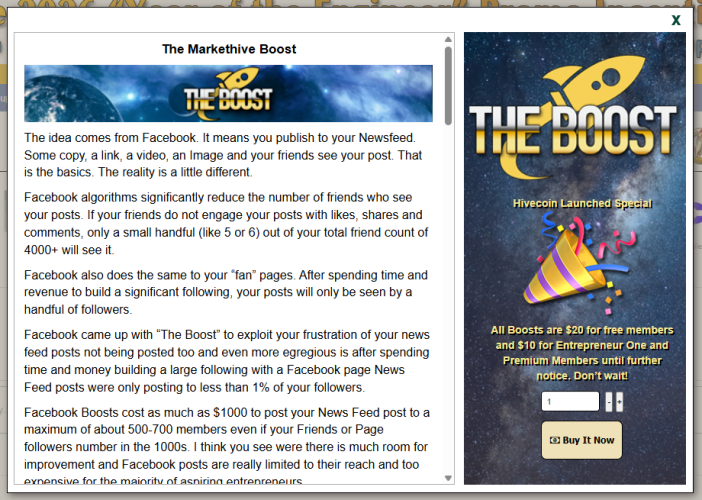
The Sales Page Pop-up 

The Boost: Amplifying Your Message Across Every Member's News Feed

In today's hyper-connected yet intensely competitive digital landscape, capturing and retaining audience attention is the ultimate challenge. The sheer volume of information being produced creates digital clutter, making it increasingly difficult for critical communications to cut through the noise and achieve genuine visibility. For organizations, businesses, and creators, this often means that vital announcements, strategic updates, and high-value content can be overlooked, diminishing their intended impact.

This is precisely where the Boost steps in, offering a revolutionary, unparalleled solution to systematically overcome these digital barriers. It is more than a delivery system; it is a meticulously engineered, proprietary mechanism built to guarantee content exposure.

How The Boost Works:

  • Bypassing the Algorithm: Unlike standard content distribution methods that rely on unpredictable, often restrictive platform algorithms that frequently filter, delay, or suppress messages, the Boost is designed to bypass these bottlenecks entirely.
  • Direct-to-Feed Delivery: The core functionality of this feature is to ensure your content is delivered directly to the news feeds of every member of your intended audience. This is a non-negotiable guarantee of presence. Every eyeshot, every scroll, will include your message.
  • Catalyst for Impact: As a powerful digital catalyst, the Boost dramatically enhances both the visibility and the overall influence of your communications. It transforms mere content posting into strategic, high-impact distribution.

The Essential Benefits:

  1. Guaranteed Visibility: Eliminate the risk of critical messages being missed. The Boost ensures 100% reach to the entire membership base, providing total confidence in your communication strategy.
  2. Enhanced Engagement: By ensuring direct exposure, the feature sets the stage for a significant increase in readership, interaction, and subsequent action from your audience. When people see the message, they can act on it.
  3. Maximum Impact: Whether it is a product launch, a crucial policy change, an urgent operational update, or a key community announcement, the Boost emphasizes the weight and urgency of your message, making its importance instantly clear and prompting immediate action.

By utilizing the Boost, you transition from hoping your message is seen to knowing it is delivered, cementing your place as a consistent and authoritative source of information in the rapid flow of the digital world.

Maximize Your Reach: The Unrivaled Power of The Boost

Imagine the impact of knowing that every member sees your latest newsletter, a substantial policy change, an exciting new event, or a crucial service update. The Boost turns this vision into reality, making your communication strategy more effective and your audience more informed. It empowers administrators and communicators to deliver messages with confidence, knowing they will be seen, absorbed, and acted upon.

In essence, the Boost is more than just a publishing tool; it's a strategic advantage that empowers you to communicate with unparalleled reach and impact, fostering a more connected, engaged, and informed member community. It serves as a PA system for communicating with the entire membership, not just your friends and associates. If they like your message and subscribe to you, you are then publishing to their sphere of influence and social networks.

The Markethive Boost feature is evolving to offer more targeted publishing options, including the ability to publish to specific geographic locations. Pricing will be tiered based on the delivery method, such as targeting via hashtags, keywords, most active users, or number of friends, but not via private navigation. The Boost feature will also be incorporated into the Promo code incentive. This allows you to offer it to prospects who join Markethive, as well as to existing members who join your groups and make purchases in your store.

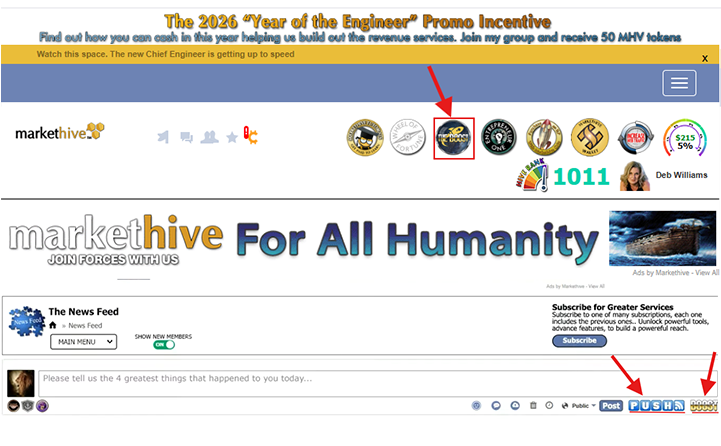
Currently, the Boost allows any post to appear on every member's News Feed for a flat fee. For the launch period, the cost is $20 for free members and $10 for Entrepreneur One upgraded members. These launch prices will remain in effect until further notice. To get started, simply click the Boost icon located in the top tray of the Markethive home page. A sales page will pop up, allowing you to select the number of Boosts you want.


The Boost and Push icons will be displayed in the updated newsfeed under your editor. 

 An Epic Ecosystem In The Making

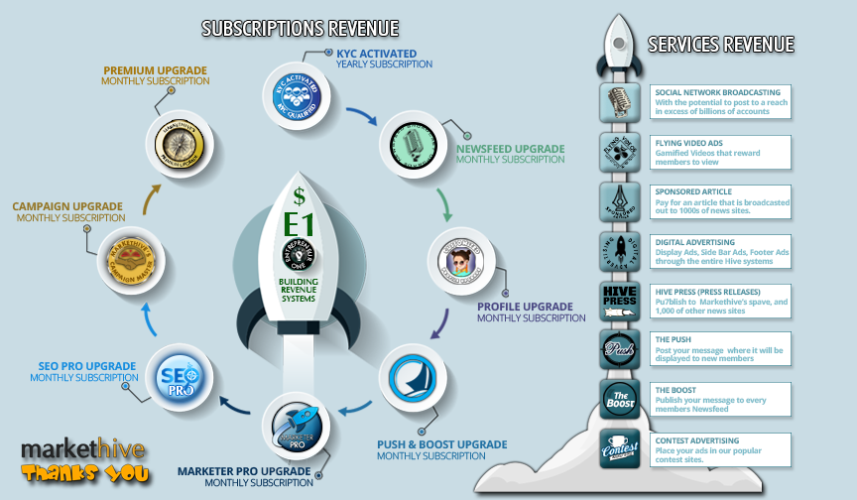
The Push and The Boost are subscription-based services that contribute to a much larger, multifaceted revenue-generating system designed to establish a robust, resilient financial foundation. It provides the predictable, recurring resources needed to support long-term operational and iterative goals and key initiatives, such as the ILP interest payouts. 

The intensive iteration and development phase for Markethive, our next-generation social commerce and marketing platform, is progressing, bringing us closer to a fully operational and revenue-generating system. However, to ensure a swift and successful transition from development to full-scale launch, and to fully capitalize on the foundational work already accomplished, additional strategic funding is necessary.

This crucial investment is not merely about maintenance; it is specifically earmarked for the final, intensive development sprints required to integrate advanced features, optimize the user experience, and stress-test the platform under real-world conditions. Securing this funding will directly enable us to:

  • Accelerate Product Launches: Bring key, highly anticipated features, such as the crypto exchange listings for Hivecoin, a peer-to-peer marketplace, and advanced marketing automation tools, to market much faster than currently projected.
  • Meet All Development Objectives: Fully complete the Markethive platform's scope, ensuring a robust, scalable, and secure system that can handle massive user growth from day one.
  • Ensure a Polished User Experience: Dedicate resources to final quality assurance, bug resolution, and user interface (UI) refinements, guaranteeing a world-class experience for all members.

By contributing now, you are not simply donating; you are securing your direct stake in the platform's future success and profitability. We offer various contribution methods, some designed to give contributors a significant, long-term stake in the Markethive ecosystem. Your support will be the catalyst that transforms our current progress into a fully realized, revolutionary market network platform ready to generate substantial revenue. There are several ways to support us.

  • Secure an E1 Subscription (New Members): This is the ideal time to become an E1 member. A limited number of non-expiring E1 subscriptions are available, securing your access to all E1 benefits, including becoming an ILP shareholder and receiving 0.01 ILP annually, as long as your account remains active. Purchasing an E1 directly supports our development.
  • Expand Your E1 Subscriptions (Existing Members): Current E1 members can significantly accelerate product launches and monthly dividend payments to ILP holders by purchasing additional E1 subscriptions.
  • Direct Initial Loan Procurement (ILP) Purchase: Individuals interested in a basic, direct investment in the platform's future can buy an ILP separately. Please reach out to the Administration for more information.
  • Maintain Active Engagement: Your participation in the ecosystem is crucial. We encourage you to:
    • Purchase Boosts and Vanity Promo Codes: These tools are essential for expanding your marketing reach and increasing conversions.
    • Stay Active in the Wheel of Fortune Game: This activity helps boost system energy, increases transaction volume, and rewards your efforts.

Join us as we move forward with the next-generation multidimensional media platform, Markethive. Welcome to the Entrepreneur’s ecosystem. We are built for Entrepreneurs by Entrepreneurs and are made up of Entrepreneurs of every caliber.

Thank you for your ongoing support. God bless you.
 

The Growth of Gamification at Markethive: Get Ready for Video Flying Ads – The Wheel of Fortune Is Already Turning

The Growth of Gamification at Markethive: Get Ready for Video Flying Ads – The Wheel of Fortune Is Already Turning

The intersection of gamification and digital marketing is growing and evolving at Markethive, offering fresh ways for businesses to connect with their audiences. This expansion brings new opportunities for engaging, interactive marketing strategies that can truly resonate with customers, making the experience more enjoyable and memorable. 

Markethive, explicitly designed for the Entrepreneur, is a friendly, supportive Market Network that prioritizes your privacy and security. It goes beyond a typical social network by serving as a hybrid enhanced social market network. This platform seamlessly integrates the power of Inbound Marketing into the News Feed and infuses the dynamic nature of the social network into its Inbound Marketing capabilities. This makes it a perfect environment for gamification. 

Flying Video Ads: Enhancing Member Engagement through Gamified Rewards – in development.

In terms of gamification, Flying Video Ads offers an innovative approach to advertising, transforming passive viewing into an interactive, rewarding experience for members. This concept centers on gamifying video content by incentivizing user engagement with tangible rewards. Unlike traditional advertising models that often interrupt the user experience, Flying Video Ads seamlessly integrates into the platform, making ad consumption a desirable activity rather than an obligation.

The flying video ads will occasionally pop up and run across your screen in the Markethive interface. If you click on them, you will be notified of a contest (a high/low type of contest) and how many Hivecoin (HVC) you will receive for watching the video. 

Benefits for Members:

  • Monetization of Attention: Members are directly compensated for their time and attention, turning a typically passive activity into a valuable one.
  • Enhanced User Experience: The gamified nature makes ad viewing more entertaining and less like a chore.
  • Access to Rewards: Members receive desirable rewards, such as Hivecoin, the native cryptocurrency of Markethive, boosting their overall platform portfolio.
  • Discovery of Relevant Content: Through personalization, members are exposed to products and services that align with their interests.

Benefits for Advertisers:

  • Increased Engagement Rates: The gamified, incentivized model drives significantly higher ad views and interaction rates than traditional advertising.
  • Improved Ad Recall and Brand Awareness: Active participation in gamified videos enhances memorability and brand recall.
  • Measurable ROI: Detailed analytics provide clear insights into campaign performance and the effectiveness of ad spend.
  • Positive Brand Association: By offering a rewarding experience, advertisers can build a more positive association with their brand.

Flying Video Ads signals a paradigm shift in digital advertising, shifting from disruptive methods to a mutually beneficial ecosystem. It incentivizes member participation and makes ad viewing an interactive experience, thereby boosting user satisfaction and yielding better results for advertisers. This forward-thinking strategy builds a stronger, more positive connection between brands and consumers, setting the stage for a more effective and engaging advertising environment.

Markethive's Wheel of Fortune: Spin Your Way to Crypto Wealth and Lifetime Revenue!

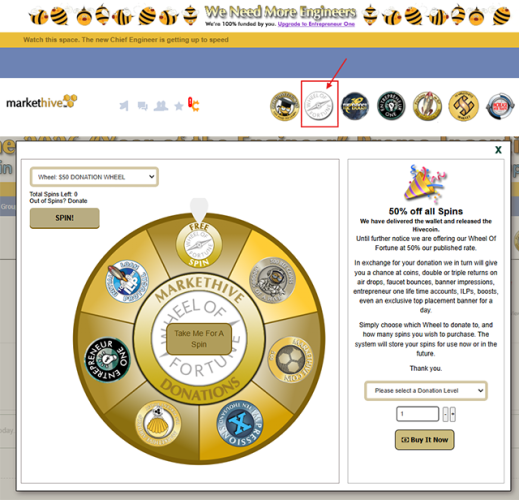
Many features of Markethive are still to be released later this year. One that has already launched is Wheel of Fortune, which highlights its gamified element. This interactive, gamified system is designed not just for fun, but to significantly benefit every participating community member by offering a diverse array of Markethive-related prizes. It transforms engagement into tangible rewards, driving activity and value within the platform.

A Spectrum of Valuable Prizes

With every spin, participants have the chance to win a bounty of Markethive assets, directly enhancing their presence and portfolio on the platform. The rewards include:

  • Hivecoins (HVC): The core cryptocurrency of the Markethive ecosystem, providing direct financial value and utility.
  • Bee Coins (BEEs): A micro-unit of Hivecoin, serving as an easily accessible fractional component. (Note: 100,000,000 BEEs are equivalent to one Hivecoin, much like a Satoshi relates to Bitcoin).
  • Ad Impressions: Valuable credits for running marketing campaigns on Markethive's internal Banner Impressions Exchange, (BIX) boosting visibility for businesses and profiles.
  • Airdrop Bumps: Multipliers that increase the volume of Hivecoin received during scheduled airdrops, accelerating crypto accumulation.
  • Newsfeed Boosts: Enhanced visibility for your content on the Markethive Newsfeed, ensuring your posts reach a wider audience.
  • Micropayment Boosts: Multipliers applied to the micropayments you receive within the Markethive system.
  • Initial Loan Protocol (ILP): The most coveted prize, offering a share in the platform's lifetime revenue. Spins can award partial or even a full ILP, opening the door to becoming a Markethive Shareholder.
  • Exclusive Top Placement Banner: A temporary, high-visibility advertising spot for a day, offering unmatched promotional value.
  • Entrepreneur One Lifetime Account: Full, premium access to the platform's features for life, including 1/10 ILP every year it’s active. 
  • Faucet Bounces: Enhanced returns on Markethive's built-in crypto faucet.

The Mechanism: A Donation-Based Win-Win System

The Wheel of Fortune is structured as a transparent, donation-based platform. Community members contribute at levels 1 through 5, ranging from $1 USD to $100 USD. 

The fundamental principle governing the system is simple: The number of spins and the potential value of the prizes are directly proportional to the chosen donation level. Higher donations yield more spins and access to larger prize brackets. The system provides a fundamental guarantee: "Every Spin is a Win!" Participants are assured of a benefit for their contribution, as there are no "lose" outcomes or empty slots. At the very least, a participant will win a free spin to try again.

Your Donation Translates to Exponential Returns

In exchange for your support via a donation, you receive immediate chances to win, which often translate into superior returns, including:

  • A chance to win substantial HVC amounts.
  • Double or Triple Returns on upcoming airdrops.
  • Significant boosts to your advertising impressions and newsfeed visibility.
  • The life-changing opportunity to win a fractional or full ILP, securing your status as a lifetime revenue-earning Markethive Shareholder.

Exclusive Limited-Time Promotion

To celebrate the launch and encourage broad participation, Markethive is offering an exceptional promotion: Until further notice, the Wheel of Fortune is available at a massive 50% off the published donation rate. This significantly lowers the barrier to entry, making it an ideal time to maximize your spins and potential winnings.

How to Get Started

You will find the Wheel of Fortune by clicking its icon in the tray at the top of the home page. Participating is quick and easy. To begin your journey toward crypto accumulation and potential lifetime revenue: 

  1. Select Your Wheel: Choose the desired donation level (Wheel) you wish to contribute to.
  2. Choose Your Spins: Determine the number of spins you want to purchase.
  3. Spin and Win! The system conveniently tracks and stores your purchased spins, which you can use immediately or save for later.

The Wheel of Fortune marries the fun of gamification with the serious opportunity to build wealth. It is a strategic tool for community members seeking to rapidly grow their crypto portfolio while offering the chance to achieve the pinnacle of Markethive membership as a lifetime revenue earner with an ILP. 

Your donations also support Markethive’s ongoing iterations, including scaling the infrastructure, expanding the feature set, improving the user experience, and completing the ecosystem’s build-out of the revenue system, which encompasses the retail side of our products and services, ensuring Markethive's continued leadership in the decentralized market network space.

Are you taking advantage of this dynamic feature and the daily opportunities it offers? Why not give it a spin? Not only are you rewarded with assets that will be extremely valuable in the foreseeable future, but you are also helping Markethive continue to build its God-given vision that millions of aspiring entrepreneurs worldwide desperately need. 

The Dual Benefit: Building Your Assets While Fueling a Global Vision

The rewards for your engagement are twofold and deeply impactful:

  1. Gaining Valuable Future Assets: The immediate benefit to you is the accrual of future assets within the Markethive ecosystem. These assets represent a stake in the platform's future growth and prosperity, creating a powerful engine for passive income and appreciation. You are not merely participating; you are actively investing in your own future portfolio with every action you take.
     
  2. Actively Supporting Markethive's God-Given Vision: Beyond your personal gains, your participation provides the essential momentum to advance Markethive's larger, profound mission. This vision is desperately needed by millions of aspiring entrepreneurs worldwide; a decentralized, fair, and empowering platform where small businesses, innovators, and creators can thrive without the stifling control or high costs of traditional Silicon Valley giants.

A Movement for Global Entrepreneurial Empowerment

Markethive's core mission is to build an ecosystem grounded in the principles of equitable wealth distribution and true digital ownership. The platform is designed to be the definitive 'entrepreneurial social market network,' a place where genuine economic freedom is possible. 

By participating in Wheel of Fortune, you become a critical part of achieving this grand humanitarian goal, ensuring that every entrepreneur, regardless of location or starting capital, has the tools and community needed to turn their aspirations into reality. Your daily engagement is a decisive vote of confidence and a direct contribution to democratizing global entrepreneurial opportunity.

You are invited to join a powerful movement and actively contribute to the unfolding of this transformative vision, while simultaneously positioning yourself to receive substantial incentives for your dedicated support and participation.

This article is designed to provide a comprehensive understanding of Markethive, exploring the profound reasons its foundational principles and ambitious goals are considered a divinely inspired vision – a framework rooted in a higher purpose. It meticulously details the multifaceted steps we can collectively take to nurture and sustain this endeavor. 

Furthermore, it establishes a framework for patient anticipation, recognizing that the full and glorious realization of Markethive's immense potential, and with it, the manifestation of your own eventual, well-deserved prosperity, is intrinsically tied to and dependent on God's perfect timing. Our commitment is to work diligently in the present while maintaining faith in the future, understanding that the most significant rewards await those who align their efforts with divine providence.


The Evolution of Digital Marketing and Social Media From its Inception Markethive has maintained a Constant Presence

The Evolution of Digital Marketing and Social Media. From its Inception, Markethive has maintained a Constant Presence.
Digital marketing, a dynamic and rapidly evolving field, has fundamentally transformed the way businesses engage with their customers. From its inception to its present sophisticated manifestations and promising future, the development of digital marketing exemplifies rapid technological advancements and enhanced human connectivity, with Markethive having played a pivotal role from the outset. 

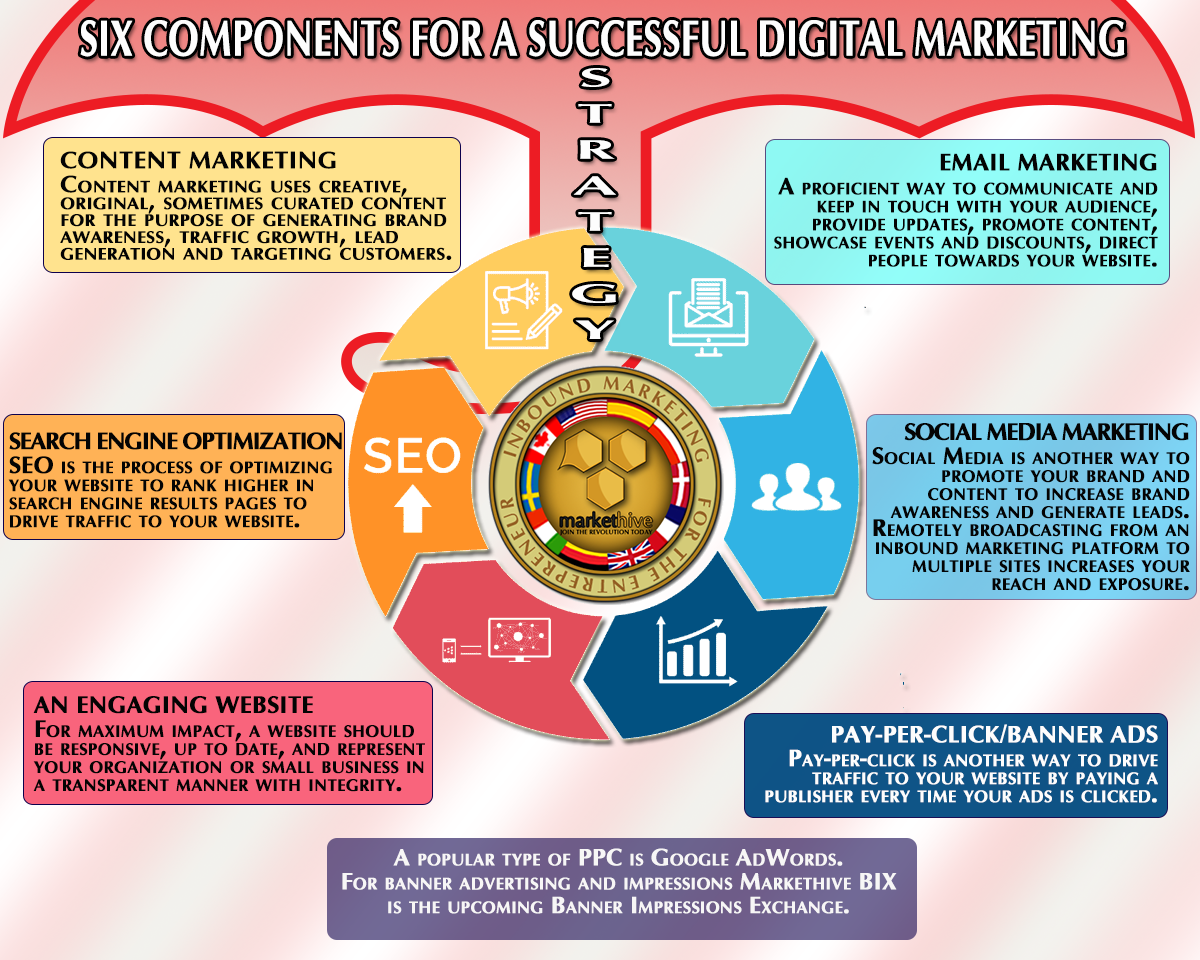
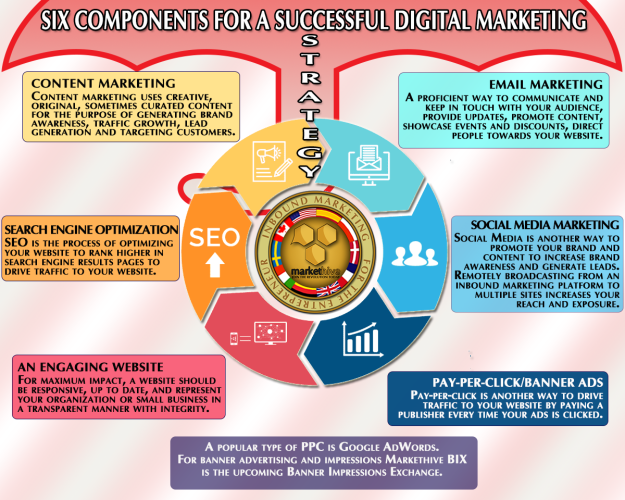
Digital marketing is an umbrella term for promoting and selling services or products using online strategies, as outlined in this article, which benefits all types of businesses and allows companies to; 

  • Reach their target audience: Connect with customers wherever they are online.
  • Observe online behavior: Utilize data to gain insight into customer interactions and behaviors.
  • Optimize marketing messages: By employing analytics to tailor communications effectively.

These digital marketing elements, highlighted in the infographic, help reach and engage customers, ultimately encouraging them to make purchases. The benefits include increasing brand awareness, generating leads, converting new customers, building trust, and driving sales growth.
For marketers, connecting with consumers and potential buyers at the right place and at the right time has always been paramount. Today, and for the foreseeable future, that place is the internet. While often called 'online marketing,' 'internet marketing,' or 'web marketing,' the term 'digital marketing' has become increasingly popular. This field is ever-evolving, with new technologies making it faster and easier, particularly for small businesses and marketers. 

But how and when did it all begin? Let's journey back to explore the history and timeline of digital marketing and social media, highlighting the more prominent platforms and some of the key technological milestones that have shaped the field.

Digital Marketing: Three Decades of Evolution

Coined in 1990, the term “digital marketing” is viewed as a key part of overall technological progress. The early history of digital marketing dates back to a significant moment in 1971, when Raymond Tomlinson, a pioneering computer programmer from New York, USA, developed and launched the first email program. This groundbreaking feat occurred on the ARPANET system, a precursor to the modern internet, underscoring its significance as a foundational event that preceded the widespread public adoption of the World Wide Web. 

Tomlinson's innovation laid the groundwork for a new era of electronic communication, inadvertently creating one of the earliest and most enduring channels for digital outreach and engagement. His work not only revolutionized how information could be exchanged but also set the stage for the evolution of digital marketing strategies that would leverage email as a powerful tool for communication, promotion, and relationship building.
The Birth of Web 1.0: 1990

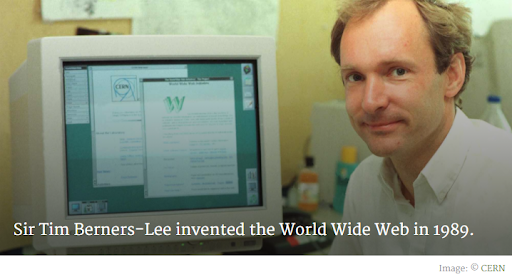
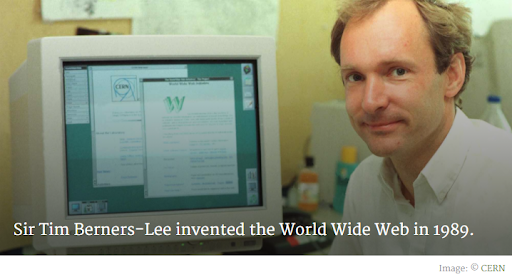
The 1990s marked a new era with the creation of the term "digital marketing," a concept that quickly transformed commerce and communication. This pivotal decade also brought significant technological progress, particularly with the work of Tim Berners-Lee. After establishing the foundation with the invention of the World Wide Web in 1989, Berners-Lee further changed connectivity in 1990 by creating the very first web client and server.

This early stage of the internet, often referred to as Web 1.0, primarily focused on reading. Users mainly viewed the web as a vast digital library where they could search for and passively consume information. Interaction was mostly one-way, with few opportunities for user-generated content or active participation. Websites served as static data stores, offering a new way to access information, but lacked the collaborative and interactive features that would later develop. Although limited in interactivity, this foundation was essential in building the infrastructure and initial user base that laid the groundwork for today’s rich, participatory digital experiences.

The Clickable Banner Ad Emerged in 1993

The year 1993 was a key moment in the early commercialization of the Internet. That year, the Global Network Navigator (GNN), an early online info service and web portal, made history by launching the first clickable paid ad on the growing World Wide Web. This innovative ad, sold to a Silicon Valley law firm, marked a shift from the internet's previous focus on academics and research. It showcased the vast potential for businesses to use this new digital space for commercial purposes, paving the way for the multi-billion-dollar online advertising industry we see today.

Just a year later, in October 1994, the online advertising landscape further evolved with the pioneering efforts of HotWired, the online arm of Wired magazine. HotWired introduced the groundbreaking concept of rotating banner ads. These graphical ads, strategically placed on web pages, automatically cycled through different creative designs, giving advertisers more exposure and the ability to test various messages. This innovation marked a crucial step toward dynamic and interactive advertising formats, moving beyond static placements.
 
Despite the success of online advertising, user sentiment remains a challenge. Intrusive formats, such as pop-up ads, which have been disliked since the internet's early days, led to the development of blockers and a desire for less intrusive experiences. Yet, most websites rely on advertising revenue, creating ongoing tension between monetization needs and user preference for an ad-free or minimally intrusive experience. This dynamic continually shapes the evolution of online advertising.

Worldwide spending on banner ads is projected to reach US$185.44 billion in 2025, according to Statista. This figure is expected to grow at an annual rate of 5.23%, reaching a market volume of US$227.40 billion by 2029.

While these ads can be a source of annoyance for some users, they play a crucial role in funding many digital publishers. This funding, in turn, helps maintain the predominantly free nature of various online platforms for users. Thirty-two years ago, banner ads were considered cutting-edge and marked the inception of the Internet advertising industry.


The first banner by HotWired. Initially, AT&T paid $30,000 for a three-month dedicated banner placement on Hotwired, which achieved an impressive 44% click-through rate. In that era, web analytics were rudimentary, involving manual click counting and a highlighter pen as the primary tool.

1994 – Yahoo's World Wide Web Debut

Initially called 'Jerry's Guide to the World Wide Web,' Yahoo, founded by Jerry Yang, launched and garnered nearly a million hits in its first year. Its original product, the human-edited Yahoo Directory, served as a guide for users navigating the internet. This marked a significant shift in digital marketing, prompting companies to optimize their websites for improved search engine rankings.

Yahoo continued to evolve, and in 2000, in what they believed was a strategic move in search history, they partnered with Google. This collaboration enabled Google to power Yahoo's organic search results, with "Powered By Google" appearing on every Yahoo search result. Unbeknownst to Yahoo at the time, this partnership introduced their most significant competitor to the world, making Google a household name.

Additionally, in 1994, the development of online communication reached a significant milestone when Justin Hall, then a student at Swarthmore College, launched what he called a "weblog." This innovative platform served as a personal online diary, a space where Hall could share his thoughts, experiences, and links to other interesting parts of the growing World Wide Web. Its original format was a chronological record of his online activity and musings, laying the groundwork for what would become a widespread phenomenon.

The term "weblog" was originally a descriptive word, emphasizing its role as a log of web activity. However, in 1999, Peter Merholz cleverly shortened it to "blog." This linguistic simplification undoubtedly contributed to its increased popularity and widespread use in everyday culture.

1996 – Alexa Internet Launches

Founded in April 1996 by Brewster Kahle and Bruce Gilliat, Alexa Internet initially operated as an independent web analytics company. Alexa Internet's most notable contribution was the Alexa Traffic Rank. This metric offered a widely accepted and frequently cited estimate of a website's popularity. The ranking system was based on a combination of factors, including the number of unique visitors and page views over a specific period. Data was collected from a global panel of users who had installed the Alexa toolbar or other extensions. A lower Alexa Rank indicated a more popular website, with the top-ranked sites being the most visited worldwide. 

In 1999, recognizing the strategic value of its data and technology, Amazon acquired Alexa Internet. This acquisition integrated Alexa's analytical capabilities into Amazon's growing suite of services, further solidifying its position in the e-commerce and internet services landscape.

On December 8, 2021, Amazon announced it would discontinue its website ranking and competitive analysis service, which had been available to the public for over 25 years. After that date, users could no longer create accounts or buy subscriptions, and the service officially ended on May 1, 2022. The Alexa.com domain now serves as a landing page for Amazon Alexa products.

Additionally, in 1996, the term "content marketing" was introduced during a discussion among journalists and members of the American Society for Newspaper Editors. This marked a pivotal shift in online promotion, highlighting that traditional advertising alone was insufficient. Companies need to deliver valuable, relevant, and consistent content to engage a knowledgeable online audience. This concept focused on creating and sharing engaging materials, such as articles, blogs, videos, and infographics, to attract and retain a specific target audience, ultimately encouraging profitable customer actions and shifting online marketing toward a more consumer-centric strategy.
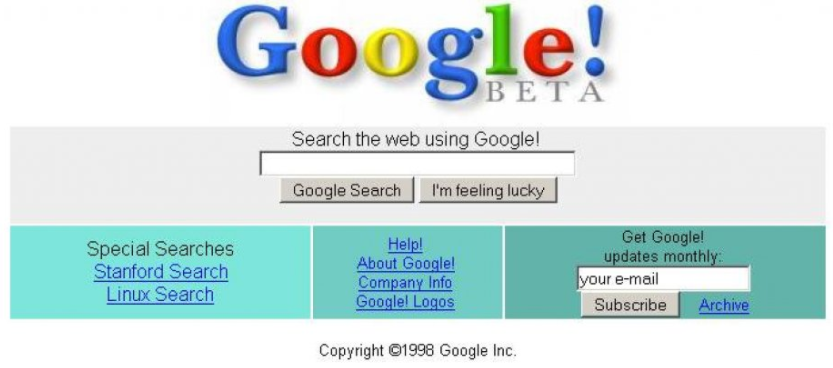
1998 – Google's Incorporation

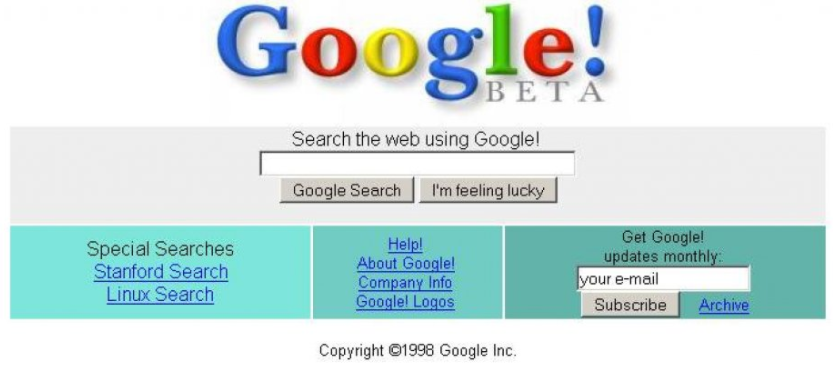
Google's origins date to 1996 when Stanford Ph.D. students Larry Page and Sergey Brin began a project to improve web analysis beyond keyword-based search engines. They created PageRank, an innovative algorithm that ranks websites based on the number and quality of links, giving more importance to links from reputable sites.

Their emerging search engine, called initially "Backrub," directly reflected this core approach. The name was a nod to its unique method of "backrubbing" or examining backlinks to measure a site's importance and influence within the vast web. This early stage involved intense research and development, establishing the fundamental principles that would become the foundation of a global information powerhouse.

Their work's transformative potential rapidly attracted attention and funding, enabling the shift from an academic project to a formal business. In September 1998, Google Inc. was officially founded and started operations from a small garage in Menlo Park, California. This was a key milestone, as their innovative PageRank algorithm and focus on users began to revolutionize the emerging search engine industry. 

The year 1998 was a pivotal time for the growing internet, as it saw the launch of competing search engines from major tech companies: Microsoft introduced MSN Search, and Yahoo rolled out Yahoo Web Search, both vying for dominance in the rapidly expanding digital world. Despite these early rivals, Google's unique technology and user-friendly interface quickly distinguished it, leading to its rapid rise as the world's top search engine.

Veretekk launched in 1998, pioneering Automated Marketing and Social Networking.

As the competitive landscape among businesses grew increasingly intense, marketers faced a significant challenge: how to connect with potential customers in a way that was both efficient and effective, giving their business a vital edge. This growing need for a smoother, more powerful way to engage customers opened the door to an innovative technological breakthrough: marketing automation.

In 1994, Thomas Prendergast developed the first generation of the automated marketing system, laying the foundation for Wavefour and later evolving into Markethive. Their original proprietary technology was pioneering, introducing concepts that were years ahead of their time. Innovations like "automated emails," branded as Veremail, and advanced capture pages such as Blastomatic, Daily Messages, and Vacations4free enabled businesses to connect with potential customers in a proactive and automated way. 

Even preceding the emergence of internet giants like Yahoo, Google, and Facebook, the company envisioned and built a centralized, member-secured social network. This groundbreaking platform, known as Inetekk, was a testament to their foresight. Inetekk offered a comprehensive suite of integrated tools, a genuinely innovative and value-driven concept, 32 years ago. This early iteration of a social network, coupled with its integrated marketing tools, showcased a commitment to providing a holistic solution for entrepreneurs, anticipating the interconnected digital landscape that would eventually define the 21st century.

Launching in 1998, this system attracted new customers. It was privately labeled for hundreds of companies and built a verifiable database that numbered in the hundreds of millions. It evolved into a service called Veretekk, a standalone Application Service Provider, and led the way in several areas, including a self-replicating website, a self-replicating PDF (designed for printing, signing, faxing, or mailing receipts), the first read-write server database, the first autoresponder email system, lead capture, and traffic portals, the first remote broadcasting system, and Internet Marketing training that ran for nearly 20 years. 

All these features combined to create the first comprehensive Automated Marketing system. This represented a significant advance over traditional outbound marketing methods, enabling a more targeted and efficient approach to generating leads and nurturing customers.

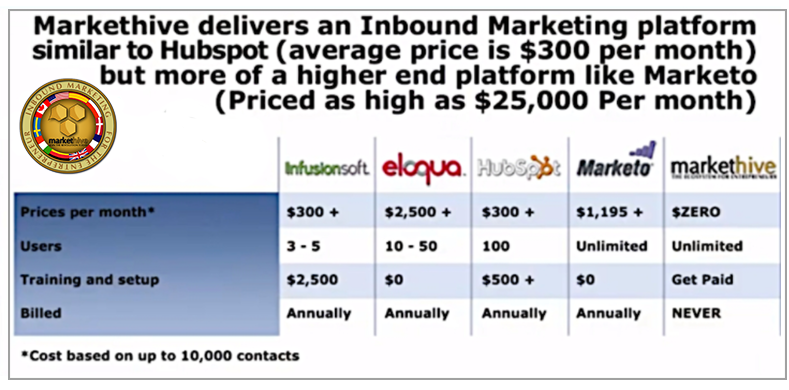
Many automated marketing platforms emerged from 2003 onwards, including Eloqua and Salesforce. Subsequently, in 2006, Hubspot and Marketo also appeared. This period marked the rise of Software as a Service (SaaS).
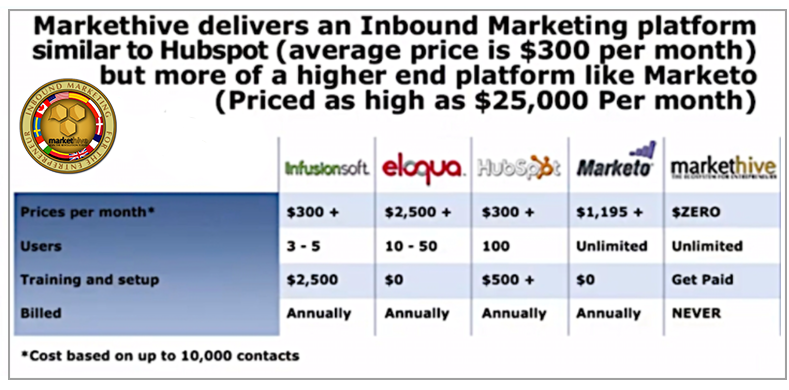
The emergence of automated marketing led to the coining of "Inbound Marketing." This approach emphasizes content marketing, which has been shown to build credibility and integrity for organizations, establishing them as trusted sources.

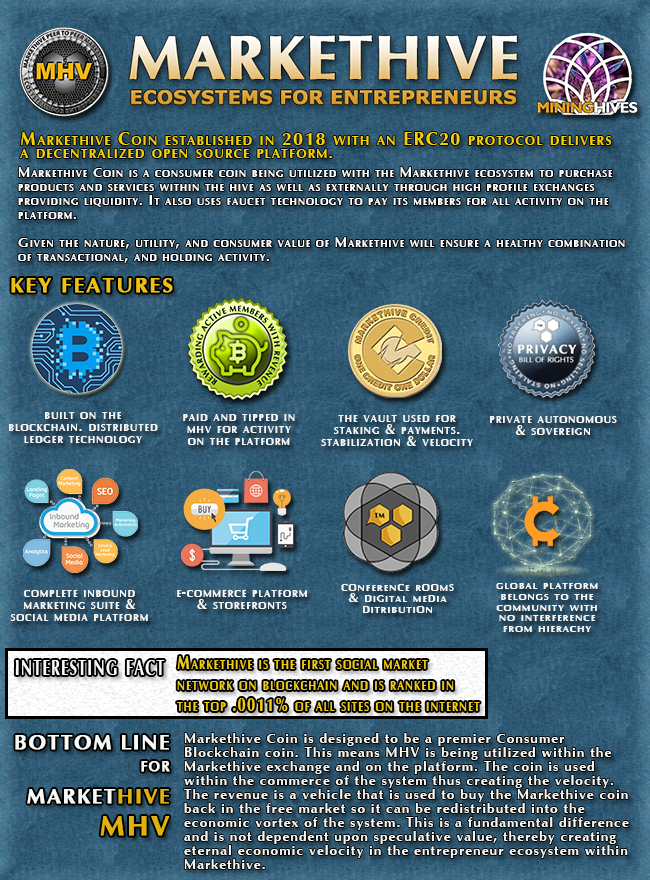
Veretekk underwent a complete transformation, now rebuilt with Blockchain technology and cryptocurrency. This new iteration, Markethive, integrates an inbound marketing platform, a social network, and a digital media broadcasting platform. It is recognized as the pioneering next-generation Market Network built on Blockchain.

2000 – AdWords Launched by Google

Google, a nascent but rapidly expanding internet giant, made a pivotal move in its commercial strategy by introducing the AdWords program. This innovative platform initially provided advertisers with the convenience of having their advertising campaigns meticulously managed directly by Google’s team of experts. This hands-on approach ensured that businesses, regardless of their online marketing expertise, could effectively leverage Google’s vast search engine reach to promote their products and services.

In March 2003, Google introduced its AdSense program, initially known as content targeting advertising. This program enables website publishers to display text, images, videos, or interactive media advertisements on their content sites. These ads are tailored to the site's content and audience, and they are managed, organized, and maintained by Google. Publishers earn revenue based on either a per-click or per-impression model. Currently, more than 44 million websites utilize AdSense.

2002 – LinkedIn Is Launched

Founded in December 2002 by Reid Hoffman, Allen Blue, Konstantin Guericke, Eric Ly, and Jean-Luc Vaillant, LinkedIn is the first business-focused social networking platform. Its primary function is to facilitate professional networking, enabling individuals to connect with colleagues, industry peers, and potential mentors. In addition to individual networking, LinkedIn is a key resource for the recruitment industry. Companies heavily use the platform to post job openings, reaching a large and highly targeted audience of professionals. 

By 2015, LinkedIn's business model had matured, with the majority of its revenue coming from premium services, particularly for recruiters and sales professionals, which generated substantial income. In December 2016, Microsoft acquired LinkedIn for $26.2 billion. Since then, LinkedIn has operated as a wholly owned subsidiary of Microsoft, integrating its professional networking features with Microsoft's broader suite of enterprise software and services. 

2003 – Myspace's Debut

Myspace, an American social networking service, was co-founded by Tom Anderson in August 2003 along with Chris DeWolfe and Jon Hart. It became a dominant player in the digital world during the mid-2000s and was the largest social networking site worldwide from 2005 to 2009, with over 100 million unique users each month. Its rapid rise peaked in June 2006 when Myspace overtook major internet giants like Yahoo and Google, becoming the most visited website in the United States.

Myspace's impact went beyond simple user counts; it deeply affected technology, pop culture, and the music scene. As the first social network to reach a truly global audience, it established essential foundations for the growth of online communities. Additionally, Myspace made significant contributions to the early development of other digital giants, particularly YouTube, by providing a platform for sharing and discovering content. Yet, the social media landscape was constantly changing. In April 2008, Facebook challenged and eventually overtook Myspace, surpassing it in unique visitors and marking a major shift in online social networking.
2003 – The Genesis Of WordPress

WordPress, a well-known name in content management systems (CMS), traces its roots to a project called b2/cafelog, often simply known as b2 or cafelog. This basic platform was the collaborative creation of Matt Mullenweg and Mike Little. Their joint effort resulted in a system that quickly gained popularity, with about 2,000 blogs running on b2/cafelog by May 2003.

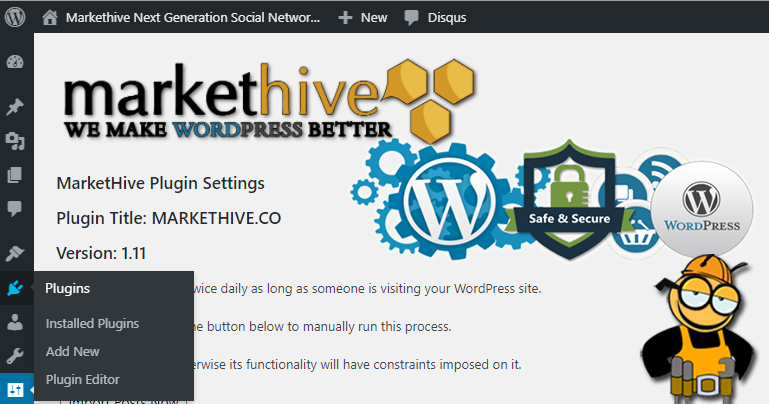
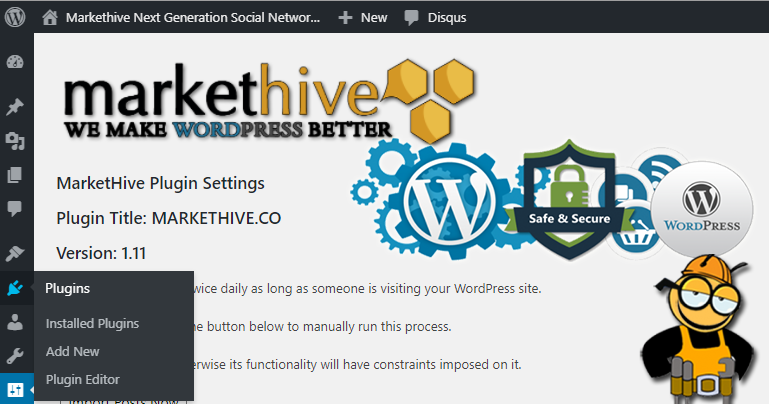
Originally designed as a simple blog-publishing platform, WordPress has significantly evolved and now far exceeds its initial purpose. It supports a wide range of web content, from basic blogs to complex websites, e-commerce stores, portfolios, and more. A key reason for its widespread use and flexibility is its extensive plugin system, a feature used by Markethive. These plugins, developed by a global community, enable users to add numerous features, including SEO tools and social media integration, thereby significantly enhancing their online reach and engagement. 

The growth of WordPress has been exponential, and its impact on the open-source community has been substantial. By October 2009, it had established itself as the leading open-source content management system, boasting the strongest brand presence and demonstrating its reliability, flexibility, and an active community supporting its development. This strong brand recognition continued to fuel its growth. By June 2019, WordPress had solidified its dominance, powering over 60 million websites worldwide. Today, WordPress powers 43.6% of all websites, holding a 62.1% share of the CMS market. As of 2025, WordPress supports 861 million sites.

2004 – Web 2.0 and Facebook Emerge

Darcy DiNucci first introduced the idea of Web 2.0 in 1999, predicting its impact on public relations. However, the term gained widespread recognition in 2004, primarily thanks to Tim O'Reilly and Dale Dougherty at the O'Reilly Media Web Conference. This shift marked a move from the static, one-way Web 1.0 to a more dynamic, interactive, and user-centered Web 2.0, emphasizing user-generated content, collaboration, and social networking. 

In 2004, another pivotal moment happened in the digital world: Mark Zuckerberg launched "TheFacebook." Created as a private online directory and social platform for Harvard students, its rapid success and increasing popularity quickly led to expansion to other elite US colleges. This initial version provided students with a digital space to connect, share information, and build communities, laying the groundwork for a global phenomenon.

The following years saw rapid growth for this emerging platform. In 2005, a strategic rebranding changed "TheFacebook" to simply Facebook, dropping its definite article and reflecting a broader, more inclusive vision. This simplification of its name coincided with ongoing growth and feature upgrades, making it an increasingly appealing platform for social interaction. By 2006, a key milestone was reached when Facebook opened to the general public, expanding beyond its college roots to serve a global audience. 

This key decision sparked a wave of growth, pushing Facebook into an unprecedented phase of worldwide popularity and turning it into one of the most dominant and influential social media platforms globally. Its widespread adoption fundamentally changed how people communicate, share information, and connect on a large scale, embodying the core concepts of the interactive and social web envisioned by Web 2.0 advocates.    
    

YouTube Emerged in 2005

The origin of YouTube, a platform that would transform online video, is a fascinating story rooted in a cultural moment: Janet Jackson's famous wardrobe malfunction during the 2004 Super Bowl halftime show. This surprising incident, which caught the attention of audiences worldwide, unintentionally sparked the idea for a new type of online video-sharing service. Former PayPal employees Steve Chen, Chad Hurley, and Jawed Karim, noticing the public's difficulty in finding and sharing clips of the event online, identified a major gap in the digital world. This realization laid the foundation for what would become YouTube.

The platform's first video, 'Me at the Zoo,' uploaded by co-founder Jawed Karim on April 23, 2005, shows him at the San Diego Zoo commenting on elephants' trunks. It marked a key milestone in online media. A beta launched in May 2005, leading to YouTube's official launch on December 15, 2005, reaching a global audience. Initially, YouTube faced competition from Vimeo, which was launched earlier in 2004, focusing on higher-quality content and a curated community. Vimeo gained recognition in some circles. However, YouTube's user-friendly design, broad appeal, and ease of uploading quickly led to its success.

In 2006, Google bought YouTube for $1.65 billion in stock, recognizing its vast potential. The acquisition made YouTube a major digital player and fueled its growth. Now, with over 2.7 billion users worldwide, YouTube is an extensive platform for entertainment, education, news, and social sharing, transforming global video consumption.
2006 – Twitter Launch and Growth in Search Engine Traffic

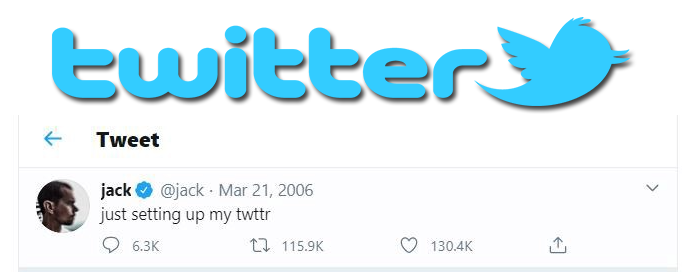
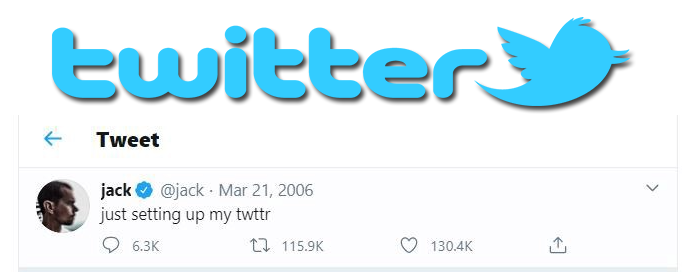
Conceived in 2006 by a visionary team including Jack Dorsey, Noah Glass, Biz Stone, and Evan Williams, Twitter emerged as a revolutionary platform. Dorsey initially envisioned it as a continuous stream of "short bursts of inconsequential information" similar to "chirps from birds." This core idea immediately set Twitter apart from its peers, positioning it more as a dynamic microblogging platform and real-time information network rather than a traditional social media site. Its unique design enabled the quick sharing of concise updates, allowing users to exchange thoughts, news, and observations instantly, effectively fostering a global conversation.

What further distinguishes Twitter, and indeed contributes to its enduring appeal and commercial viability, is its remarkable user engagement with advertising. Counterintuitively, for a platform often characterized by its rapid-fire content and user-generated discussions, statistical analyses consistently show that Twitter users interact with advertisements at a rate 26% higher than users on other prominent social media platforms. 

In 2022, Elon Musk purchased Twitter for $44 billion. He rebranded the platform as X in 2023, officially changing the name in July. Furthermore, the website's domain shifted from twitter.com to x.com in May 2024. Statistics also show that 55% of American users still refer to the platform as Twitter rather than X, while 70% of UK users continue to use the name Twitter.

Additionally, in March 2006, digital marketing emerged as a vital business strategy, driven by 6.4 billion search engine visits that month, marking a shift in consumer behavior toward online information. This period saw improvements in SEO, the rise of content marketing, and the growth of PPC advertising, especially Google AdWords, for targeted campaigns. 

The broadband expansion enabled video marketing and more advanced website design while emerging social media platforms began offering new ways to connect. The integration of analytics provided essential insights for refining campaigns. Overall, March 2006 marked a significant milestone for digital marketing, laying the foundation for today's complex digital landscape. Microsoft also launched Live Search to compete with Yahoo and Google.

2010 – Instagram Launches

Created by Kevin Systrom and Mike Krieger in 2010, Instagram is a social media platform that specializes in sharing photos and videos. It quickly gained popularity after its launch and was acquired by Facebook in 2012. From 2013 to 2024, Instagram experienced significant growth, increasing from 110 million to 2.4 billion users. However, in 2024, the platform saw a slight decline of 4 million users compared to the previous year.

Despite its influence, Instagram faces criticism for its frequent policy and interface changes, algorithm updates that affect content visibility, and censorship impacting marginalized communities, political discussions, and artistic expression, leading to allegations of bias and opacity. Additionally, problems with illegal content, such as hate speech, harassment, explicit images, and misinformation, raise safety concerns, especially for minors.

With over 2 billion monthly active users, Instagram users spend an average of 33 minutes per day on the platform in 2025, with 62.7% actively following or researching brands, underscoring its significance for marketing and brand visibility.

The year 2010 also marked a pivotal moment, signaling the start of an era of unprecedented growth and change in the digital marketing industry. This period was defined by a rapid increase in digital media use and engagement, fundamentally changing how businesses connected with their audiences. 

The massive amount of online engagement resulted in an incredible rise in advertising impressions, with approximately 4.5 trillion online ads delivered annually across various digital platforms. This enormous reach highlighted the growing influence of the internet as a marketing tool. 

As a result, businesses quickly shifted their marketing budgets to capitalize on this digital transition. Digital marketing spending saw a significant increase, jumping by an impressive 48%. This substantial investment reflected a growing recognition among companies of the vital role digital strategies would play in their future success, setting the stage for the digitally driven marketing landscape we observe today.

2012 – Saw The Launch Of Zoom 

Zoom, the widely used video conferencing app, was first released in beta on September 10, 2012. The initial version allowed up to 15 video participants in meetings. Positive feedback and quick updates led to the official launch of version 1.0 in January 2013, increasing the participant limit to 25. This early growth reflected Zoom's focus on scalability and its goal to support larger virtual meetings, paving the way for its widespread use in both work and personal contexts.

Zoom rapidly gained popularity, reaching 400,000 users in its first month and surpassing 1 million by May 2013. The COVID-19 pandemic further sped up its growth, resulting in an explosive increase of 2.22 million users in 2020. This period transformed Zoom from a popular business tool into a ubiquitous household name, fundamentally altering how individuals and organizations communicate, collaborate, and connect in a rapidly changing world. 

In March 2020, the Zoom app saw an astonishing 2.13 million downloads in a single day, and by April 2020, it boasted over 300 million daily meeting participants. However, this rapid expansion was not without its challenges. On August 24, 2020, the platform experienced a significant, several-hour-long outage that disrupted countless meetings and activities worldwide before service was eventually restored.  

That same year, Zoom faced significant controversy over its attendee tracking features, raising concerns about user privacy and data collection. Additional worries have arisen about the company's practices for sharing personal data, with critics pointing to potentially questionable methods used in handling sensitive user information. A general lack of transparency from Zoom on these critical issues has increased public scrutiny. Due to these growing concerns, users are increasingly advised to "Zoom" at their own risk, sparking a broader debate about data privacy and corporate responsibility in the digital age.
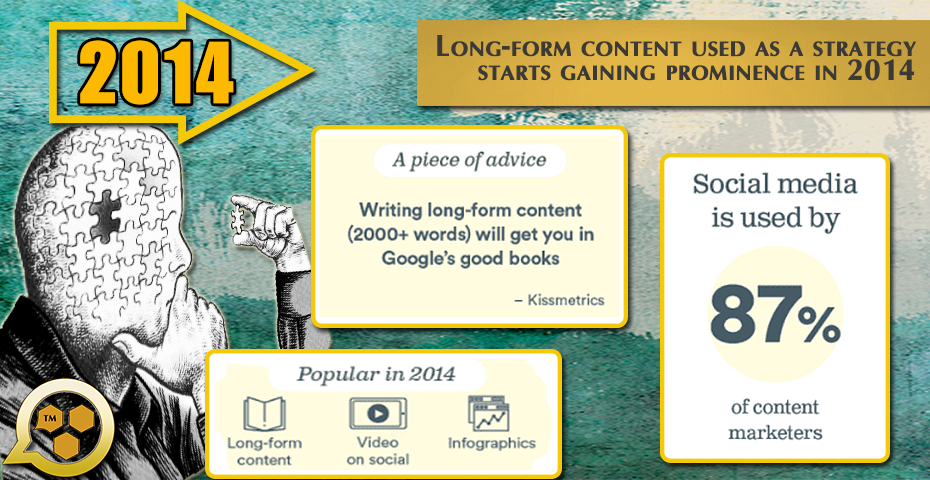
2014 – Smartphone usage increased, and Long-Form Content became Strategically Effective 

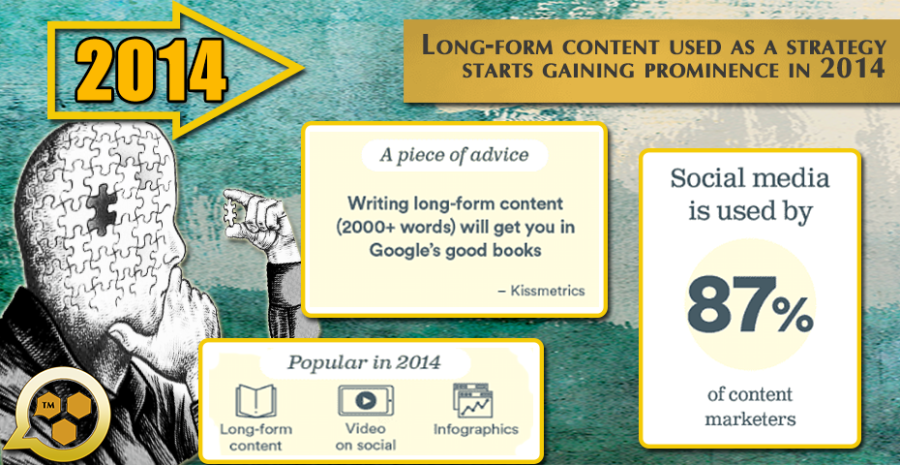
In 2014, mobile usage surged, with 4.55 billion users (70% of the global population) and 1.75 billion smartphone users. This year also marked the introduction of the Facebook Messenger app, followed shortly by the Apple Watch.

In 2014, long-form content emerged as a highly effective digital marketing strategy, shifting away from shorter formats. Several converging factors fueled this evolution. Search engine algorithms, particularly Google's, were becoming increasingly sophisticated, rewarding websites that offered comprehensive, high-quality, and authoritative content. 

Keyword stuffing was no longer enough; instead, content that genuinely answered user questions and offered in-depth information began to rank higher. This motivated marketers to create more detailed articles, guides, and whitepapers, providing value through comprehensive material, building trust, and establishing thought leadership. 

Increased broadband access and the proliferation of mobile devices also enabled consumers to engage with longer content. Consequently, marketers focused on producing extensive blog posts, e-books, and case studies, thereby solidifying the role of long-form content in nurturing leads, establishing authority, and driving organic traffic.

2015 – Markethive Arrives as The Next Generation Market Network and Genesis of Web 3.0

Markethive, a company with a rich history dating back to its earlier form as Veretekk, officially established its presence in the market in mid-2015. This period marked a crucial milestone for the organization, as it was formally trademarked and incorporated, setting the legal and structural foundation for its future growth.

After incorporation, Markethive strategically rolled out its platform. A private Beta, exclusive to foundational Veretekk members and dedicated users, refined the platform and gathered feedback, addressing issues before a wider release. This led to a full public Beta launch in January 2016, expanding reach and testing scalability for commercial release. This iterative approach ensured a polished product.

Over the course of three years, Markethive underwent a significant transformation, evolving from its initial role as a robust inbound marketing platform and social network. This deliberate development was driven by a clear and ambitious vision: to realize the concept of a decentralized, blockchain-based social market network. Created to achieve multiple aims, primarily to harness the growing influence of cryptocurrency, Markethive sought to develop a truly comprehensive and self-sustaining ecosystem. 

This environment was specifically designed to meet the diverse needs of various professionals and organizations, ranging from ambitious entrepreneurs and experienced marketers to established companies, expanding small businesses, and creative commercial artists, providing them with unparalleled tools and opportunities in the digital realm.

In 2019, Markethive introduced its inaugural cryptocurrency token, MHV, with the primary purpose of incentivizing and rewarding user engagement across its various functionalities. This token enables users to earn rewards through a diverse range of activities. The Markethive token, MHV, is a fractional representation of the native token Hivecoin (HVC), which serves as the principal transactional token within the Markethive ecosystem and is actively traded on prominent cryptocurrency exchanges.

In 2022, the Markethive wallet was introduced as a key part of the Markethive ecosystem. It serves as a versatile financial tool, offering a wide range of features. Primarily, it includes a detailed accounting system that carefully monitors all financial transactions within the platform. Additionally, it enables smooth payments and rewards distribution, ensuring that members are appropriately compensated for their involvement. The wallet is also equipped with a secure Vault and Staking system, allowing users to protect and expand their digital assets.

Fast forward to today, and Markethive has not only kept pace with technological advancements but has evolved into a sophisticated, ready-to-launch ecosystem. It stands as a powerful and comprehensive platform meticulously designed to empower modern entrepreneurs. The core of today's Markethive lies in its seamless integration of key technologies and principles: social networking, cutting-edge blockchain technology, robust security protocols, unparalleled user autonomy, absolute privacy, and a suite of advanced inbound marketing tools. 

This significant combination goes beyond the boundaries of a typical social network or simple marketing platform. It creates what is known as a "market network," a vibrant space that encourages a flexible, collaborative, and intensely engaged community among its users.
 
Operating as a decentralized, distributed environment, Markethive provides comprehensive and unwavering support for all creative and entrepreneurial endeavors. This decentralized architecture ensures greater transparency, security, and user control, aligning with the growing demand for digital freedom and ownership. 

By championing the rise of the individual entrepreneur, Markethive positions itself at the forefront of what it terms "the greatest renaissance in history." It offers a cutting-edge social environment that is not only secure and private but also intrinsically linked to the latest inbound marketing technology, web conference rooms, video channels, curation and blogging capabilities, and digital broadcasting. This unique synergy enables entrepreneurs to build, grow, and monetize their ventures with unparalleled efficiency and effectiveness, truly embodying the spirit of innovation and empowerment in the digital age.
 

Editor in Chief Markethive: Deb Williams. (Australia) I thrive on progress and champion freedom of speech.  I embrace "Change" with a passion, and my purpose in life is to enlighten people to accept and move forward with enthusiasm. Find me at my Markethive Profile Page | My Twitter Account | and my LinkedIn Profile.



History And Timeline Of Digital Marketing Online

History And Timeline Of Digital Marketing Online

Markethive Header History of Digital Marketing

Where have we been and where are we heading?

Let's travel back in time and check out the history and timeline of digital marketing and how we got to where we are now in 2020, also where we are heading in the future. This year has seen a remarkable change in habits and a tremendous leap in users online. 

Everything from social catch-ups on Zoom, even viewing your favorite sports game from your lounge chair on the Zoom platform as a part of the live audience at the game’s venue. 

Also, corporate working from home, more recently-unemployed looking to work from home to earn a buck, and an ever-increasing number of traditional offline businesses now have a presence on the net adopting digital marketing strategies.

Pretty much everybody has a connection to the internet in some form or another. Grandmas and grandpas are being urged to get online for their banking needs and grocery deliveries. So, of course, every time you go online, you experience digital marketing where someone is trying to sell you something albeit directly or indirectly. 

It’s fair to say businesses just can’t thrive now without online marketing to help generate sales. All businesses, big and small are increasingly moving online with a direct-to-consumer approach that reaches a huge worldwide audience more easily and takes advantage of an unlimited marketplace.

On a global scale, digital advertising spend was projected to hit $336 billion in 2020, pre- COVID, now adjusted to $332.84, but as you can see by the graph, stronger times are just ahead. 

Worldwide digital ad spending will make up 62.6% of the total media spend by 2024.

Digital Ad Spend


The Rise In Digital Marketing

Digital Marketing is an umbrella term for promoting and selling services or products using online strategies as outlined in this article which is beneficial for all types of business and allows companies to; 

  • Reach their target audience wherever they are.
  • Use data to observe their online behavior.
  • Use analytics to understand which marketing messages to send them.

These digital marketing elements outlined in the infographic help you reach your customers wherever they are, engage with them, and encourage them to purchase something from you. You create brand awareness, generate leads, convert new buyers, build trust, and increase sales.

digital marketing infographic

Marketing has always been about connecting with your consumers and potential buyers in the right place, at the right time. Currently and into the foreseeable future the best place to meet them is where they are spending time – on the internet. 

Digital marketing is also referred to as 'online marketing', 'internet marketing', or 'web marketing' however, the term digital marketing has grown in popularity over time. 

Digital marketing is constantly evolving, with new technologies making it faster and easier to master especially for small businesses and marketers, but where and when did it all start? 

Let’s go way back and visit the history and timeline of digital marketing with some of the more major milestones in technology.  


Digital Marketing Became A Thing 30 Years Ago

The term “digital marketing” was coined back in 1990 and considered integral to technology development and advancement on the whole. 

One of the first key events took place back in 1971, when Raymond Tomlinson, a computer programmer from New York, USA, implemented the first email program on the ARPNET system, even before the internet launched. 

Tomlinson sent his first test email on a system that was able to send mail between users on different machines that previously could only be sent to others using the same computer. 

He was inducted into The Internet Hall of Fame in 2012 which stated "Tomlinson's email program brought about a complete revolution, fundamentally changing the way people communicate".

1990 – Web 1.0 Was Invented

This was a memorable year with the new terminology of digital marketing and that same year, Tim Berners-Lee who invented the World Wide Web in 1989, wrote the first web client and server in 1990. Classed as Web 1.0, it was limited to read-only. Meaning the early web allowed us to search for information and read it but very little user interaction or content generation. 


1993 – The First Clickable Banner Ad Was Born

The very first true, linked, clickable, paid advertisement on the WWW was from a website called the Global Network Navigator, (GNN) which in 1993 sold a clickable ad to a Silicon Valley law firm. 

However, the first to do rotating banner ads was pioneered by HotWired in October 1994 and the internet has not been the same since. Despite users’ aversion to online ads, particularly pop-ups, the business models of most websites still revolve around advertising. 

Advertisers will spend $52.1m on banner ads in the U.S. this year, according to Statista, with a projected annual growth rate of 7.9% resulting in a market volume of $71.5m by 2024. 

Those ads may annoy some users, however, they help fund many digital publishers. This is what helps keep platforms predominantly free for users. Banner ads were cutting-edge 26 years ago and gave birth to the internet ad industry.


The first banner. Image credit: Wired Formerly Hotwired

AT&T paid $30,000 to run a dedicated placement for this banner for 3 months in Hotwired. It initially got a 44% click-through rate. The metrics in those days consisted of a person manually counting the clicks and the first Web analytics tool was a highlighter pen. 

1994 – Yahoo Hits The WWW Scene

Yahoo, AKA ‘Jerry’s Guide to the World Wide Web”, named after its founder Jerry Yang, launched and to its success, received nearly a million hits within the first year. The human-edited Yahoo Directory provided for users to surf through the Internet became their first product and the company's original purpose. 

This set the tone for comprehensive changes in the digital marketing world, which led to companies to start optimizing their websites to obtain higher search engine rankings.  

Over the years, Yahoo evolved, then in 2000, they made what they thought was a strategic move in the history of search, when they partnered with Google. They let Google power their organic results, so in every Yahoo search result it displayed “Powered By Google”. 

At the time, Google was not well known, so essentially Yahoo introduced their largest competitor to the world and Google became a household name. 

Also in 1994, the first blog was created by Justin Hall of Swarthmore College. Soon after blogs became an opportunity for brands to connect with consumers. The original term was “weblog”, and shortened to “blog” in 1999.


1995 – LookSmart Comes Onboard

LookSmart was founded as Homebase in 1995 in Melbourne, Australia by husband and wife Evan Thornley and Tracy Ellery. The original concept of Homebase was to build a female and family-friendly web portal.  

On 28 October 1996, the company launched its LookSmart search engine. At launch, the search engine listed more than 85,000 sites and had a "Java-enhanced" interface.

These days, LookSmart is a search advertising, content management, online media, and technology company. It provides search, machine learning, and chatbot technologies as well as pay-per-click and contextual advertising services.


1996 – Alexa Internet Launches

Alexa Internet was founded in April 1996 by Brewster Kahle and Bruce Gilliat and has an interesting history. Alexa was founded as an independent web analytics company in 1996 and acquired by Amazon in 1999. 

The evolution of Alexa has seen its claim to fame being a key metric known as Alexa Traffic Rank also simply known as Alexa Rank. It is also referred to as Global Rank by Alexa Internet and is designed to be an estimate of a website's popularity.

The Alexa Traffic Rank can be used to monitor the popularity trend of a website and to compare the popularity of different websites.

This was also the year that the phrase, “content marketing” was born at a discussion for journalists and the American Society for Newspaper Editors, and quickly became one of the most pivotal terms in digital marketing.


google 1998

1998 – Google Was Incorporated

Starting out as a project in 1996, by Larry Page and Sergy Brin. They theorized about a better system that analyzed the relationships among websites. They called this algorithm PageRank which determined a website's relevance by the number of pages, and the importance of those pages that linked back to the original site. 

Page and Brin originally nicknamed the search engine “Backrub”, because the system checked backlinks to estimate the importance of a site. After much funding, Google was incorporated and launched in 1998, based in a garage.

In the same year, Microsoft launched the MSN search engine, and Yahoo introduced Yahoo web search.


Veretekk Automated Marketing 1998

1998 – Veretekk Launches  – Automated Marketing

Marketers needed an edge to reach out to potential customers so a new technology arose as marketing automation. 

Thomas Prendergast built the first automated marketing system in 1994 and was the foundation of Wavefour, which was one of the many firsts. It included a self-replicated website, self-replicated PDF (a formatted receipt to print out sign and fax or mail-in), the first read-write to a server database, the first autoresponder email system, the first remote broadcasting system, and all incorporated into the first Automated Marketing system.
 
Launching in 1998, this system poured new customers and evolved into a service called Veretekk, a standalone Application Service Provider with “Aweber” like email systems, lead capture portals, and Internet Marketing training that ran for nearly 20 years. It was private labeled to hundreds of companies and built a verifiable database that numbered into the hundreds of millions and produced revenues in excess of 5 million.

From 2003 onwards, many automated marketing platforms followed suit such as Eloqua, Salesforce, and later in 2006 came Hubspot and Marketo to name a few. This gave rise to SaaS or Software as a Service. 

The company Veretekk has since been re-built from the ground up to include Blockchain technology and cryptocurrency, combining an inbound marketing platform, social network, and digital media broadcasting platform. Now called Markethive, it’s known as the first next-generation Market Network on Blockchain.

inbound Marketing Comparison

This also saw the birth of the term “Inbound Marketing” derived from automated marketing with a focus on content marketing which is proven to bring credibility and integrity to any organization and be considered a trusted source. 


2000 – Google Launches AdWords

Google’s AdWords program is a service that provides advertisers with advertising campaigns managed by Google. For those who want to manage their own campaigns the AdWords self-service portal was introduced soon after. 

Google then launched its AdSense program, originally named content targeting advertising in March 2003. It’s a program through which website publishers of content sites serve text, images, video, or interactive media advertisements that are targeted to the site content and audience. 

These advertisements are administered, sorted, and maintained by Google and generate revenue for the publisher on either a per-click or per-impression basis. Today over 11.1 million websites use AdSense.


2002 – Linked Is Launched

Reid Hoffman founded LinkedIn in December 2002 – making it the first-ever business-oriented social networking platform. It’s primarily used for professional networking, job posting by company, and by job seekers.

As of 2015, most of the company's revenue came from selling access to information about its members to recruiters and sales professionals. Since December 2016 it has been a wholly-owned subsidiary of Microsoft. 


2003 – Myspace Launches

Myspace, an American social networking service was the largest social networking site in the world from 2005 to 2009, reaching more than 100 million users per month. In June 2006 Myspace surpassed Yahoo and Google to become the most visited website in the United States

Myspace has had a significant influence on technology, pop culture, and music. It was the first social network to reach a global audience and it played a critical role in the early growth of companies like YouTube. However, in April of 2008, Myspace was overtaken by Facebook in terms of the number of unique visitors. 


2003 – The Genesis Of WordPress

b2/cafelog, more commonly known as b2 or cafelog, was the precursor to WordPress with an estimated 2,000 blogs installed as of May 2003. WordPress then became its name and is a joint effort between Matt Mullenweg and Mike Little. 

WordPress was originally created as a blog-publishing system but has evolved to support other types of web content and plugins assisting publishers to increase their reach across the internet. 

By October 2009, WordPress was enjoying the greatest brand strength of any open-source content management system. As of June 2019, WordPress is used by more than 60 million websites which include 33.6% of the top 10 million websites. 

WordPress is one of the most popular content management system solutions in use.

Wordpress Markethive plugin


2004 – Web 2.0 Is Introduced, Then Came Facebook

The terminology, Web 2.0 was initially invented in 1999 by Author and web designer, Darcy DiNucci, who also predicted the influence it would have on public relations. However, it was in 2004 that it became popularized when introduced by Tim O’Reilly and Dale Dogherty at the O’Reilly Media Web Conference. Web 2.0 was the start of a participatory or social web. 

The same year “TheFacebook” founded by Mark Zuckerberg, became a thing, initially for the students at Harvard which later that year expanded to many other colleges across the USA. But it was in 2005 the name changed to just Facebook and started to take hold globally in 2006 when it opened to the public. 

Google also released Gmail on April 1, 2004. It started as a beta release and didn’t end its testing phase until July 7, 2009. 


2005 – YouTube Hits The Scene

YouTube was the brainchild and founded by Steve Chen, Chad Hurley, and Jawed Karim, all were early employees of Paypal. Karim said the inspiration for YouTube first came from Janet Jackson's embarrassing wardrobe malfunction in 2004 at the Super Bowl

The very first video of “Me at the zoo” with founder Jawed Karim, was uploaded on April 23, 2005. Then YouTube offered the public a beta test of the site in May 2005. At the time of the official launch on Dec. 15, 2005, YouTube didn’t have much recognition as Vimeo was already operational as it launched in 2004. 

However, as history denotes YouTube is a hit and in 2006 Google acquired the video-sharing platform for $1.65 billion in Google stock. Today, YouTube accounts for 2 billion users worldwide.

2006 – Growth In Search Engine Traffic 

By 2006 there were considerable advancements in the digital marketing space. Search engine traffic grew to approximately 6.4 billion in the month of March alone.

Microsoft also introduced Live Search to compete with Yahoo and Google.

Twitter also launched in 2006 and created by Jack Dorsey, Noah Glass, Biz Stone, and Evan Williams. Dorsey explains,

“…we came across the word 'twitter', and it was just perfect. The definition was 'a short burst of inconsequential information,' and 'chirps from birds'. And that's exactly what the product was.”

So although classed as a social media, Twitter is more of a microblogging platform and information network. Furthermore, statistics demonstrate that Twitter users spend 26% more time with ads than users of other social media platforms.

Twitter Jack Dorsey Founder


2007 – Automation Marketing Became More Widespread. 

As the pace of the World Wide Web increased, so did the marketing climate and more companies and marketers came onboard utilizing marketing automated software that replaced conventional marketing processes. 

These tools automated the tasks of lead segmentation, marketing campaigns, and the ability to provide customers with personalized information. Its development during the 1990s and 2000s, changed the way brands and businesses use technology for marketing as digital platforms became increasingly incorporated into marketing plans and everyday life. 


2010 – Instagram Launches

The photo and video sharing platform was created by Kevin Systrom and Mike Krieger, in 2010  After its launch, Instagram rapidly gained popularity, and was acquired by Facebook in 2012. Instagram users are spending an average of 28 minutes per day on the platform in 2020.

A large portion of those users (around 200 million) visit at least one business profile a day, indicating that Instagram has become a focal point in the digital marketing arena. 

Although praised for its influence, Instagram has been the subject of criticism, most notably for policy and interface changes, allegations of censorship, and illegal or improper content uploaded by users.

Also noteworthy, the digital marketing industry saw a substantial rise in 2010, with the digital media growth of an estimated 4.5 trillion online ads served annually, and digital marketing expenditure experienced a 48% growth.


2011 – Google’s Panda Algorithm launches.

First released in February 2011, Google Panda brought a major change in Google’s search engine ranking algorithm. The name "Panda" comes from Google engineer Navneet Panda, who developed the technology that made it possible for Google to create and implement the algorithm.

It aimed to lower the ranking of “low-quality sites” and rank “higher-quality sites” near the top of the search results. Google Panda affected the ranking of an entire site or a specific section rather than just the individual pages on a site.

Panda’s updates were rolled out once a month in the first 2 years, and consequently influenced the ranking and traffic which negatively impacted some sites that upset a few people, to say the least. In some cases, it forced companies to change names, business models, fire employees, and even go out of business altogether. 

Google stated in 2013 that future updates would be integrated into the algorithm which would make it less noticeable and continuous.


2012 – Saw The Launch Of Zoom 

Zoom is a video-telephony software program that launched a beta version on September 10, 2012, that could host conferences with up to 15 video participants at the time. In January 2013, version 1.0 of the program was released with an increase in the number of participants per conference to 25. 

By the end of its first month, Zoom had 400,000 users, which rose to 1 million by May 2013. Due to the COVID-19 pandemic Zoom experienced an exponential gain in users of 2.22 million in 2020.

On one day in March 2020, the Zoom app was downloaded 2.13 million times. In April 2020, Zoom had more than 300 million daily meeting participants. On August 24, 2020, Zoom experienced widespread outages for several hours before service was restored.

However, this year, Zoom has been at the center of some controversy with its attendee tracking feature, sharing personal data, shady techniques, and lack of transparency. It is recommended you “Zoom” at your own risk. 


2014 Long Form Content more prominent


2014 – Upsurge In The Amount Of Smartphone Users

Reportedly, 2014 saw a rise in the number of mobile users, to 4.55B which is 70% of the global population, with smartphone users reaching 1.75B. 

2014 also saw the launch of the Facebook messenger app and not long after came the Apple Watch. 


2015 – Markethive, The Genesis of The Next Generation Market Network  

Markethive, (previously Veretekk), was trademarked and incorporated in mid-2015 and opened the doors to a private Beta phase for Veretekk founders and users. The company then went into full public Beta launch in January 2016. 

Over the next couple of years, while operating as an inbound marketing platform and social network, Markethive methodically worked on creating its primary vision of being a decentralized Blockchain driven Social Market Network integrating cryptocurrency forming an entire ecosystem for aspiring entrepreneurs, marketers, companies, small business, and commercial artists. 

January of 2019 saw the launch of the Markethive Coin (MHV) within the Markethive ecosystem. Now it is possible to earn coins on every task and activity performed, whether it be facilitating your business with the inbound marketing tools or engaging on the social media platform.

Markethive is a sovereign entity offering transparency and self-sovereignty on all levels including autonomy, privacy, and security to its users as well as financial well-being. A community-focused culture of collaboration is the fabric of Markethive and proving to be a much-needed resource in the online world today. 

Markethive Wallet App

By years end of 2020 will be the launch of the Markethive wallet app and exchange which will open the floodgates bringing in the millions who are looking for a genuine way to earn and conduct their business in the online space that in many ways has become a jungle and cesspool of fraud, scams, data harvesting, political bias, and dystopia. 

This is all part of the Web 3.0 or 3rd generation internet which has started to emerge as a movement away from the centralization of services.  Markethive was built for the little guy and gal in mind, at little to no cost to join, utilize all the facets of an inbound marketing platform and social network, build their business relationships, and get paid for doing so, all while enjoying free speech, privacy, and autonomy in a collaborative environment. 

Sound like utopia? Pretty much is! 

Markethive Infographic


Staying At The Forefront Of Technology

So there you have it… Technology has come a long way over the past three decades with no signs of it slowing down any time soon. The successful company for the long term will need to have an innovative culture and be tuned in to the fast-paced, ever-changing technology and behaviors in this revolutionary world.    

One thing is for certain, content marketing, along with email marketing integral to inbound marketing which is a prescribed marketing strategy under the digital marketing umbrella is crucial to the success of any organization, large and small. 

Statistics show that:

  • Content marketing costs 62% less than outbound marketing and generates 3x as many leads
  • Content marketing has lower up-front costs and deeper long-term benefits than paid search.
  • Small businesses with blogs generate 126% more leads than those without blogs.
  • Content marketing rakes in conversion rates 6x higher than other methods.
  • 87% of B2B marketers say email is one of their top free organic distribution channels.
  • 80% of B2C businesses believe email marketing increases customer retention. 

We have evolved into a more human approach towards marketing and advertising. Even  Google’s search engine is adopting that approach with their latest algorithm in 2019, BERT, that helps better understand the context of words in searches and language a bit more like humans do. 

At the height of the automated, inbound marketing boom in the mid-2000s, not only was it expensive but overwhelmingly complicated for many businesses to integrate. Larger companies would have it done for them, but what about the little guy and gal? 

Enter Markethive, the complete Market Network. 


ecosystem for entrepreneurs


Deb Williams
A Crypto/Blockchain enthusiast and a strong advocate for technology, progress, and freedom of speech. I embrace "change" with a passion and my purpose in life is to help people understand, accept, and move forward with enthusiasm to achieve their goals. 


Bitcoin continues its steady recovery, rising above $8,000/more

Bitcoin continues its steady recovery, rising above $8,000

Other cryptocurrencies match bitcoin’s march higher

Bitcoin continued to move above $8,000 on Thursday,
taking a cue from global equity markets, which appeared to be stabilizing somewhat after a week of extreme volatility. The price of a single bitcoin BTCUSD, +2.72% gained 6.7% to $8,091.23, bouncing off a session low of $7,576.25, according to CoinDesk data. The price of bitcoin remains well below a level of $10,000 seen a week ago, and its December peak above $19,000, but has recovered from a drop below $6,000 on Tuesday. Ether, the coin on the ethereum network, saw a similar rise, up 6.3% to $806.63, while bitcoin cash was at $995.25, up 3.5%. Litecoin rose 2.7% to $142.66, and Ripple gained 3.4% to 75 cents, CoinDesk prices indicated.

Winklevoss:
If you can’t see bitcoin at $320,000, you just lack imagination

‘We believe bitcoin disrupts gold’

Tyler Winklevoss and Cameron Winklevoss are still fired up about bitcoin.

‘You know the criticisms are just a failure of the imagination.’

That’s what Tyler, one of the Winklevoss twins, had to say to the skeptics — and there are many — who fail to see the massive potential for bitcoin BTCUSD, +2.33%  and the rest of the crypto space. “Cryptocurrencies aren’t really important for human-to-human transactions… but when machines-to-machines trade economic value, they are going to plug into protocols like bitcoin and ethereum,” he explained to CNBC. “They are not going to open bank accounts at J.P. Morgan… those were invented by bankers before the internet existed. Trying to use them as payments or money on the internet is a square peg in a round hole at best.” His brother, Cameron, says bitcoin will one day be worth 40 times today’s price, which is currently just over $8,000, thanks to a double-digit rally.

“We believe bitcoin disrupts gold GCH8, -0.01% We think it’s a better gold if you look at the properties of money. And what makes gold gold? Scarcity,” Cameron said. “Bitcoin is actually fixed in supply so it’s better than scarce … it’s more portable, its fungible, it’s more durable. Its sort of equals a better gold across the board. We think regardless of the price moves in the last few weeks, it’s still a very underappreciated asset.”

Neither Cameron nor his brother put a specific timeline on the prediction during the chat, but they did say they’re taking the 10-to-20 year view. The Winklevoss twins were hailed as the first crypto billionaires, after riding the hype and creating an exchange that processes $300 million in daily transactions. The brothers are currently No. 4 on the Forbes list of wealthiest players in the space, behind the Binance CEO Changpeng Zhao.

February Bitcoin futures on the Cboe Global Markets XBTG8, -0.30%  slipped 2.4%, to settle at $8,040, while those on the CME Group Inc. BTCG8, -1.52%  fell 3.6% to $7,970. Cryptocurrencies have drawn some support this week from a Senate hearing to discuss regulations for the industry , which was viewed as generally positive. But bitcoin and its rivals have been not escaped the volatility that has at times whipsawed global equity markets.

Chuck Reynolds

Marketing Dept
Contributor

Please click either Link to learn more about Bitcoin.
Interested or have Questions, Call Me, 559-474-4614

Alan Zibluk – Markethive Founding Member

What is cryptocurrency?

What is cryptocurrency?


Bitcoin is a form of cryptocurrency 

Cryptocurrency is a form of digital money that is designed to be secure and, in many cases, anonymous. It is a currency associated with the internet that uses cryptography, the process of converting legible information into an almost uncrackable code, to track purchases and transfers. Cryptography was born out of the need for secure communication in the Second World War. It has evolved in the digital era with elements of mathematical theory and computer science to become a way to secure communications, information and money online. The first cryptocurrency was bitcoin, which was created in 2009 and is still the best known. There has been a proliferation of cryptocurrencies in the past decade and there are now more than 900 available on the internet. Here's everything you need to know about cryptocurrencies. 

How do cryptocurrencies work? 

Cryptocurrencies use decentralised technology to let users make secure payments and store money without the need to use their name or go through a bank. They run on a distributed public ledger called blockchain, which is a record of all transactions updated and held by currency holders.

Units of cryptocurrency are created through a process called mining, which involves using computer power to solve complicated maths problems that generate coins. Users can also buy the currencies from brokers, then store and spend them using cryptographic wallets. Cryptocurrencies and applications of blockchain technology are still nascent in financial terms and more uses should be expected. Transactions including bonds, stocks and other financial assets could eventually be traded using the technology.  

What are the most common cryptocurrencies? 

  • Bitcoin:
     
    Bitcoin was the first and is the most commonly traded cryptocurrency to date.  The currency was developed by Satoshi Nakamoto in 2009, a mysterious figure who developed its blockchain. It has a market capitalisation of around $45 billion as of July 2017. 
  • Ethereum:
     
    Developed in 2015, ethereum is the currency token used in the ethereum blockchain, the second most popular and valuable cryptocurrency. Ethereum has a market capitalisation of around $18bn as of July 2017. However, ethereum has had a turbulent journey. After a major hack in 2016 it split into two currencies, while its value has in recent months reached as high as $400 but crashed briefly to as low as 10 cents.
  • Ripple:
     
    Ripple is another distributed ledger system that was founded in 2012. Ripple can be used to track more kinds of transactions, not just of the cryptocurrency. It has been used by banks including Santander and UBS and has a market capitalisation of around $6.3 billion.
  • Litecoin: 
    This currency is most similar in form to bitcoin, but has moved more quickly to develop new innovations, including faster payments and processes to allow many more transactions. The total value of all Litecoin is around $2.1 billion.

Why would you use a cryptocurrency?

Cryptocurrencies are known for being secure and providing a level of anonymity. Transactions in them cannot be faked or reversed and there tend to be low fees, making it more reliable than conventional currency. Their decentralised nature means they are available to everyone, where banks can be exclusive in who they will let open accounts.  As a new form of cash, the cryptocurrency markets have been known to take off meaning a small investment can become a large sum over night. But the same works the other way. People look to invest in cryptocurrencies should be aware of the volatility of the market and the risks they take when buying.

Chuck Reynolds


Marketing Dept
Contributor
Please click either Link to Learn more about -Bitcoin.

Alan Zibluk – Markethive Founding Member

Why the feds took down one of Bitcoin’s largest exchanges

Why the feds took down one of Bitcoin’s largest exchanges

Tracing Mt. Gox’s stolen coins led feds to Alexander Vinnik

  This week, one of Bitcoin’s largest and most notorious coin exchanges

was brought down by law enforcement — and police and prosecutors are now beginning to explain why. On Thursday, the Department of Justice unsealed an indictment against Alexander Vinnik — thought to be the operator, or one of the operators of Bitcoin exchange BTC-e — charging him with 21 counts of money laundering and other related financial crimes. The counts range from operating an unlicensed money transmittal business to a variety of money laundering charges, including laundering associated with ransomware payouts and a theft from the now-defunct Mt Gox exchange. More generally, the indictment paints BTC-e as a hub of criminal activity, laundering the proceeds of everything from drug trafficking to ransomware attacks.

As some suspected, Vinnik’s alleged crimes go beyond just operating the exchange. Feds believe he played a role in the theft of more 800,000 bitcoin — about $400 million at the time — from Mt. Gox, a staggering loss that ultimately shuttered the exchange. According to the indictment, 530,000 of those bitcoin ended up passing through wallets controlled by or associated with Vinnik, although his role in the larger scheme remains unclear.Vinnik’s alleged crimes go beyond just operating a Bitcoin exchange

Vinnik himself is in custody, arrested while on vacation in Greece, but the Bitcoin world is still sorting through the larger implications of his arrest. BTC-e was one of the last major exchanges outside the reach of conventional finance, and now that it’s gone, it’s unclear what might replace it. There are many legitimate uses of Bitcoin, but Bitcoin transactions have also become essential for online crime — whether it’s ransomware or Silk-Road-style online marketplaces. There will continue to be demand for exchanges like BTC-e, and ____. With feds directly targeting exchanges that don’t play by the book, the split between the two halves of Bitcoin is becoming starker and starker.

BTC-e, founded in 2011, always stood out as an anomaly among the major Bitcoin exchanges. Even a cursory look at BTC-e flagged it as a little strange. “Their exchange prices always seemed weird and out of line with every other exchange, and I had wondered why,” Matthew Green, a professor at Johns Hopkins University told The Verge in an email.

Nicholas Weaver wrote at Lawfare that BTC-e was noted for its “sketchy ownership and control.” The exchange was supposedly located in Eastern Europe, but there were no clues as to who ran it — until now.300,000 bitcoin from Mt. Gox went to wallets tied to “BTC-e administrative accounts” But the big surprise in the indictment is how closely tied BTC-e is to a massive theft at Mt. Gox, one that eventually bankrupted the exchange in 2014. Founded in 2010, Mt. Gox dominated the Bitcoin world for years, at one point processing 80 percent of all bitcoin-to-currency transactions. Mt. Gox first suffered a multimillion-dollar theft in June 2011. When the exchange collapsed in 2014, the equivalent of nearly half a billion dollars was unaccounted for.

On Wednesday, in the wake of the arrest of Vinnik, WizSec published a blogpost presenting the findings of an investigation into the Mt. Gox thefts that they have apparently been preparing for years. According to WizSec, the Mt. Gox hot wallet private keys were stolen sometime in 2011, and the hacker (or multiple hackers) continued to steal bitcoin through 2012 and 2013. The bitcoin were laundered through wallets controlled by Alexander Vinnik. The indictment claims that 300,000 bitcoin were stolen from Mt. Gox went directly to three connected BTC-e accounts “directly linked” to “BTC-e administrative accounts” that only BTC-e admins and operators could have had access to.

At least one of the accounts — under the name “Vamnedam” — was controlled by Vinnik and “others known and unknown.” (The “others known” are either not named in the indictment or have been redacted from the published document.)Many of the charges allege more straightforward money laundering" More bitcoin from the theft were sent to other Mt. Gox wallets and wallets at a third exchange — the now-defunct Tradehill, which operated out of San Francisco, California. From there, they eventually ended up at BTC-e, in an account that was directly controlled by Vinnik. WizSec also claims that the wallets that laundered Mt. Gox coins also handled “coins stolen from Bitcoinica, Bitfloor and several other thefts from back in 2011 and 2012.”

It’s not clear whether Vinnik was directly involved in the Mt. Gox theft, or how close he is to any of those previous thefts, or even the CryptoWall ransomware hackers whose funds he is accused of laundering. But when it comes to Mt. Gox, at least, BTC-e’s proximity to the theft is fairly suspicious.“Anybody who thought about this for a second understood that law enforcement was working on a case against BTC-e" While the Mt. Gox allegations are the most eye-catching, many of the charges that brought down BTC-e allege more straightforward money laundering. The very first count listed in the indictment is for operating an unlicensed money-transmitting business: a criminal charge based on failing to register with FinCEN, an intelligence network that’s mandatory for all financial companies dealing with US customers.

Participating in FinCEN comes with a range of requirements, from registration to internal anti-money laundering programs. Since 2013, it’s been clear that Bitcoin exchanges had to follow those same rules, and for the most part, exchanges have complied — and prosecutors haven’t been shy about filing charges against services that don’t. In recent years, BTC-e has been the largest Bitcoin exchange not registered with FinCEN, a distinction that made it an obvious target for law enforcement, even without Vinnik’s alleged Mt. Gox involvement. “Anybody who thought about this for a second understood that law enforcement was working on a case against BTC-e,” said Jerry Brito, executive director of Coin Center. “The question was just whether the government would catch them.”“designed so that criminals could effect financial transactions under multiple layers of anonymity”

Where other counts in the indictment focus on money transfers linked to theft and ransomware, the first two — operation of an unlicensed money transmitter and conspiracy to commit money-laundering — focus on the technological capabilities of BTC-e itself, claiming that the exchange had a “criminal design.” “BTC-e’s system was designed so that criminals could accomplish financial transactions with anonymity and thereby avoid apprehension by law enforcement or seizure of funds,” the indictment says, pointing out that BTC-e only required “a username, password, and an email address,” unlike “legitimate payment processors or digital currency exchangers.” The indictment also points to suspicious usernames like “ISIS,” “CocaineCowboys,” “blackhathackers,” “dzkillerhacker,” and “hacker4hire” as additional support for the money-laundering allegations.

The language in the indictment about BTC-e’s “criminal design” mimics the indictment against Liberty Reserve — an anonymous currency service taken down by law enforcement in 2013 — which also accused the online exchange of having a “criminal design” and a system “designed so that criminals could effect financial transactions under multiple layers of anonymity.” (The Liberty Reserve indictment also took the time to point out that account names on the site included “Russia Hackers” and “Hacker Accounts.”) BTC-e’s website claimed that they required customers to provide proof of identity — namely, a scanned ID card and a scanned utility bill or bank statement — and forbid any US customers, letting them off the hook for FinCEN registration. But neither turned out to be true, according to the indictment.“Exchanges will go one of two ways. Either they’ll clean up their act… or they’ll go fully underground.”

Now that BTC-e is down for good, it could have a profound impact on the criminal ecosystem more broadly. BTC-e handled about 5 percent of total Bitcoin transactions, but recent research found that as much as 95 percent of ransomware cashouts happened through the platform. With most comparably sized exchanges already registered under FinCEN, the takedown could make it both harder and riskier for criminals to cash out — something law enforcement seems to be counting on. In the same Lawfare piece, Weaver says he thinks taking down BTC-e “will probably prove more important than the AlphaBay and Hansa takedowns” in fighting online crime. For Bitcoiners less invested in law enforcement’s war on dark web marketplaces, the lesson is a more ambiguous one. Cornell professor Emin Gun Sirer says the focus on FinCEN compliance could lead to a lasting split in Bitcoin markets, as exchanges face the choice of whether to comply with US government demands.

“Exchanges will go one of two ways,” Sirer says. “Either they will clean their act, by first shopping for the most lenient jurisdictions and complying with relevant KYC/AML laws, or they'll go ‘fully underground,’ and operate with no rules, behind Tor and other anonymous communication technologies. The most colorful drama ahead will involve exchanges, such as Bitfinex, that operate in the gray zone, where they seem to neither comply with relevant laws nor go fully underground.” For a technology with a surrounding community built on libertarian ideas, that may be a difficult pill to swallow. But as the past week has made clear, those that don’t will be taking a very serious risk.

Chuck Reynolds


Marketing Dept
Contributor
Please click either Link to Learn more about -Bitcoin.

Alan Zibluk – Markethive Founding Member

Bitcoin Cash: Why It’s Forking the Blockchain And What That Means


Bitcoin's scaling debate finally seems to be shaking out,

but some users aren't happy with the results. After a few years of debate, it was perhaps to be expected that at least some were going to come away empty-handed. Controversial scaling proposal Segwit2x tried to remedy this by joining two code change ideas – the code optimization Segregated Witness (SegWit) and a block size increase. Today, SegWit is just a couple of steps away from activating on bitcoin, but some bitcoin users are unhappy about the outcome.

Others who originally backed the Segwit2x proposal appear to be losing confidence in an eventual block size increase and are now taking matters into their own hands by making their own version of bitcoin – and they're doing so on a short timeline. On August 1, at precisely 12:20 UTC, the group claims that they will split off from bitcoin, creating a new cryptocurrency called Bitcoin Cash. Developer Calin Culianu, who's contributing code to an implementation of Bitcoin Cash, is one user who doesn't like SegWit, suspecting that others feel the same way.

Culianu told CoinDesk:

”If the Segwit2x agreement fails to implement the 2x part, which is not entirely unreasonable, and only ends up being being basically SegWit without the 2x, many miners will likely defect to Bitcoin Cash."

What is Bitcoin Cash?

So, what is it? And how does it differ from bitcoin? There are two main changes of note:

  • It increases the block size to 8 MB.
  • It removes SegWit, a code change that might activate on the bitcoin blockchain by the end of August.

Some, including a few of the project's supporters, call Bitcoin Cash an "altcoin," a term that usually denotes a fork of the software that creates a new cryptocurrency, with its own market. Indeed, the cryptocurrency is currently trading at $461, meaning it's worth about 18% of bitcoin's current price of $2,568, in an already-open futures market. Unlike other altcoins, though, Bitcoin Cash's transaction history would be the same as bitcoin's – at least up until the point of the split. So, if and when Bitcoin Cash splits off, users would have bitcoin on both blockchains.

Another difference is the project says it will support multiple implementations of its software, a move that's not surprising given the criticism that Bitcoin Core's software is too dominant on the bitcoin network. BitcoinABC is the first software to implement the Bitcoin Cash protocol, but the goal is for there to be many implementations. Culianu said that both Bitcoin Unlimited and Bitcoin Classic, other implementations that aim to increase bitcoin’s block size, are working on a version compatible with Bitcoin Cash. These might or might not be ready for August 1.

Who's involved?

So far, most bitcoin companies, mining pools, users and bitcoin developers seem uninterested in the effort. Yet, there are some eager supporters.Beijing-based mining firm ViaBTC, which boasts roughly 4% of bitcoin’s computing power, is the clear ringleader. The firm, which also operates an exchange, has become the first to list the cryptocurrency and also has plans to launch a new mining pool dedicated solely to Bitcoin Cash. (Though, so far, it's not clear how much of its 4% mining hashrate it will commit to the effort.) Asked if he believed Segwit2x would fulfill its roadmap, CEO Haipo Yang responded: "I doubt it."

Further, Bitcoin Cash has attracted support from some users who want a block size increase, as well as developers of other proposals such as Bitcoin Classic and Bitcoin Unlimited. What might be more surprising, though, is who's not involved. Even former supporters, including mining firms Bitcoin.com and Bitmain, seem hesitant to back the effort. For now, they remain committed to controversial scaling proposal Segwit2x. Mining company Bitmain even inspired Bitcoin Cash. Yet, the firm said that they only planned on going through with making the switch under certain conditions. Still, the firm might support both Segwit2x and Bitcoin Cash in the future.

In a PSA statement, Bitcoin.com said that it will allow miners in its pool to choose if they want to mine the Bitcoin Cash token BCC. For now, though, it will mine on Segwit2x chain, though it said it "will immediately shift all company resources to supporting Bitcoin Cash exclusively" if the block size increase part of SegWit, scheduled for roughly three months from now, falls through.

Wait, but why?

There are a few reasons users and mining pools might like to break off from bitcoin:

  • These users want an increase in bitcoin's block size parameter, and believe that the cryptocurrency's future depends on it.
  • SegWit is likely going to activate soon and some users want to avoid the feature.
  • There's a possibility that Segwit2x's block size parameter increase will ultimately fall through.

This mix of ideological and technical reasons was also on display in conversations with users. When asked by CoinDesk what BitcoinABC's goal is,

Culianu responded:

"To save bitcoin. We want to scale bitcoin up so that it won't die. It's already a bit sick and dying."

What's different here?

Many other efforts over the last couple of years have said they would split off from bitcoin, if they gained enough support from those operating the computers that secure the network. But, to date, no group has actually carried through with this plan so far. Bitcoin Cash might be unique in that it's actually committing to a deadline to split bitcoin into two, and that deadline is less than a week away.

If miners and users indeed go ahead with the split, it would mark the first time a cryptocurrency split off from bitcoin, carrying with it bitcoin’s transaction history. Like past efforts intended to replace the bitcoin used today with a new bitcoin, however, Bitcoin Cash has the same goal, but it seems willing to wait and see if users join the effort. Rather than call it bitcoin, ViaBTC, as well as a group of bitcoin companies in China, signed an agreement to label it a "competitive currency," not the "real" bitcoin. The move could set up the split to happen more quickly, as in the past exchanges have expressed confusion over how to handle a fork.

What's next?

If a new cryptocurrency splits off from the main bitcoin network, it will mark a first. So, some users are curious to see what happens. Still, without much support from miners and users, it might not end up having that much of an impact on the course of the main network. Nonetheless, it might if be worth watching if the second half of Segwit2x falls through. That's when it might see some more supporters.

Culianu, for example, concluded on an optimistic note:

”My secret gut feeling is Bitcoin Cash may surprise all of us. It is not entirely impossible that it will be the de-facto bitcoin after a few months. The much roomier 8 MB block space is attractive."

Chuck Reynolds


Marketing Dept
Contributor

Please click either Link to Learn more about -Bitcoin.

Alan Zibluk – Markethive Founding Member