All posts by Alan B. Zibluk

Goldman Sachs Finally Recognizes the Power of Blockchain Technology

Goldman Sachs Finally Recognizes the Power of Blockchain Technology


In the most recent initiative to promote

its acceptance of Blockchain technology, one of leading US investment banking institutions, Goldman Sachs, has set up a microsite dedicated to explaining the benefits of Blockchain technology.  It was then followed by a tweet on July 1 which clearly sends a message of the banking giant finally embracing the same technology

that powers Bitcoin. 

Trusted, secure, efficient — why #blockchain could revolutionize how we work together

The page was created for the purpose of giving people an idea of how Blockchain technology is used and how cryptocurrencies like Bitcoin run on these programs. One of their key messages include Blockchain technology’s security feature: Blockchain is designed to store information in a way that makes it virtually impossible to add, remove or change data without being detected by other users.

Goldman Sachs on Blockchain-based projects

Although the financial sector has not really been very keen on cryptocurrencies for quite a long time, Goldman Sachs has been involved in some Blockchain technology based companies like Circle and even Digital Asset Holdings. While the banking giant has been helping startups such as these, it is just now that they have formally announced their acceptance of Blockchain technology.

Blockchain's future in finance sector

Despite its price volatility, there is no doubt that Blockchain technology is making waves in various industries, including finance. In fact, a report by Accenture shows the cost data of eight of the world’s largest investment banks states that Blockchain technology could help reduce the costs of investment banks by as much as $12 bln per annum by the time 2025 comes. This is a big thing for investment banks because not only will this new technology help make the transaction of data safer and more secure, but it will also help drive the costs down.

The foray of mainstream banking, financial and technology giants into the cryptocurrency sector showcases the promising future of Blockchain technology and its applications in various industry segments. The initial wave was caused due to the increasing threat to conventional banking methods by Bitcoin, which could execute cross-border transactions much faster at a much cheaper rate while staying decentralized the whole time. Now, with the capabilities of cryptocurrency technology well-known, could its widespread implementation will be expected in the next 3-4 years?

Chuck Reynolds


Marketing Dept
Contributor
Please click either Link to Learn more about -Bitcoin.

Alan Zibluk – Markethive Founding Member
Bitcoin Could Hit Near $4,000: Goldman Sachs’ Chief Analyst

Bitcoin Could Hit Near $4,000: Goldman Sachs' Chief Analyst


Bitcoin Could Hit Near $4,000: Goldman Sachs’ Chief Analyst


Although bitcoin price has grown 3x at peak levels this year, better gains are yet to come, according to Goldman Sachs’ chief technician.


Bitcoin has been on a historic tear in 2017. After ringing in the year at $1,000 on the very first day of January, bitcoin price reached an all-time high of $3,000 in mid-June. The remarkable rise amid an overall boom period for cryptocurrencies has seen skepticism from some observers who have pointed to inflated values amid accusations of a bubble. Others are looking at more bullish gains.


In a note sent to clients, Sheba Jafari – Goldman Sachs’ head of technical strategy predicts bitcoin to climb higher, ultimately getting near $4,000.


Jafari, who was persuaded into covering bitcoin by Goldman Sachs’ clients recently, sees the current corrective course to tread longer with upward gains to be the ultimate outcome.


Jafari, who is also the vice president of the investment bank’s securities division, sees bitcoin “still in a corrective 4th wave”, as reported by the Business Insider.


That fourth wave “shouldn’t go much further (lower) than $1,857”, the head analyst told her Wall Street clients.


The upcoming 5th wave is to take a bullish turn, according to her analysis.


She wrote:


From current levels, this has been a minimum target that goes out to $3,212. There’s potential to extend as far as $3,915. It just might take time to get there.


It was “due to popular demand” that Jafari began covering bitcoin a month ago. The first analysis, in comparison, was a more bearish take based on price trends at the time.


As things stand, bitcoin is up 5.28% on the day, according to data from CoinmarketCap. The cryptocurrency is trading at $2573 on a global average and struck a high of $2,601 on Monday, a 7-day high following the downward turn a week ago.


On Bitstamp, bitcoin hit a high of $2,595 on Monday.


David Ogden
Entrepreneur

David Ogden


Author:Samburaj Das

Alan Zibluk – Markethive Founding Member

Altcoin EOS Joins Top Crypto League, Surges 321 Percent After ICO Launch

Altcoin EOS Joins Top Crypto League, Surges 321 Percent After ICO Launch


Last week’s season of mourning saw gloomy markets

that were inspiring only fear and panic in Bitcoin and altcoin communities, in particular for those who have not been in the crypto space for long. But this week has begun on a bright note with the green days coming back as most of the tokens have recorded growth.

On top 10 cryptocurrencies, for instance, only two tokens continued to fall.

But the biggest surprise was a new entrant to the top echelons. EOS in a fairytale manner growth jumped more than 300 percent to occupy the number nine spot on CoinMarketCap early morning on Monday.

The decentralized business application Blockchain in the process pushed Monero to number 10 resulting in BitShares losing top notch status. In Cryptoland such astronomical growth has been seen so many times… Needless to say, they just pass with the wind and becomes a nine-day wonder.

Meteoric rise

This catalytic move comes at a time where EOS is ending its first 350 consecutive 23-hour  token sales in a few hours. At the time of filing this report on Monday morning, two mln tokens have already been distributed. However, the sale of the total of one bln tokens will continue on the Ethereum network for a period of 341 days. According to Block.one, the company behind EOS, the extended period of token sales is to render adequate time for the community to familiarize themselves with the project, as well as participate in the distribution. With an incredible 321.67 percent growth, EOS token was selling for $5.40. This actually brought its market valuation to more than $800 mln. The digital currency was first listed by Bitfinex in June, a few days before launching its token sale.

Hype? Don’t think so

Meanwhile, Cointelegraph reached out to some members of the crypto community on Bitcoin PowPow for their opinion on EOS's sudden magnificent growth. For Priyabrata Dash it is more of a hype. But David Mondrus of Trive has a lot of admiration for one of the founders of EOS. "I like anything Brock touches, but I know nothing about the details," David said, referring to Brock Pierce, co-founder of block.one.

Chuck Reynolds


Marketing Dept
Contributor
Please click either Link to Learn more about -Bitcoin.

Alan Zibluk – Markethive Founding Member
Ethereum Price Drops Below $300 Amid Technical Issues and Cryptocurrency ICO Hype

Ethereum Price Drops Below $300 Amid Technical Issues and Cryptocurrency ICO Hype

Ethereum Price Drops Below $300 Amid Technical Issues and Cryptocurrency ICO Hype


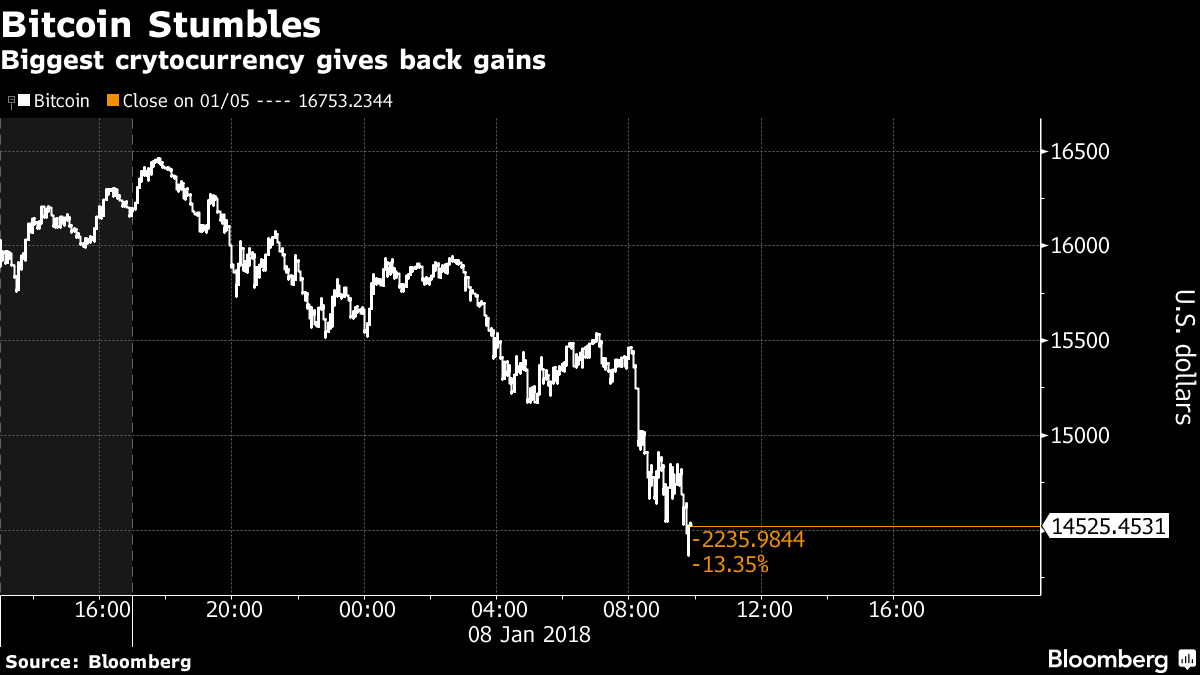
Things are not looking all that great for Ethereum right now. The popular cryptocurrency suffered a major crash not too long ago and it remains the market is still recovering. The past two days have heralded another downturn for Ether, making it highly doubtful Ethereum will pass Bitcoin in market cap anytime soon. It seems safe to say more volatility is on the horizon for Ethereum holders.


WHAT IS GOING ON WITH THE ETHEREUM PRICE?


Looking over the Ethereum price charts leaves traders and investors disappointed, as their hopes for challenging Bitcoin’s crown subside. More specifically, the ETH price has taken another beating, as it declined by 7.65% over the past 24 hours. This puts the value of one Ether well below the US$300 mark and it is possible this value will keep heading toward US$270 or lower over the coming days. This momentum is not entirely surprising given Ethereum’s bullish trend throughout the first half of 2017.


It is not hard to forget once ETH was worth under US$11 back in early January of this year. Things have certainly picked up over the past few months, culminating in an Ether price peak of nearly US$400, according to Coinmarketcap. Such a spectacular price increase can only be met with future price volatility, which is what we are seeing on a daily basis right now. Even so, the Ether value increase has been nothing short of impressive this year.


Ethereum enthusiasts have referred to a phenomenon known as the flippening all year. This trend would occur once Ethereum’s market cap surpasses that of Bitcoin. Although both currencies were only separated by “just” US$8bn, the gap has widened once again. More specifically, Bitcoin’s market cap is close to US$41bn right now, whereas Ethereum’s is only US$26.32bn. The flippening will not be happening anytime soon at this rate.


The bigger question is why Ethereum is facing such a setback right now. Shifting market conditions are likely the culprit. Moreover, the Ethereum blockchain and its technology are weighed down by the influx of cryptocurrency ICOs. Transactions are confirmed far slower when a big ICO happens, and smart contracts used by these projects often contain issues which need to be fixed later on. The technology is still premature, yet investors also see this can become a much bigger problem if things aren’t resolved quickly.


Speaking of cryptocurrency ICOs, they have quickly become the main use case of the Ether currency. That is not necessarily a positive development either. With so many projects raising funds in Ether, the chances of a market “dump” will increase as well. When teams need funding, they will convert ETH to fiat currency, creating negative pressure across the exchanges. When more projects sell off their raised funds, the price per ETH will undoubtedly continue to go down quite quickly. It is unclear if that is part of the ongoing price drop right now, but it is something to keep in mind.


It is unclear what the future will hold for Ethereum right now. The Ethereum price is very volatile, which is only to be expected at this point. However, Ethereum is not a store-of-value by any means. With so many “dumb money” flowing into Ethereum to participate in cryptocurrency ICOs, it is virtually impossible to determine the real value of the existing coin supply. Technical issues are becoming a major problem as well. If this trend keeps up, the flippening may never happen at all. These are interesting times for Ethereum to prove its value, but so far, the project leaves quite a bit to be desired.

David Ogden
Entrepreneur

David Ogden Entrepreneur


Author: JP Buntinx

Alan Zibluk – Markethive Founding Member

The Blockchain Fuels Startups Unlike Any You’ve Ever Seen

The Blockchain Fuels Startups
Unlike Any You've Ever Seen


Bitcoin was hailed as the digital currency of a utopian future,

but, at least in the US, few people use it. (At Overstock.com, the first major retailer to accept bitcoin, it accounts for less than 0.1 percent of sales.) What is taking off, however, is the tech underlying bitcoin. Called the blockchain, it’s an online ledger for a virtually endless chain of transactions, or “blocks,” stored across a worldwide network of computers. Using cryptography, a blockchain verifies, records, and protects the integrity of those transactions, without answering to a government, bank, or company. Separate from bitcoin, it’s being used to create businesses that look like nothing we’ve seen before.

Augur

Prediction Markets

At Augur people bet on the outcome of events—sports, stock offerings, elections. Because it runs on a blockchain, it spans borders, roping in so many bets that its predictions could be far more accurate than any market in history.

Utopian future: We’ll gain the ability to truly see the future.

Blockchain Capital

Venture Capital

Using a blockchain called Ethereum, this VC firm issued an ICO, or initial coin offering, selling its own digital token to raise money for its latest venture fund. Anyone who owns a token owns a piece of the fund. And because digital tokens are so easily resold, it’s a particularly liquid VC investment. In the past two years, more than 75 entities have raised over $250 million through ICOs.

Utopian future:

Anyone can play the VC game.

Numerai

Hedge Funds

Inside this hedge fund, all trades are decided by AI models built by thousands of anonymous data scientists from across the internet. It gets weirder. The data wonks all get digital tokens, and if the fund is successful, the value of the token rises, a dynamic that transforms normally cutthroat traders into eager collaborators.

Utopian future:

Hedge funds go from shark tanks to kumbaya show-and-tell sessions.

Chuck Reynolds


Marketing Dept
Contributor
Please click either Link to Learn more about -Bitcoin.

Alan Zibluk – Markethive Founding Member

Are cryptocurrencies about to go mainstream?

Are cryptocurrencies about to go mainstream?

Experts call for caution about digital currencies, such as bitcoin and Ethereum, but financial firms are considering adopting them or even establishing their own.


Bitcoin is the world’s biggest cryptocurrency

but there are now close to 800 digital currencies work around $96bn total. Last Sunday a message posted on message board 4Chan started the rumor that Vitalik Buterin, the founder of cryptocurrency Ethereum, had been killed in a car crash. News of the 23-year-old, Russian-born programmer’s demise was soon proved false – but not before 20%, or roughly $4bn, had been wiped from Ethereum’s soaring market value. The hoax not only drew attention to Ethereum, the second largest digital currency after bitcoin, which had seen its value rise fiftyfold since the start of the year to $300 a coin, but also to the booming market in other so-called cryptocurrencies that could now be on the cusp of mainstream financial credibility.

Vaswani’s comments came after several central banks from across Europe and Asia said they were looking into establishing digital-only currencies in addition to traditional denominations. The People’s Bank of China has reportedly run trials, while the Danish central bank is considering a digital-only e-krone. On 19 June, the International Monetary Fund issued a staff discussion note stating that banks should consider investing in cryptocurrencies, saying: “Rapid advances in digital technology are transforming the financial services landscape, creating opportunities and challenges for consumers, service providers and regulators alike.”

At the same time, IBM announced it had made a deal with the Digital Trade Chain Consortium – a group of seven European banks that includes Deutsche Bank, HSBC, KBC, Natixis, Rabobank, Societe Generale and Unicredit – to build a digital trade platform that will run on IBM’s cloud. Andrew Levin, professor of economics at Dartmouth and co-author of a study on central bank digital currencies, told the Guardian that the concept of private institutions creating new forms of payment was not in itself new, “but the greater need is for consumers and businesses to have access to money that has a stable value and is practically costless to use. We think there’s a strong case for central banks to issue digital currencies that would be free to use.”

Crypto- or cyber-currencies are digital-only currencies in which encryption and registry techniques, often called blockchains, are used to regulate the generation of units of currency independent of a central bank. It is a booming, dizzying market. Since the start of the year, bitcoin, the world’s biggest cryptocurrency, has almost tripled in value to $2,565. By some estimates, the cryptocurrency business could be worth $5tn by 2022. There are now close to 800 cryptocurrencies worth, in total, around $96bn. One of the newest offered to market is Tazos, backed by billionaire venture capitalist and early bitcoin investor Tim Draper of Draper Fisher Jurvetson. According to a prospectus, a total of US$893,200.77 worth of XTZ tokens will be issued on 1 July. “The best thing I can do is lead by example,” Draper told Reuters last month. “Over time, I actually feel that some of these tokens are going to improve the world, and I want to make sure those tokens get promoted as well. I think Tezos is one of those tokens.”

Tezos’ founders, Kathleen and Arthur Breitman, anticipate their ICO will become a “digital commonwealth” or “self-governing network”. The couple’s background in finance speaks to the seriousness of the endeavor: Arthur worked at the high-frequency trading desk at Goldman Sachs; Kathleen at Bridgewater Associates, the world’s largest hedge fund. “We think our competitive advantage is in our ability to assign governance,” Kathleen told the Observer. “The thing about blockchain is it’s very interdisciplinary. You have to have an understanding of finance and economics, but also game theory, pure science and networking theory.”

She concedes that blockchain complexity is also cause for investor skepticism. “A lot of people struggle to understand its value proposition, because it offers something different to everyone. I like the idea of putting business logic in a decentralised network, and hopefully, it will help people to conduct business more easily.” Brock Pierce, managing partner of Blockchain Capital and a relative veteran of the ICO market, recently launched a tradeable, digital securities token called BCAP that he considers “the next giant leap in the democratization of venture capital and liquidity where everybody has equal access”.

Three days ago, Pierce launched the crowd sale of EOS, a blockchain coin (or token) offering that’s already taken in $100m. “This is a 340-day project that’s already broken every record. It’s 100% certain we’re going to surpass Bancor, the most successful ICO to date.”

Pierce predicts that the underlying technology of blockchain – essentially a public record of actions – “is going to impact our world more than the internet has”. He added: “The implications are huge, and it’s going to have huge implications not only on venture, but private equity, real estate, digitizing currency. This is going to be the technology that democratizes the global financial system so everybody has equal access.” But such rapid increases in value is cause for concern. Five-year-old Ripple XRP, which is connected to 75 banks, including Bank of America and Royal Bank of Canada, has increased in value by 40 times this year alone. According to CNBC, 100 billion XRP are in existence, each priced 26 cents.

“A lot of lessons will be learned and a lot of money will be lost, before a lot of money can be made,” Peter Denious, head of global venture capital at Aberdeen Asset Management, told Bloomberg last week. “Prices right now aren’t being driven by network usage, they’re being driven by speculation that tokens are going to appreciate. It’s a gold-rush mentality.” But Les Borsai, an early investor in Ethereum, believes that what is under way is a re-ordering of the financial systems. At root, he argues, blockchain technology shows “we don’t need a centralized solution for anything. It’s a liberated attitude and the implications are huge”.

Since you’re here …

… we have a small favour to ask. More people are reading the Guardian than ever but advertising revenues across the media are falling fast. And unlike many news organisations, we haven’t put up a paywall – we want to keep our journalism as open as we can. So you can see why we need to ask for your help. The Guardian’s independent, investigative journalism takes a lot of time, money and hard work to produce. But we do it because we believe our perspective matters – because it might well be your perspective, too. I appreciate there not being a paywall: it is more democratic for the media to be available for all and not a commodity to be purchased by a few. I’m happy to make a contribution so others with less means still have access to information.

Chuck Reynolds


Marketing Dept
Contributor
Please click either Link to Learn more about -Bitcoin.

Alan Zibluk – Markethive Founding Member
Prominent Venture Capitalist Shares Bitcoin, Ethereum Investment Tips

Prominent Venture Capitalist Shares Bitcoin, Ethereum Investment Tips


Prominent venture capitalist and investment firm

co-founder Fred Wilson shares investment tips for Bitcoin and Ethereum traders in a blog post entitled “The Selloff.” His investment firm Union Square Ventures is based in New York.

Rollercoaster

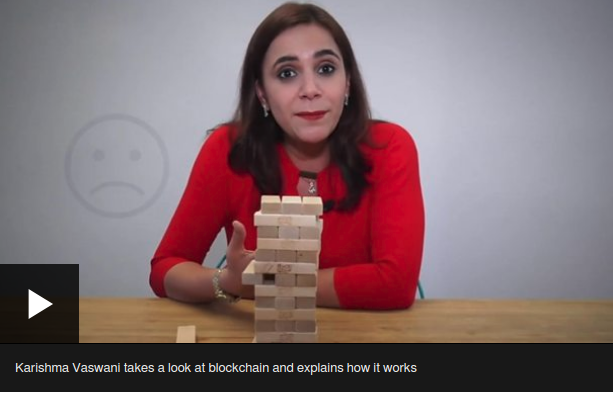
Since the beginning of January, the cryptocurrency market and leading cryptocurrencies such as Bitcoin and Ethereum have experienced corrections. Some market corrections saw Bitcoin and Ethereum falling by as much as 30 percent, although the two cryptocurrencies recovered relatively quickly after their initial decline. In a blog post, Wilson noted that as he told his daughter who has also been an early investor in Bitcoin and Ethereum, he encourages traders and investors to consider what the price trend and value of Bitcoin and Ethereum will be in five to 10 years, not in the short-term.

Long-term

Admittedly, the majority of traders within the cryptocurrency market are looking to profit off minor corrections and rallies of cryptocurrencies such as Bitcoin and Ethereum. Hence, when the price of the two cryptocurrencies achieve new all-time highs or are in a position to sustain an upward momentum, traders tend to sell off and cause a price correction. However, like many early-stage investors, Wilson, who has invested in Bitcoin since 2013 and Ethereum since its launch in 2015, explained that most market corrections don’t hold much significance for his portfolio. Wilson is considering Bitcoin and Ethereum as long-term investments and is taking its long-term price trend into consideration.

Wilson writes:

“I have been buying Bitcoin since early 2013 and Ethereum since last year. I keep buying but never that much at one time. Just a little bit every week. You can build a pretty big position that way, but you have to be patient, and you have to keep at it.”

More importantly, Wilson emphasized that he doesn’t attempt to predict price corrections and market bottoms even though his predictions turned out to be accurate often. Because Wilson is maintaining a cryptocurrency portfolio as a long-term investment, he explained that he doesn’t focus on evaluating short-term price development of cryptocurrencies. 

Wilson adds:

“I don’t try to time market bottoms and market tops, even though I can sense when they are happening. I don’t try to predict where these assets are going in the near term and I just believe they will be a lot more valuable in five or ten years than they are now.

Many analysts within the cryptocurrency sector have also stated in the past that most traders will earn a profit if they only trade a monthly basis. Over the past few years, Bitcoin has consistently made gains on a monthly basis as it always bounced back from market corrections. “I am wrong a lot. But honestly, I don’t really care. I will keep buying into this correction or rally, whatever it turns out to be. Because the more important question is where these assets will be in five or ten years,” said Wilson.

Chuck Reynolds


Marketing Dept
Contributor
Please click either Link to Learn more about -Bitcoin.

Alan Zibluk – Markethive Founding Member

Cryptocurrencies Could Reach $5 Trillion in 5 Years, Says Wall Street Billionaire Bitcoin Investor

Cryptocurrencies Could Reach $5 Trillion in 5 Years, Says Wall Street Billionaire Bitcoin Investor

Cryptocurrencies Could Reach $5 Trillion in 5 Years, Says Wall Street Billionaire Bitcoin Investor


Billionaire investor Michael Novogratz, a former hedge fund manager who has been supportive of bitcoin, claims cryptocurrencies could be worth more than $5 trillion in five years, speaking at the CB Insights Future of Fintech conference in New York,

Get exclusive analysis of bitcoin and learn from our trading tutorials. Join Hacked.com for just $39 now.

For this to happen, companies have to develop business principles that satisfy regulators. The recent cyberattack that disabled computers and demanded $300 bitcoin ransom payments is one reminder of the challenge bitcoin faces, following May’s WannaCry attack. Such events reinforce bitcoin’s reputation as a currency favored by hackers and criminals.
 

Bitcoin Needs A Better Reputation

Novogratz, who formerly managed liquid strategies for Fortress Investment Group LLC and has addressed bitcoin investments since 2013, is among Wall Street’s most visible cryptocurrency supporters, according to Bloomberg. He urged cryptocurrency companies to pay their taxes since “nobody in that space” pays taxes. He said a core group of developers have good intentions, however.

The Nasdaq reached $5.4 trillion in 1999, he noted.


Hack’s Impact Not Great

The recent cyberattack did not impact bitcoin’s price, which at 2 p.m. Tuesday was $2,339.66. Some makers of chips used for bitcoin mining equipment did retreat, however. Bitcoin has gained more than 140% on the year, while Ether has skyrocketed from $8 to $240.


Challenges still face cryptocurrencies, Novogratz noted. The cyberattack struck amidst questions about the strength of the current cryptocurrency rally and about the scalability of digital assets, Novogratz noted.

This week’s downturn in crypto values shrunk the total market cap from $110 billion $90 billion, according to coinmarketcap.com.
 

Novogratz Bets On Bitcoin

Novogratz said he has profited on the bitcoin and ether surges, and still has 10% of his net worth in cryptos, including assets he acquired in initial coin offerings. He hopes to add more bitcoin if the price falls to $2,000, and more Ether should the price drop between $200 and $150.

Bitcoin could emerge as a store of wealth similar to gold, he said, while Ethereum could provide the foundation for future Facebooks and Googles. He suspects money transfers to securities settlement will discontinue using blockchain technology.


David Ogden
Entrepreneur

Entrepreneur David Ogden


Author: Lester Coleman


Alan Zibluk – Markethive Founding Member

Bitcoin Scaling Project Segwit2x to Release New Code Tomorrow


Segwit2x is moving ahead in adherence with its previously announced timeline

Segwit2x, a controversial scaling proposal largely backed by the bitcoin network's enterprises and miners, is moving ahead in adherence with its previously announced timeline. In an email yesterday, Bloq co-founder and Segwit2x lead developer Jeff Garzik confirmed to CoinDesk that new code is set to be released on Friday, following two weeks of alpha release testing. The release is said to address issues and comments on the initial version. As such, the release is expected to mark a new phase for the proposal, which has been praised by some as a pragmatic solution to the network's perceived capacity issues and derided by others as a deal that misunderstands the nature of bitcoin development and the network's intended design.

Still, it has emerged as unique, given that it was able to bring together perhaps the largest contingent of companies and mining pools ever in support of a scaling proposal. Further, its support by a large majority of miners means, if released, the code could quickly gain the necessary backing from the network to activate the upgrade. If development continues as planned, bitcoin’s long-requested scaling optimization SegWit could be activated before August, with a hard fork to double the block size slated for three months later. This change, though, also remains a matter of controversy and critique.

Testing phase

So far, little is publicly known about the testing process.

According to those involved, the last two weeks of development have been dedicated to testing, with the firms involved using a new testnet ("testnet5") and a so-called faucet that spits out fake coins to test the system. A notable change this week was that the team tweaked the details of the hard fork portion of the agreement for the time being Companies involved in the project – including Abra, Bitfury, Blockchain, BTCC, OpenBazaar, Purse and Xapo – have been contributing to development and testing, though it’s still not public who's working on what. From the SegWit2x GitHub site, it is apparent that developers have been testing the code. Purse CTO Christopher Jeffrey, for instance, identified and fixed some bugs during this two-week stage, while others flagged and put forth other ideas.

Some companies are playing a smaller role in the effort. For example, OpenBazaar's lead backend developer, Chris Pacia, said that he is the sole developer from the firm to contribute to the project. He explained that he created a testnet5 DNS seed (which helps new nodes connect to the test network) and has offered occasional feedback. However, a few of the firms that pledged to assist in testing the code have been hesitant to reply to requests about their involvement. (Some critics have gone as far as to argue that the firms involved are "corporatizing" bitcoin, asserting that Segwit2x is a small group of companies in an invite-only Slack channel attempting to govern a decentralized online currency.)

Remaining questions

So, with the beta release almost here, what's next?

According to the schedule, mining pools are supposed to install the software on 14th June, which they can use to signal for the network to activate the upgrade from 21st July. Last week mining pools representing 80% of the bitcoin hashrate agreed to run the code that could lock in SegWit before 31st July. After that, three months later, is the hard fork to boost the block size. Of concern, is that the fork could potentially result in a split into two competing tradeable bitcoin assets if not everyone agrees to upgrade their software to the change. While this is the plan for later in the summer, bitcoin developer James Hilliard mentioned that the details of the 2MB hard fork portion are still up for debate.

"It’s unclear what the details are," he told CoinDesk.

Hilliard, who's contributed code to Segwit2x that might help to avoid a split into two assets, is skeptical of the hard fork timeline, calling it "unrealistic" – a sentiment shared by other Bitcoin Core contributors, who nearly universally reject the SegWit2x project. Developers have proposed various ways of doing the hard fork portion of the code, though Hilliard said it would be possible to wait and finish the code and logistics for increasing the block size parameter after SegWit activates. As usual, users will have to wait and see how this will unfold, and for now, speculate on the possible outcomes and their impact.

Chuck Reynolds


Marketing Dept
Contributor
Please click either Link to Learn more about -Bitcoin.

Alan Zibluk – Markethive Founding Member

Beware Cryptocurrency Gold Rush Mentality

Beware Cryptocurrency Gold Rush Mentality

Beware Cryptocurrency Gold Rush Mentality

On one hand, it's hard for many investors not to be excited about the meteoric rise of cryptocurrencies in the past few months. Bitcoin has roughly tripled in value since the beginning of the year, Ethereum is up by about 40 times, and Ripple, one of the newest arrivals on the scene, gained a shocking 3800%. What's more, the total market cap for the cryptocurrency industry has been steadily increasing as well, and more and more businesses are finding ways to incorporate digital currencies into their models and payment systems. However, with all of this excitement about the new industry, there are also many analysts approaching with caution. Aberdeen Asset Management is one of the latest firms to do so, suggesting that there is a virtual currency bubble which will, at some point, eventually burst.

Prices Driven By Speculation?

In an interview with Bloomberg, the head of global venture capital at Aberdeen Asset Management had some words of caution for investors considering the cryptocurrency field. Peter Denious said that "prices right now aren't being driven by network usage, they're being driven by speculation that tokens are going to appreciate. It's a gold-rush mentality." Denious and others point to the rapid increase in the number of initial coin offerings, or ICOs, as well as the quick gains in the price of tokens upon listing as two signs that a bubble is in effect. ICOs are tremendously successful, with many companies operating in the blockchain space making millions of dollars in minutes, even if they have no proven or distinctive idea backing their token.

Cryptocurrencies Not the Only Assets to Reach Heights

It may be important to note, however, that digital currencies are not the only assets which have seen gains to record levels in recent months. The returns on the leading cryptocurrencies so far in 2017 have been unparalleled in other areas, but other asset classes have also made impressive gains. Nasdaq and S&P 500 indices are at record levels, despite the widespread uncertainty surrounding global markets. At the same time, housing prices seem to have mostly recovered from an earlier burst.

Coin Telegraph suggests that the increase in asset prices may be due to large degrees of liquidity across global markets, thanks to quantitative easing by many central banks around the world. Considering this possible reason for the gains, it may not be just a cryptocurrency bubble that eventually bursts. If there is, in fact, a burgeoning bubble in either the real estate or equity worlds, those could have serious and long-lasting effects on the worldwide economy. As cryptocurrencies are untested, it's more difficult to say what the impact of a bubble burst would be in that area.


David Ogden
Entrepreneur

daviid ogden


Author: Nathan Reiff |

Alan Zibluk – Markethive Founding Member