All posts by Alan B. Zibluk

10 Free Keyword Tools to use in 2016

Did you know that you no longer need to allocate a large budget for keyword research, that there are a wide range of free keyword tools out there for you to choose from? Read on to learn more about the 11 free keyword tools you should be using. 1. Google Webmasters Tool When you need to boost SEO, why not go straight to the source? With Google's webmasters tool, you can see what keywords your website is ranking for and learn more about potential keywords that you have yet to target. 2. Bing Webmasters Tool Bing's webmaster tool provides information about keywords that are related to their search engine. This tool shows users all of the keywords that are related to their seed keyword, as well as the search volume data. 3. SeoChat's Keyword Suggestion Tool This tool allows users to generate keywords from Amazon, YouTube, Bing and Google. The alphabet is used to modify the original keyword and generate a plethora of suggestions.   4. Soovle Soovle is more limited than some of the other choices, but remains effective, providing up to ten suggestions for each seed keyword. 5. Ubersuggest This tool appeals to the more simplistic user, generating keywords from Google. It has been around for several years and is already quite popular. Ubersuggest can generate a whopping 300 to 400 suggestions for each keyword and the resulting keyword can also be expanded for further information. 7. Hypersuggest Much like Ubersuggest, Hypersuggest offers keywords from Google, in addition to suggestions from YouTube, as well. Since Hypersuggest users can add modifiers, it is able to produce keywords at a greater rate than Ubersuggest. 8. Google Keyword Planner One of the premier keyword research tools, Google Keyword Planner provides search volume data and keyword ideas by using a seed keyword. Users are also able to add their own keywords that have been generated in other places and receive CPC data/search volume information. 9. SeoStack Chrome extension This tool is totally free and generates hundreds of keyword suggestions from Google and YouTube. Alphabets and numbers are tacked onto the original keyword and the tool also supports the use of multiple seed keywords. 10. Google Trends Google Trends is the premier tool to find out more about the current trends and determine the popularity of certain keywords. When you want to know about certain keywords that your competition hasn't discovered yet, Google Trends can help. 11. AnswerThePublic This is a simple tool that generates keywords from Google's autocomplete function. Much like the SeoStack extension from chrome, alphabets and numbers are added to the seed keyword to generate hundreds of suggestions.    

 
Related articles

Alan Zibluk – Markethive Founding Member

The Ultimate Gift for Mom: Financial Freedom via Inbound Marketing

The Ultimate Gift for Mom: Financial Freedom via Inbound Marketing

Well, it's Mother's Day (okay, May 8, 2016) and time to honour the Old Girl, who gave birth to you and plays or played a pivotal role in your success or failure throughout life, just ask her.  Oh yes, your FATHER; likewise, deserves the same honour and respect on June 16th 2016, despite less media and corporate advertising on TV and Online.  Anyway, time to get down to business and demonstrate the ultimate act of L-O-V-E for one's parent.  Learn how to achieve and then, teach mum the fundamentals of financial freedom through Inbound Marketing. 

In fact, duplicate the process with other family members so it becomes a generational practice.  More importantly, you create the Ultimate Gift for Mom, that keeps on giving and giving.  It’s only fitting because she was your first teacher of Inbound Marketing.  Mum was an expert in Inbound Marketing?  Yes, she was because her task was about developing and training the “inner you” to become the best man/woman you could become, believe it or not. Additionally, she was your first teacher of Inbound Marketing because she did the following things in preparation of your arrival: researched, developed data, consulted with experts (grand mum), created strategies specific to the individual (yourself) and executed strategies to achieve a resolution to daily problems.  Should sound very familiar from both a marketing and mother perspective. Both give birth to their babies and responsible for their developmental growth which later impacts society.   

By now the symbiotic relationship between mum and Inbound Marketing should be clear, I hope. Now, let’s jump ahead in time and show the interconnectivity between technology, inbound marketing, mothers and their kids (Millennials).  So, with the massive acceleration in technological devices (computers, smartphones, IPads, Kindle, Mac Books, etc.,) and impact on social media, significant changes in societal behavioral conduct have occurred and businesses are scrambling to make appropriate adjustments to meet the needs of their consumer base.  Unfortunately, many businesses still engage in an old strategy called Outbound Marketing where companies (buy leads, pay for TV commercials, flyers, door-to-door salesman, etc.,) initiate contact by sending their messages to their desired target market.  Nothing wrong with traditional marketing (outbound marketing) if, the strategy generates new and consistent customers; however, consumer behavior has changed and attracting them requires a more individualized approach that earns their attention. It’s the intimate touch that’s so critical in today’s market (yeah, just like mum). 

Generally, Millennials (Generation Y or Net generation) are the target population most desired by most major corporations because they are some-what “fresh meat” with great potential purchasing power; however, they are also, very entitled and opinionated in their beliefs which have impacted corporate culture, media and certain parts of society when dealing with various social issues (equal pay, abortion, war, etc.,).  Being in a westernized capitalist society when money is involved or potential to generate massive revenue then, positions quickly change at least publicly because business is business.  So, mum’s little millennials are impacting the society and possibly the World be it good or bad.  So, she should be rewarded for her dedication.

Now, the research suggests that rearing a child from birth into adulthood (18-years old) costs approximately $250,000 dollars and the cost continues to increase yearly.  Yes, you are worth it but, what about Dear Old Mom?  She and the Old Man could use that money for their retirement.

How about offering Mom the ultimate?  Mother's Day gift and I don't mean a card with chocolates and roses.  No, give her the means to retrieve the investment cost of rearing YOU and your siblings.  Give Mom and Father (don't forget him) access to the essential Tools, Training, Traffic and Resources needed to generate, Consistent, Predictable and Long-term Residual Income in the Information/Computer and Social Media global economy.  Start on May 12th 2016 or sooner.

Oh yes, since Father's Day is shortly after Mother's Day give the Old Man an early bird special.   Since he already “Tied The Noose” it's best he has a backup plan in the event of divorce, which is likely in today's reality.

“Behind every great man is a man greater, his father.” 
― Habeeb Akande

Vaurn James

Contributor


Alan Zibluk – Markethive Founding Member

8 SEO Mistakes to Avoid

SEO - Mistakes

All search engine marketers are trying desperately to promote trends

Especially the trends that are aligned with traditional digital marketing. SEO is immensely important to enhance key to improving your website’s visibility, driving more traffic and better conversion rates.

The first thing one can do as an internet marketer is to avoid making mistakes. Following “SEO Best Practices” can be difficult for online marketers. With search engines changing algorithms on a periodic basis, every SEO strategy needs to adapt and adjust with the latest techniques while giving up on age-old practices. Here are some of the prominent mistakes made by SEO experts:

Mistake #1: Not optimizing images with rest of the content

Optimizing images is sometimes not part of the SEO strategy and can be over looked. Adding target keywords to images relevant to the rest of the content helps search engines understand them. A link to the image with just numbers and alphabets in odd positions does not convey anything but some relevant words and numbers would matter. One should incorporate descriptive keywords for every image. Including relevant alt text helps search engines to find images in relevant searches and even the accessibility of the site.

Mistake #2: Keyword stuffing

Nowadays websites contain varied types of content in terms of text. One needs keywords for SEO and use of right keywords is important for getting the right audience. Optimize them carefully to gain popularity in search engines. But keyword stuffing will only ruin your website ranking since cramming a keyword multiple times makes content worthless. Only keywords do not get customers to a website. Also, Google algorithms will get the site blacklisted and also issue a bad ranking.

Relying on large amounts of mediocre content can affect sites. Using specific keywords with strategic placement and relevant content is effective. Creating insightful info about a topic can can attract attention through different channels.

Mistake #3: Not Setting Up Canonicalization

When implementing an SEO strategy, one should make sure that you do not have duplicate content on the site. If there is identical content for online access using different URLs, you need to identify the right page for visitors and implement a canonical to help search engines know that it is not a duplicate version.

Mistake #4: Disregarding Pages by Not Indexing Them

One should not forget indexing pages. Pages that are broken or missing are going to avoid search engine results altogether because pages indicating 404 error are excluded. A high number of 404s leads to an increase in bounce rate and visitors will feel cheated of any information. Search engines crawl websites and rank them and 404 pages interrupt their process. It is important not to have broken links on your site and keep the website active.

Mistake #5: No updates on site

After spending months to create an interactive and attractive website, one should try to keep it dynamic with consistent blog posts or some other content. Companies fail to optimize the site with keywords and just sit back to watch the traffic decrease. Let in some updates that will help your prospects with relevant information and they might convert to leads.

One needs to make a schedule for posting different posts related to your field on a regular basis, and consistency will get you the attention of search engines too.

Mistake #6: Neglecting social media

Neglecting social media is a crime in this day and age. Social media is no longer an optional marketing ploy but a necessity for businesses. By being conversant and relevant on popular social sites like Facebook and Twitter, one can enhance a company’s image and credibility. Sharing your content will lead the search engines and drive potential visitors to your site. Social media following can also boost brand awareness amongst loyalists.

Mistake #7: Lack of internal links

One might think that it is erroneous to link to one’s own content and even think that search engines might read into it and even blacklist the pages. Despite what you may think, internal links to website is great for SEO and helps search engines to crawl to your website. One should focus on the most important pages of any site and strategize posts to link back to those pages. One should find a real connection between pages to do the linking task.

Mistake #8: Failure to measure progress

Improving SEO is like losing weight. One needs to check and measure your progress on a consistent basis. One should know the current standing when you start, and then track the changes. With solid metrics in place, one will know that the SEO practices have been working or not. If you do not think that there has been any progress, then it is preferable to drop it.

Credit: Keval Padia

Dennis Roeder

Contributor

Alan Zibluk – Markethive Founding Member

Topics in Mobile Redirect Issues Part 6: SSL- Redirect to Mobile Redirect-Problem and Solution


Glenn E. Fleming, MD, MPH, Contributor, MarketHive

(Reposted from Patrick Sexton, https://varvy.com)

There are four common types of redirects that affect how your users and Google see your mobile pages. Each of them is bad for performance (speed). They include:

       *    Initial redirect – canonical (www.example.com vs example.com)

  • SSL – secure pages redirect
  • Redirect to mobile version
  • Content driven redirects

Content-Driven Redirects

  1. Problem

          Content-driven redirects are not required to display a page. These redirects have been added because mobile and                   desktop versions of a given webpage may not display the same content.Thus, some mobile pages are redirected to                 other locations.

          Bottom-line: Content-driven redirects are more of a design issue rather than a technical issue.

       b. Solution

         The use of content-driven redirects should be avoided if possible.The solution here is to utilize responsive web design.            This will ensure that both website versions (mobile and desktop versions) display the same content with no need for a              content-driven redirect.

Alan Zibluk – Markethive Founding Member

Topics in Mobile Redirect Issues Part 5: SSL- Redirect to Mobile Redirect-Problem and Solution

Glenn E. Fleming, MD, MPH, Contributor, MarketHive

(Reposted from Patrick Sexton, https://varvy.com)

There are four common types of redirects that affect how your users and Google see your mobile pages. Each of them is bad for performance (speed). They include:

       *    Initial redirect – canonical (www.example.com vs example.com)

  • SSL – secure pages redirect
  • Redirect to mobile version
  • Content driven redirects

Redirect to mobile version

  1. Problem

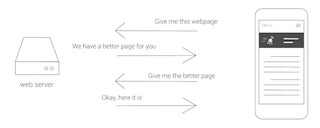
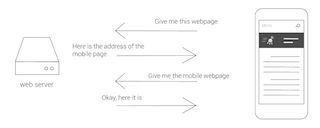
            When you have a different web address (url) for your mobile pages than you do for your desktop pages, the mobile                 device must somehow get to the mobile version. The way it does so is through a redirect.

           In other words, the mobile redirect is the method in which your mobile page gets displayed.This redirect only occurs                when a different url is utilized for mobile devices versus the desktop version. This redirect does not happen when a                  responsive web design is employed.


       b. Solution

         As previously mentioned, a mobile redirect only occurs when a different url is utilized for mobile devices versus the                  desktop version.

         Using responsive web design or dynamic serving will remedy this issue by eliminating the need for separate urls for the          same website (i.e., mobile v. desktop version).

Alan Zibluk – Markethive Founding Member

Topics in Mobile Redirect Issues Part 4: SSL-Secure Pages Redirect-Problem and Solution

Glenn E. Fleming, MD, MPH, Contributor, MarketHive

(Reposted from Patrick Sexton, https://varvy.com)

There are four common types of redirects that affect how your users and Google see your mobile pages. Each of them is bad for performance (speed). They include:

       *    Initial redirect – canonical (www.example.com vs example.com)

  • SSL – secure pages redirect
  • Redirect to mobile version
  • Content driven redirects

SSL-Secure Pages Redirect

  1. Problem

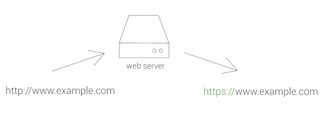
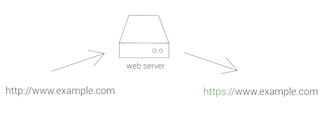
               Pages that use SSL will often be redirected from the url

              "http://www.example.com" to the secure version of that page at "https://www.example.com"

              This redirect usually occurs when a webmaster uses a site-wide 301 redirect as a simple step to forward all pages to               the secure versions of the page.

       b. Solution

              A redirect exists for SSL sites typically because the webmaster used an "easy fix" of doing a site-wide 301 redirect to               make all traffic forwarded to the secure version of their pages.

             A better option would be to use HTTP Strict Transport Security (HSTS) which forces all traffic to use secure pages.                  This means your pages will be more secure and load faster by not using that 301 redirect.


Alan Zibluk – Markethive Founding Member

Topics in Mobile Redirect Issues Part 3: Initial Redirects-Problem and Solution

Glenn E. Fleming, MD, MPH, Contributor, MarketHive

(Reposted from Patrick Sexton, https://varvy.com)

There are four common types of redirects that affect how your users and Google see your mobile pages. Each of them is bad for performance (speed). They include:

       *    Initial redirect – canonical (www.example.com vs example.com)

  • SSL – secure pages redirect
  • Redirect to mobile version
  • Content driven redirects

Initial Redirect (Canonical)


  1. Problem

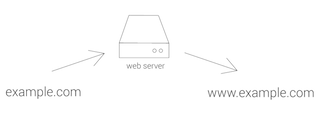
Example: The url "www.example.com" and the url "example.com" are actually two different urls even though they typically will have the same content.

One has the "www" and one does not. Oftentimes webmasters will choose one or the other throughout their site (www or no www).To ensure that pages are always using the same version of the url, a site-wide redirect is typically used.

Thus, when typing "google.com" into a browser, the end-result is "www.google.com".

  1. Solution

This type of redirect was typically implemented for SEO purposes.The common logic was to obtain credit for each link given to a page because some people link to the "www" version and some link to the non-version of a page.

As a webmaster, one must decide if this value even still exists and if so, is it worth the redirect?

Google understands pages and sites much better now than it did when this redirect became a common practice and Google even offers you a way via Webmaster Tools to choose which version you prefer (without the redirect).

Take Home Points:

*Regardless, make sure your site-wide redirects are smartly working with other redirects like ssl.

*Do not redirect users to one version of page just to be redirected again to the secure (ssl) version.

*The way to actually review / update / remove it for most webmasters is to go to their htaccess file and find it:

RewriteCond %{HTTP_HOST} ^domain.com [NC]
RewriteRule ^(.*)$ http://www.domain.com/$1 [R=301,NC]

Alan Zibluk – Markethive Founding Member

Pipeline Marketing: A Powerful Tool For Realizing Funnel Potential

Pipeline Marketing: A Powerful Tool For Realizing Funnel Potential

Posted By 

Pipeline Marketing: A Powerful Tool For Realizing Funnel Potential

Pipeline marketing is a term that many in the marketing industry, even those heavily engaged in digital marketing, are not entirely familiar with.

It may go by other names; math marketing or revenue marketing, for instance, but the idea is the same: using data strategically to critically evaluate the effectiveness of online marketing efforts.

ClosedOpp was a very early adopter of this concept. A small paid search agency founded in 2007 that is breaking new ground in PPC marketing, ClosedOpp has been able to improve lead attribution by integrating all of its clients’ AdWords and Bing data with their CRM records.

The process of pipeline marketing is unique and innovative. ClosedOpp ties paid search data into clients’ Salesforce opportunity and lead records. This provides the ability to track leads from the point they were created, to closure. It also allows marketers to analyze the paths that resulted in the new business wins, to compare paths and to identify best practices to leverage in the future.

Pipeline marketing is a powerful tool to help businesses better understand their customers, how to segment customers into more high-performing groups, and how to identify the sales approaches that achieve the best results. Customer better, how to segment, and how to attribute successful sales approaches.

Rich Norwood, co-founder of ClosedOpp, describes how they developed this approach: “We realized early in 2012 that many digital marketers didn’t trust AdWords conversion data and were looking for a new way to track SEM performance.

We ran countless regressions identifying whether or not there was a correlation between AdWords conversions and Salesforce leads, AdWords conversions and Salesforce opportunities, and AdWords conversions and Salesforce wins. Once we determined there was a low R-squared correlation, we began looking for a better solution for our clients…”

The Power of Pipeline Marketing

The result was the new approach of “pipeline marketing,” which lets businesses focus less on lead gen and more on what they really care about, results. From Bizible’s website: “If your intention is to grow your business, shouldn’t you want to focus on generating customers and revenue, not leads?”

Lead gen, developing new contacts in hopes of increasing sales, has been an important marketing metric for decades. However, as Bizible states, “even as marketing has shifted to digital and analytics systems have been able to capture more complex data and insights, far too many companies are using legacy ways to measure their performance.”

Norwood asks the $64,000 question: “Do the clients care about leads or do they care about opportunities?” It boils down to this: do they want contacts, or do they want customers? Norwood says, “This may throw some people off. However, we’ve… proven that all leads are not created equally, some keywords drive larger opportunities, some keywords convert to opportunity at a much higher conversion rate. This is what Pipeline Marketing and Account-Based Marketing is all about.”

How It Works

The beauty of it all is that pipeline marketing allows marketers to be able to evaluate, in real time, exactly what keywords are driving visitors to their site, where they’re entering and what actions they’re taking. It’s a powerful analysis tool that requires careful consideration up front to realize the full promise of the technique.

Here’s how it works:

  1. Define campaign goals. The first step to embracing this new approach is for businesses to define their campaign goals in detail. And one of the most important goals is, as Norwood explains, to “focus on their sweet spot first. Start with the keywords that are must-targets.”
  2. Determine, specifically, the type of leads you’re looking for and where in the sales funnel you hope to initially engage with these leads. For instance, Norwood asks, “Do [you] want to buy top of funnel leads, leads looking for resources, checklists, and guides? Those leads tend to convert a lot… but [few] convert into opportunity. This can be a great strategy if the company is at scale and already has a successful nurture program. On the other hand, clients may decide it’s best to start with bottom of funnel leads that want a quote and pricing information and to talk with someone from sales.” It’s clear to see that engaging at the bottom of the funnel can yield better, and less expensive to convert, opportunities.
  3. Focus on Cost Per Opportunity. Norwood explains: “Because the opportunity has a high correlation with wins, and pipeline is defined as the total amount for all open opportunities, it makes sense that Cost per Opportunity should be the focus.” Simply put, you’re looking for the best outcome. This should be the main metric you focus on, according to Norwood. What keywords drive the highest ROI? “We need to create pipeline and wins. Period,” he says.
  4. Monitor and measure. Because they are tied in so closely with their clients’ CRM records, ClosedOpp is able to be extremely responsive and nimble, receiving feedback daily about what is and isn’t successful. Shorter timeframes allow quicker course corrections, as well as more rapid expansion of a campaign to leverage big wins.
  5. Adjust, and reap the rewards. Based on the feedback received, marketers are able to adjust their budgets based on real data related to ads, channels, keywords and audiences.

Access to Salesforce records powers the potential of pipeline marketing and provides a unique approach to business development. Norwood says, “[W]e actually measure leads, opportunities, wins, and Average Revenue per Unit (ARPU) daily, in real time. Our access to Salesforce allows us to monitor paid search so that we can see problems before they affect revenue.

We literally have our fingers on the pulse of the company. We often share data with our clients that cause them to pivot their whole strategy or completely redesign their landing pages.”

Pipeline marketing provides the ability to take a very focused, outcome-based approach to campaign analysis Norwood explains: “Our system creates an instant feedback loop between sales and marketing with the simple action of converting a lead to an opportunity and adding the amount to the opportunity.

We see this instantly and take action [often] days before the director of marketing suggests that we do so, because we’re looking at the data in real time and the director of marketing is in meetings.”

The Takeaway

What pipeline marketing boils down to is using your Salesforce records to figure out where your opportunities are coming from. Norwood clarifies: “Traditional PPC companies care about AdWords conversions. We don’t. We care about getting to know what campaigns, ad groups, keywords, landing pages, ads, countries, cities and devices result in opportunities and revenue.” 

Businesses that are able to tie marketing attribution to their CRM can get to market more quickly, spend money more wisely, and out-market their competitors. Pipeline marketing offers a unique competitive advantage, and gives business owners and managers an enormous amount of insight.

When you know where your best customers come from, it makes sense to invest more paid search dollars toward finding them. Pipeline marketing leads the way.

Contributor
Charles R Juarez Jr

Alan Zibluk – Markethive Founding Member

3 ways to pump up your online marketing with video

3 ways to pump up your online marketing with video

by James F. McClister 

real-estate-agent-marketing-video-youtube-buyer-seller-home

In the 1990s, real estate agents posted ads in the newspaper and slapped their faces on the backs of benches. In the 2000s, agents still put ads in papers and spruced up bus stops with their smiles, but began shifting their operations to the Internet – promoting themselves on websites and, later, social media. In the 2010s, ads in papers and on benches still exist, websites are still a staple and social media has exploded, but in the Internet age agents must continue to diversify their marketing strategies. One crucial medium is video.

Every month, YouTube receives more than 1 billion unique visitors. The platform has offered major exposure for real estate businesses around the globe; in fact, the Australian Real Estate Group reported listings that include a video receive more than 400 percent more inquiries than those without.

But the medium is versatile, and as such, requires a strategic approach. Here are a few ideas for agents looking to harness the power of online video in their marketing:

  1. Serialize – A weekly “top listings” list or a monthly dive into market stats (or any other topic your clients will want to return to on a regular basis) is a great way to establish a branded video product that will continuously engage viewers (and potential clients) with compelling content. Keeping potential clients engaged with regular video content will help you stay top of mind for when viewers are ready to buy or sell.

  2. Establish authority – It isn’t fair, but it’s a reality in the lives of agents that their value is often questioned. People forget to ask the question of “what can you do for me” because, in many ways, they feel they already know the answer – which is to say: nothing the Internet can’t already do. Agents know this to not be the case, but someone whose real estate experience is limited to lackluster showings and HGTV series will have a skewed perception of the profession. Video allows agents to look buyers, sellers and hopefuls in the eye and give them a glimpse of the benefits a helpful, professional agent can provide.

  3. Promote your personality – Video is the perfect way for you to show potential clients your personality in action. It answers the question of “what’s this person like” before the initial meeting, giving them a sense of who you are and how you’ll handle their business.

Contributor
Charles R Juarez Jr

Alan Zibluk – Markethive Founding Member

Is your website ready for Google’s mobile update in May?

It has been widely reported by Search Engine Land, Techcrunch, and others that Google is planning a new update to their algorithm regarding mobile-friendliness.  Mobile web traffic now exceeds traffic from desktop users, so Google is emphasizing how important it is that websites have the ability to display information correctly on mobile devices.

In the spring of 2015, last year Google first prioritized this and will update that original announcement again next month with a new change in their ranking criteria.

What does that mean to website owners and administrators?  Simply, you may lose mobile traffic if your site is not compatible with mobile devices.

Fortunately Google does provide a tool in which you simply type in your url to check your site.You can find it here —-> Google Mobile Checker <—-

Something else that is less critical, but worth paying attention to is AMP – (Accelerated Mobile Pages). Google would also like sites to use their formula for making web pages load faster.  They are emp

You can find all about it at the following link.  —-> AMP <—-

Best of success in all your endeavors.

Jon Lombard – Contributor

Alan Zibluk – Markethive Founding Member